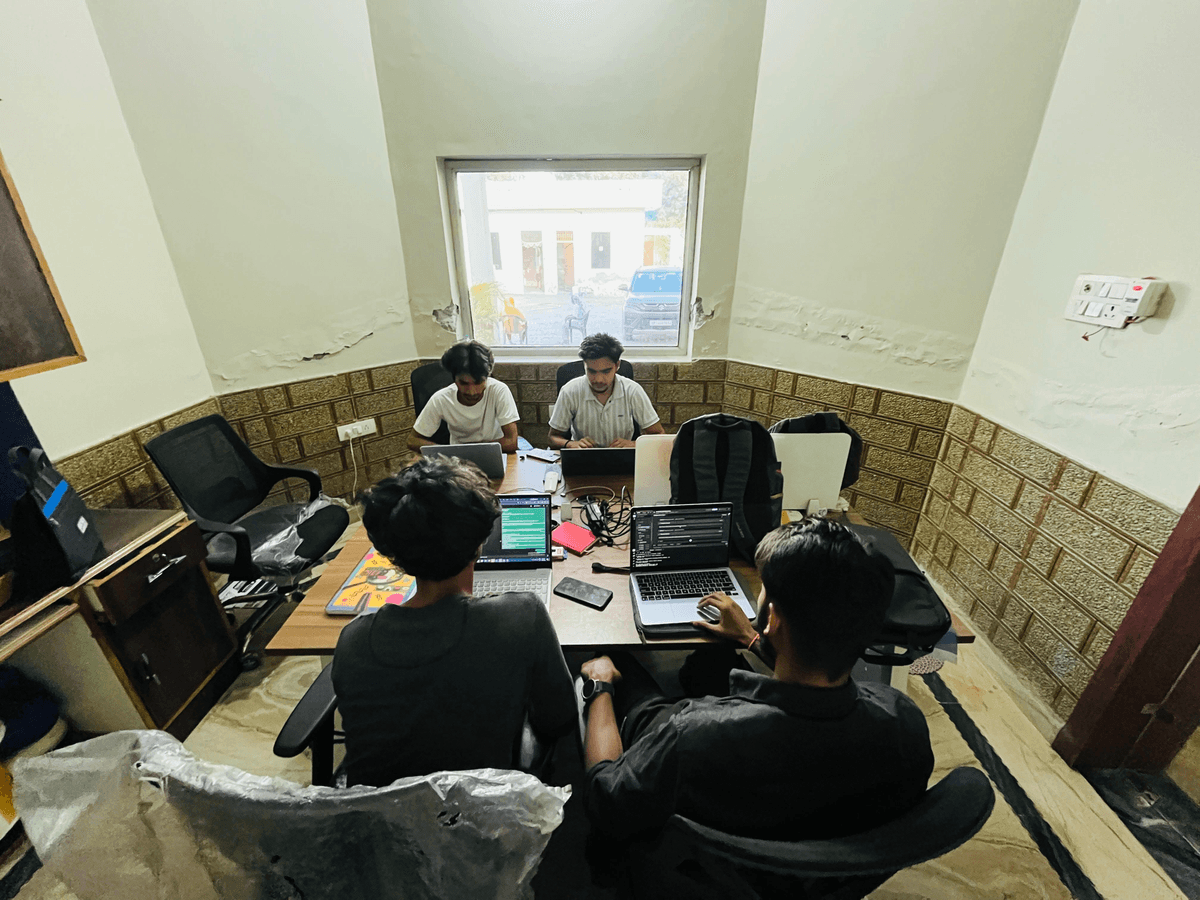
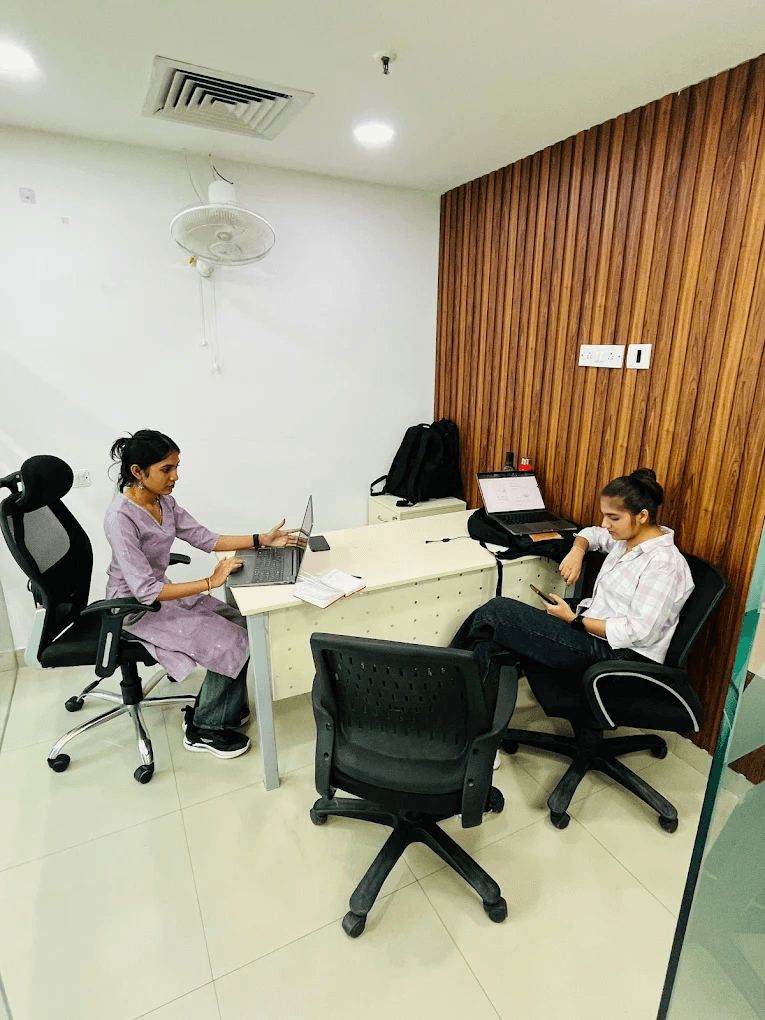
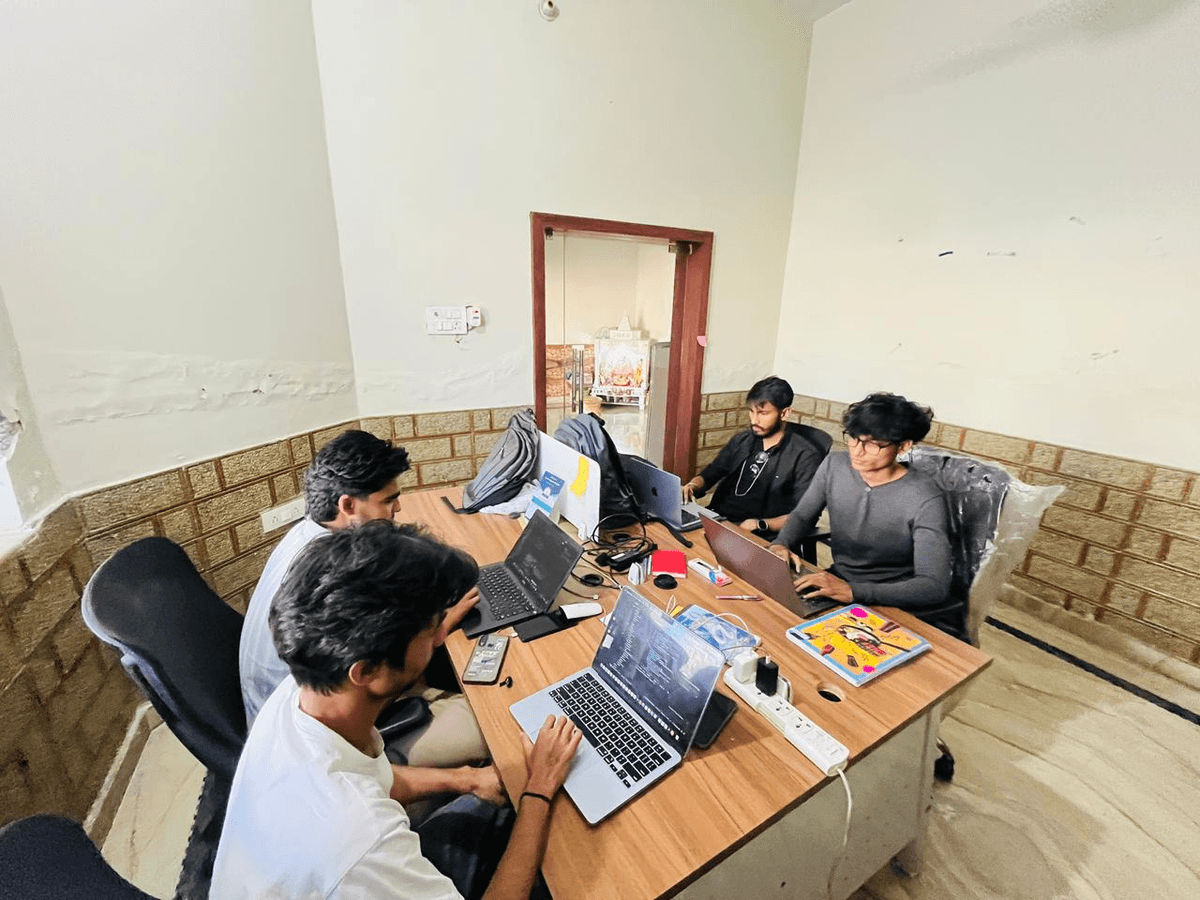
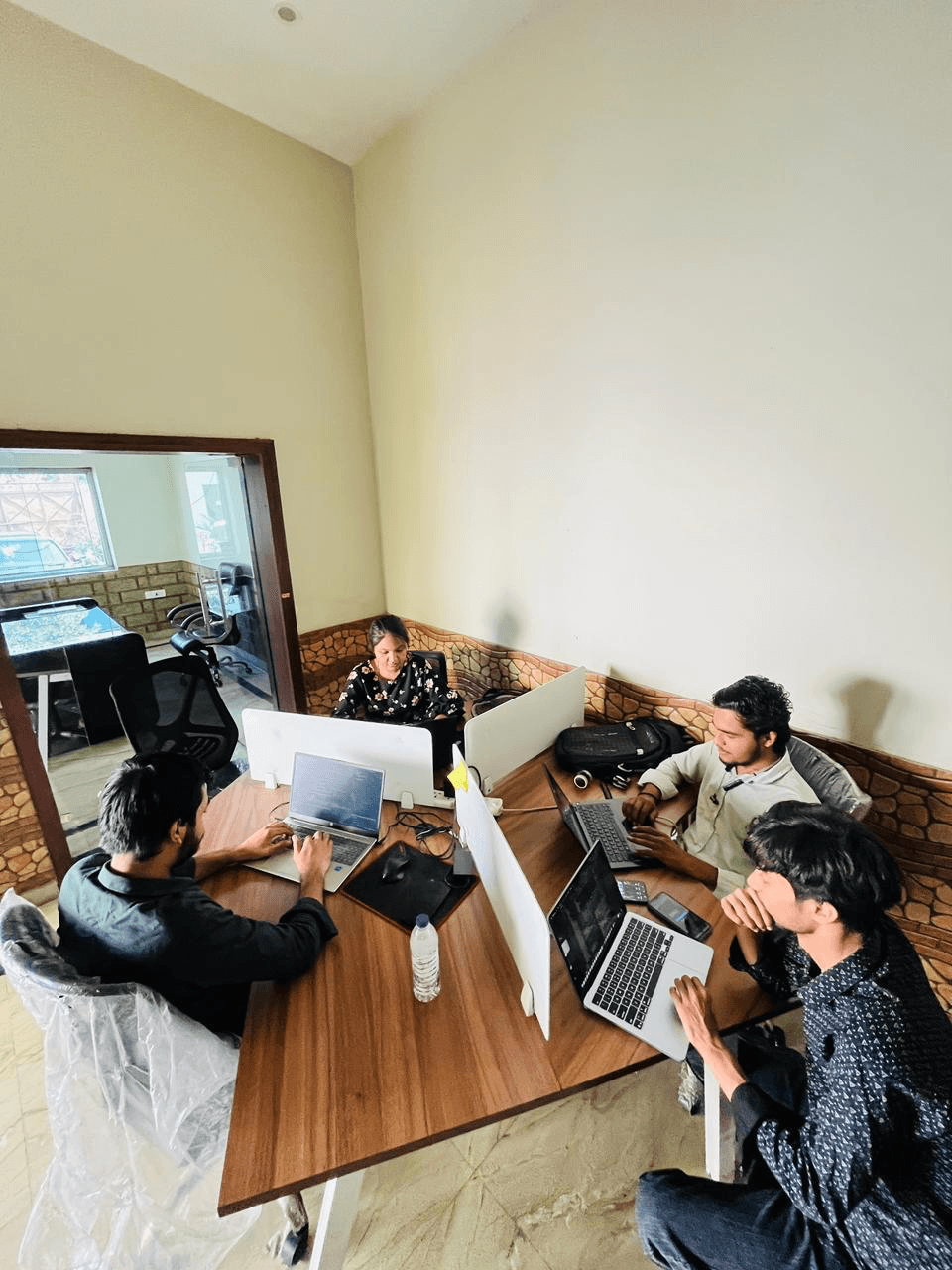
meet the humans who built this →

Frontend Team · UI & Interactions
F

Frontend Team · UI & Interactions

Backend Team · APIs & Infrastructure
B

Backend Team · APIs & Infrastructure

Design Team · UX & Visual Design
D

Design Team · UX & Visual Design

DevOps Team · CI/CD & Deployment
D

DevOps Team · CI/CD & Deployment

QA Team · Testing & Quality
Q

QA Team · Testing & Quality

ClaimsMitra – Smart Survey & Inspection Management Platform | Xenotix

ClaimsMitra – Smart Survey & Inspection Management Platform | Xenotix

this crew shipped ClaimsMitra – Smart Survey & Inspection Management Platform | Xenotix in 16 weeks

Screenshot 1
Screenshot 2
Screenshot 3
Screenshot 4
Screenshot 5
Screenshot 6
Screenshot 7
Screenshot 8

ClaimsMitra – Smart Survey & Inspection Management Platform | Xenotix

ClaimsMitra is a geo-enabled survey and inspection management platform designed for insurance and field verification workflows. The system connects assignors, surveyors, and admins through a seamless ecosystem featuring real-time survey tracking, GPS-verified inspections, offline media uploads, automated assignment workflows, secure payments, and dispute management. Built for scalable field operations, the platform supports motor, marine, and investigation surveys with advanced reporting, multilingual support, and role-based dashboards.

·For Piyush Singhal··16 Weeks·83 Min Read·16,555 Words
AppAdmin DashboardUI/UX DesignInsurance TechnologyInsurTechField Survey Management
ClaimsMitra – Smart Survey & Inspection Management Platform | Xenotix

The Brief.

ClaimsMitra is a geo-enabled survey and inspection management platform designed for insurance and field verification workflows. The system connects assignors, surveyors, and admins through a seamless ecosystem featuring real-time survey tracking, GPS-verified inspections, offline media uploads, automated assignment workflows, secure payments, and dispute management. Built for scalable field operations, the platform supports motor, marine, and investigation surveys with advanced reporting, multilingual support, and role-based dashboards.

Project Overview

ClaimsMitra is a next-generation survey and inspection management platform developed to streamline the entire vehicle accident survey, insurance inspection, and field verification process. Designed for insurance agencies, surveyors, and field operations teams, the platform connects assignors, surveyors, and administrators into one centralized digital ecosystem. The project was created to eliminate the inefficiencies of traditional manual survey workflows by introducing real-time tracking, GPS-based verification, automated assignment systems, secure payments, and cloud-based reporting.

The platform includes a powerful mobile application for surveyors, a dedicated assignor portal for creating and managing survey requests, and a robust admin dashboard for operational monitoring, user verification, dispute management, and analytics. The system supports multiple survey categories including motor spot surveys, motor final surveys, marine cargo inspections, and investigation cases. Each workflow is designed with custom forms, validation rules, media management capabilities, and status tracking systems to ensure accuracy and transparency throughout the inspection lifecycle.

One of the core highlights of ClaimsMitra is its intelligent geo-location workflow. Assignors can create survey requests using GPS location, map pin selection, latitude-longitude coordinates, or manual pin code entry. Nearby surveyors are notified instantly based on radius matching and can accept or reject assignments after confirming their estimated arrival time (ETA). Once payment is completed, surveyors gain access to detailed survey information and can begin the inspection process directly from the app.

The surveyor application is built specifically for field operations and includes advanced features such as offline synchronization, live GPS verification, geo-tagged media uploads, selfie-based presence verification, PDF scanning, video compression, and automated watermarking. Surveyors can upload photos, videos, reports, and documents directly from the camera, gallery, or device storage while the system automatically manages file optimization and secure cloud uploads.

ClaimsMitra also introduces a transparent payment and dispute management workflow. Assignors can track the real-time progress of surveys, review uploaded reports, and either approve or dispute completed inspections. In case of disputes, the platform enables in-app communication between assignors and surveyors before escalation to the admin team. The integrated admin dashboard provides complete control over survey assignments, user approvals, payment disbursement, analytics, and operational settings.

Developed with scalability, security, and real-world usability in mind, ClaimsMitra combines modern mobile app development, cloud infrastructure, role-based authentication, and offline-first architecture to create a reliable digital solution for the insurance and field inspection industry. The project showcases Xenotix’s expertise in building enterprise-grade mobile applications, geo-location systems, real-time workflows, and operational management platforms for modern businesses.

CLIENT

Company

Claimsmitra

Industry

Other

Location

Delhi

Type

App, Admin Dashboard, UI/UX Design

the build log →

Day 07

The Client & Their Vision

The Client & Their Vision

The client behind ClaimsMitra approached Xenotix with a clear mission — to modernize and digitize the traditional survey and inspection ecosystem used across the insurance and field verification industry. Their vision was to create a scalable, technology-driven platform capable of connecting assignors, surveyors, and administrators through a single unified system that could simplify field operations, improve reporting accuracy, and significantly reduce operational delays.

The insurance and inspection sector has long depended on manual coordination, physical paperwork, phone calls, messaging apps, and disconnected workflows to manage survey requests and field investigations. This outdated process often resulted in delayed assignments, poor communication between stakeholders, lack of real-time visibility, inconsistent reporting standards, and challenges in payment tracking. The client recognized that the industry needed a modern digital transformation capable of improving efficiency while maintaining accuracy, transparency, and accountability.

The core objective of the project was not simply to build a survey app, but to create a complete inspection management ecosystem that could support real-time operations across multiple survey categories including motor spot surveys, motor final surveys, marine cargo inspections, and investigation-based claims. The client envisioned a platform where assignors could raise requests instantly, surveyors could receive and manage assignments efficiently from the field, and administrators could monitor the entire workflow from a centralized dashboard.

One of the major goals defined by the client was to create a highly reliable field survey platform that works effectively even in low-network or remote areas. Since many surveyors operate in rural regions, highways, accident-prone locations, and remote industrial zones, internet connectivity cannot always be guaranteed. To solve this real-world problem, the client emphasized the importance of offline functionality and background synchronization. This led to the development of an offline-first architecture where media uploads, reports, and field activities could continue seamlessly and sync automatically when network connectivity becomes available.

The client also wanted to eliminate the trust and verification issues commonly associated with manual field inspections. Traditional survey workflows often lacked reliable proof of physical presence, accurate timestamps, or verified location data. ClaimsMitra was envisioned as a geo-enabled inspection platform capable of capturing GPS-verified photos, selfie-based presence verification, timestamped media, and real-time location tracking to ensure that every survey activity could be authenticated digitally. This vision significantly improved transparency between assignors, surveyors, and insurance stakeholders.

Another critical part of the client’s vision was automation. They wanted the system to intelligently reduce manual intervention in survey assignment and tracking processes. Instead of relying on endless phone calls and manual coordination, the platform was designed to notify nearby surveyors automatically based on survey location and travel radius. Surveyors could then accept requests, confirm their estimated arrival time, and update their progress in real time. This automation helped streamline operations while reducing response time during urgent cases.

The client also focused heavily on user experience and workflow simplicity. Surveyors in the field often need to perform inspections under stressful or time-sensitive conditions. Therefore, the platform had to be intuitive, fast, and easy to operate with minimal training. Xenotix worked closely with the client to ensure that the surveyor workflow remained simple and action-driven, allowing users to upload photos, documents, videos, notes, and reports quickly without navigating through complex interfaces. Features such as one-tap upload actions, GPS-based validation, smart form validations, and guided status updates were integrated to make field operations smoother and more efficient.

From the assignor’s perspective, the client wanted complete visibility into the survey lifecycle. Assignors needed a platform where they could create requests, track survey progress live, make payments securely, review uploaded reports, and communicate with surveyors directly through integrated chat functionality. The client believed that transparency and real-time updates would significantly improve customer trust and operational accountability.

Another important vision behind ClaimsMitra was financial transparency and streamlined payment management. The client wanted survey payments, surveyor compensation, and transaction tracking to be fully digitized. The platform was therefore designed with integrated payment gateway functionality, automated payment release workflows, transaction history management, and compensation tracking for surveyors. This ensured a more organized financial process compared to traditional offline payment handling.

The client also anticipated future scalability from the beginning of the project. They wanted a platform architecture capable of supporting thousands of survey requests, large media uploads, expanding surveyor networks, and multi-location operations without affecting performance. To support this vision, the platform was planned using scalable backend technologies, cloud-based media storage, secure APIs, and modular workflows that can easily expand in the future.

Security and compliance were equally important considerations in the client’s vision. Since the platform handles sensitive claim information, user data, survey documents, and financial transactions, the client required a secure authentication and access management system. Role-based permissions, JWT authentication, secure cloud storage, OTP verification, and admin approval workflows were implemented to ensure secure and controlled platform usage.

The client also envisioned ClaimsMitra as a future-ready platform capable of adapting to evolving business requirements. Features such as multilingual support, QR-based survey tracking, dynamic form systems, dispute management workflows, and analytics dashboards were included with long-term scalability in mind. The admin dashboard was specifically planned to provide actionable business insights including survey performance metrics, response times, completion rates, and surveyor activity tracking.

Ultimately, the client’s vision extended far beyond digitizing inspections. Their goal was to create a trusted, technology-powered ecosystem that improves coordination between field personnel, insurance companies, and operational teams while increasing efficiency, accountability, and customer satisfaction. They wanted ClaimsMitra to become a reliable platform for modern field survey operations where every stage — from assignment creation to final report approval — is transparent, trackable, and optimized through technology.

By collaborating closely with Xenotix, the client successfully transformed this ambitious idea into a structured digital product roadmap. Through thoughtful planning, scalable architecture, modern UI/UX design, and operational workflow optimization, ClaimsMitra evolved into a comprehensive survey and inspection management platform capable of solving real-world challenges within the insurance and field operations industry.

Screenshot 2026-05-12 130651.png
S

Screenshot 2026-05-12 130651.png

Day 14

Problem Statement & Challenges

Problem Statement & Challenges

The insurance and field inspection industry has traditionally operated through fragmented communication systems, manual documentation processes, delayed coordination, and inconsistent reporting standards. Before the development of ClaimsMitra, survey operations were heavily dependent on phone calls, spreadsheets, messaging applications, physical paperwork, and disconnected workflows that created significant inefficiencies for assignors, surveyors, and administrative teams. As survey volumes increased and operational requirements became more complex, these traditional systems became increasingly difficult to manage, especially in time-sensitive insurance claim scenarios.

The client identified several operational bottlenecks affecting survey management, field inspections, payment handling, communication, and reporting transparency. These issues not only slowed down the inspection process but also affected customer trust, survey accuracy, and operational scalability. ClaimsMitra was conceptualized to address these deep-rooted industry challenges by creating a centralized, technology-driven survey management platform capable of streamlining field operations from end to end.

One of the biggest challenges faced by the industry was the absence of a centralized digital workflow. Assignors typically relied on manual coordination methods to locate and contact surveyors. Requests were often shared through calls or messaging platforms without proper tracking mechanisms. This created confusion regarding assignment ownership, survey status, estimated response time, and accountability. In urgent cases such as vehicle accidents or cargo damage investigations, delays in surveyor coordination directly impacted claim processing timelines and customer satisfaction.

Another major issue was the lack of real-time visibility into field operations. Once a survey request was assigned manually, there was very little transparency regarding the actual status of the inspection. Assignors could not reliably track whether the surveyor had started traveling, reached the survey location, or completed the inspection. Communication gaps between surveyors and assignors frequently caused misunderstandings, repeated follow-ups, and operational delays. The client needed a real-time workflow system that could provide live status tracking and improve operational transparency throughout the survey lifecycle.

Field verification and trust validation presented another critical challenge. Traditional survey workflows lacked strong proof-of-presence mechanisms. Insurance companies and assignors often faced difficulties verifying whether surveyors had physically visited the survey location or whether uploaded media was captured during the actual inspection. This created opportunities for inaccurate reporting, misuse of uploaded media, and operational disputes. The client wanted a reliable geo-verification system that could digitally authenticate survey activities using GPS tracking, geo-tagged media, timestamps, and selfie-based verification.

The handling of media files and survey documentation was also a significant operational pain point. Surveyors were required to capture multiple photos, videos, PDFs, and supporting documents during inspections. However, managing large media files manually created storage, upload, and synchronization problems, especially in low-connectivity environments. Uncompressed media increased server load and slowed down upload speeds, while inconsistent document organization made it difficult for assignors and admins to review cases efficiently. The platform needed an optimized media handling infrastructure capable of compressing files, organizing uploads intelligently, and supporting secure cloud storage.

Internet connectivity limitations created one of the most technically demanding challenges in the project. Surveyors frequently operate in remote areas, highways, villages, industrial zones, and accident-prone regions where stable internet connectivity cannot be guaranteed. Traditional mobile applications fail under poor network conditions, often resulting in lost uploads, incomplete reports, or failed synchronization. The client specifically emphasized the need for an offline-first architecture capable of supporting uninterrupted field operations even when network access is unavailable. Building a reliable offline synchronization system became a critical requirement for the platform.

The project also faced challenges related to dynamic survey workflows. ClaimsMitra was designed to support multiple survey categories including motor spot surveys, motor final surveys, marine cargo inspections, and investigation cases. Each survey type required unique forms, custom validation rules, conditional fields, document structures, and workflow logic. For example, vehicle inspections required vehicle number validation and insurance-related fields, while marine cargo investigations required invoice details, GR numbers, consignee information, and cargo documentation. Investigation surveys introduced additional conditional fields based on loss item type such as vehicle, human, cattle, or other categories. Designing a flexible system capable of handling highly dynamic forms without compromising usability or performance was a major challenge.

User experience complexity was another critical consideration. The platform needed to cater to multiple user roles including assignors, surveyors, and administrators, each with different responsibilities, technical understanding, and workflow requirements. Surveyors needed a fast and highly simplified mobile interface optimized for field usage, while assignors required clear tracking systems and easy request management. Administrators needed advanced operational controls, analytics dashboards, user management tools, and dispute resolution systems. Balancing functionality with usability across all interfaces required extensive workflow planning and UI/UX optimization.

The client also wanted intelligent assignment automation to reduce manual intervention in survey allocation. Traditionally, survey assignments depended heavily on human coordination, which slowed response time and created inefficiencies in urgent situations. ClaimsMitra required a location-based matching engine capable of identifying nearby surveyors, notifying them instantly, managing assignment acceptance, and expanding search radius dynamically when required. Designing this assignment workflow while ensuring fairness, response optimization, and scalability introduced additional architectural complexity.

Payment management and financial transparency represented another major operational problem. In traditional survey operations, payment handling between assignors, administrators, and surveyors was often managed manually, leading to tracking difficulties, delayed payouts, and disputes. The client wanted a fully digitized payment ecosystem where assignors could pay survey fees online, surveyors could track their earnings, and administrators could manage compensation disbursement transparently. Integrating secure payment workflows while supporting automated calculations based on travel distance added another layer of technical complexity to the project.

Dispute management also emerged as a key challenge within the survey lifecycle. Insurance claims and inspection reports are highly sensitive processes where disagreements regarding survey findings, report accuracy, or inspection quality are common. The client wanted a structured dispute workflow where assignors could reject reports, communicate directly with surveyors through chat, and escalate unresolved disputes to administrators after a defined time period. Designing a workflow that maintained transparency, accountability, and communication efficiency required careful process planning.

Security and access control introduced another important challenge. Since the platform handles sensitive insurance information, financial data, user documents, identification proofs, and claim-related media, strong authentication and authorization systems were essential. The client required OTP-based verification, role-based access permissions, JWT authentication, admin approval systems for surveyors, and secure cloud-based storage mechanisms. Protecting sensitive user data while maintaining smooth usability was a critical balancing act during the platform architecture design.

Scalability requirements further increased project complexity. The client envisioned ClaimsMitra as a long-term enterprise solution capable of handling growing numbers of users, survey requests, media uploads, and operational transactions. The platform needed to support expanding surveyor networks, high-volume media processing, and concurrent workflows without compromising performance. This required careful planning around backend architecture, database design, cloud infrastructure, API optimization, and media management strategies.

The admin management ecosystem also presented operational challenges. The platform required a comprehensive dashboard capable of monitoring surveys, managing assignments, approving users, resolving disputes, tracking payments, and analyzing operational performance. Administrators needed visibility into survey completion rates, response times, surveyor performance metrics, and financial transactions. Building a centralized analytics-driven admin system capable of simplifying operational oversight became a crucial part of the project scope.

Localization and accessibility added another layer of complexity. Since the platform targets field users across multiple regions, multilingual support became necessary to ensure accessibility for surveyors operating in different language environments. The client required support for Hindi, English, and additional regional languages while maintaining interface consistency and usability across devices.

Another significant challenge was maintaining data consistency across real-time workflows. Multiple users could interact with the same survey request simultaneously, creating potential synchronization conflicts between surveyor actions, assignor approvals, admin interventions, and payment updates. Ensuring real-time consistency while handling offline synchronization and background uploads required robust backend logic and reliable state management strategies.

Performance optimization became equally important because the platform handles heavy media operations, location tracking, document uploads, and live status updates simultaneously. Surveyors needed a lightweight and responsive mobile experience despite performing resource-intensive operations such as video uploads, GPS tracking, and report generation in the field. Efficient compression systems, upload queues, background processing, and optimized API communication became essential to maintaining application performance.

Finally, the biggest overall challenge was transforming a traditionally manual and fragmented industry workflow into a fully connected digital ecosystem without overwhelming end users. The platform needed to feel intuitive, reliable, and practical for real-world field usage while supporting enterprise-level operational complexity behind the scenes. Xenotix had to carefully balance scalability, security, usability, automation, and offline capability to ensure that the final product could genuinely solve the operational problems faced by the client and their users.

Through detailed research, workflow planning, scalable architecture design, and continuous collaboration with the client, ClaimsMitra successfully addressed these challenges by introducing a modern, centralized, and highly optimized inspection management platform. The project demonstrates how technology can streamline field survey operations, improve accountability, reduce manual dependency, and create a transparent ecosystem for insurance and inspection workflows.

Project visual 2
Day 21

Our Approach & Methodology

Our Approach & Methodology

At Xenotix, we approached the development of ClaimsMitra with a strong focus on solving real-world operational problems through scalable technology, user-centric workflows, and enterprise-grade architecture. Since the platform was intended to modernize field survey and inspection management for the insurance industry, our strategy extended beyond traditional mobile app development. We focused on building a complete operational ecosystem capable of handling real-time coordination, geo-verified inspections, offline workflows, payment management, and dynamic reporting across multiple user roles.

From the beginning, our methodology was centered around understanding how assignors, surveyors, and administrative teams actually operate in real-world conditions. Instead of designing a generic survey application, we conducted deep workflow analysis to identify operational bottlenecks, communication gaps, field challenges, and reporting inefficiencies commonly faced in insurance and investigation processes. This research-driven approach helped us design a platform architecture that aligned closely with real industry workflows while remaining scalable for future growth.

Discovery & Requirement Analysis

The first phase of the project focused heavily on business analysis and workflow discovery. The client provided extensive documentation outlining operational requirements, user roles, form validations, survey categories, payment structures, assignment logic, and field verification expectations. Our team carefully mapped each workflow to understand how survey requests moved from creation to completion.

We identified three primary user ecosystems within the platform:

  • Assignors

  • Surveyors

  • Administrators

Each user group had completely different operational goals and interface requirements. Assignors required fast request creation, transparent tracking, and secure payment workflows. Surveyors needed a lightweight field-ready mobile application optimized for speed, offline usage, and media uploads. Administrators required centralized monitoring tools, analytics dashboards, dispute resolution systems, and user management controls.

To avoid feature overload and workflow confusion, we divided the system into modular operational layers while maintaining centralized data synchronization between all user roles.

During the discovery stage, we also identified several critical business priorities:

  • Offline-first field operations

  • GPS-based verification

  • Real-time assignment tracking

  • Media-heavy workflows

  • Dynamic survey forms

  • Secure payment handling

  • Transparent status management

  • Dispute resolution workflows

  • Scalable backend architecture

These priorities became the foundation of our technical and design methodology throughout the project lifecycle.


Workflow-Driven Product Architecture

Instead of building isolated features independently, Xenotix designed ClaimsMitra using a workflow-first methodology. Every screen, API, database structure, and user interaction was mapped directly to real operational processes.

We divided the complete system into multiple interconnected modules:

Assignor Management System

Responsible for:

  • Survey request creation

  • Payment workflows

  • Survey tracking

  • Report review

  • Dispute management

Surveyor Field Operations System

Responsible for:

  • Assignment handling

  • ETA confirmation

  • GPS verification

  • Media uploads

  • Report generation

  • Offline synchronization

Admin Control System

Responsible for:

  • User approvals

  • Assignment monitoring

  • Payment release

  • Analytics

  • Dispute resolution

  • Operational management

This modular architecture helped maintain clean workflows while improving scalability and long-term maintainability.


User-Centric UI/UX Strategy

One of the most important parts of our methodology was designing user experiences specifically optimized for real-world field usage.

Surveyors often work:

  • On highways

  • At accident locations

  • In low-network environments

  • Under time pressure

  • In harsh outdoor conditions

Because of this, traditional enterprise interfaces would not have worked effectively.

Our UX strategy focused on:

  • Large touch-friendly action buttons

  • Minimal typing requirements

  • Guided workflows

  • One-tap media uploads

  • Clear status indicators

  • Simple navigation hierarchy

  • Offline upload visibility

  • Fast access to camera tools

  • Reduced cognitive load

We designed the surveyor workflow as a step-by-step operational journey instead of a complex form-heavy experience.

For assignors, we prioritized:

  • Transparency

  • Real-time visibility

  • Easy request creation

  • Clear payment flow

  • Live tracking

  • Simplified report review

For admins, we focused on:

  • Information density

  • Operational efficiency

  • Analytics visibility

  • Filterable dashboards

  • Workflow control

This user-focused methodology ensured that each platform interface aligned directly with the needs of its intended users.


Offline-First Development Methodology

One of the biggest technical requirements in ClaimsMitra was ensuring uninterrupted field operations in poor network environments.

Traditional mobile apps fail when internet connectivity becomes unstable. However, surveyors frequently operate in:

  • Rural locations

  • Industrial zones

  • Remote highways

  • Accident-prone areas

  • Low-signal environments

To solve this challenge, Xenotix adopted an offline-first development methodology.

Instead of treating offline functionality as a secondary feature, we built the application assuming network instability as a default condition.

This approach included:

Local Data Persistence

Critical survey data was temporarily stored locally on the device before syncing with the server.

Upload Queue Management

Media uploads were added to a retry queue using background processing systems.

Background Synchronization

Failed uploads automatically retried once connectivity returned.

Network State Monitoring

The app continuously monitored connection quality and adjusted upload behavior accordingly.

User Feedback Systems

Surveyors could clearly see:

  • Pending uploads

  • Failed uploads

  • Sync status

  • Retry progress

This methodology ensured uninterrupted workflows even under difficult field conditions.


Geo-Location & Verification Methodology

Trust and verification were central to the client’s vision.

To address verification concerns, we implemented a multi-layer geo-validation system designed to authenticate survey activities digitally.

Our approach included:

GPS Validation

Surveyors were required to confirm physical presence at the inspection location.

Geo-Tagged Media

All captured media included:

  • GPS coordinates

  • Timestamps

  • Metadata

  • Location references

Selfie Verification

Surveyors uploaded live selfies for presence confirmation.

“I’m at the Spot” Workflow

Survey progression required location verification before continuing.

Real-Time Status Updates

Assignors could monitor surveyor movement and activity progression.

This methodology significantly improved operational transparency and reduced the risk of inaccurate inspections or fraudulent reporting.


Dynamic Form Architecture

ClaimsMitra supports multiple inspection categories:

  • Motor Spot Survey

  • Motor Final Survey

  • Marine Cargo Inspection

  • Investigation Cases

Each workflow required unique:

  • Input fields

  • Conditional logic

  • Validation rules

  • Document requirements

  • Media structures

To solve this complexity, Xenotix designed a dynamic form architecture capable of rendering condition-based workflows without creating entirely separate applications.

Examples included:

  • Showing vehicle fields only when “Vehicle” is selected

  • Displaying cattle information dynamically

  • Supporting multiple invoice entries

  • Auto-validating vehicle registration formats

  • Auto-fetching location metadata

  • Supporting unlimited document uploads

This modular form methodology improved maintainability while enabling rapid scalability for future survey categories.


Media Optimization Strategy

The platform was designed to handle heavy media operations including:

  • Photos

  • Videos

  • PDFs

  • Reports

  • Scanned documents

Large unoptimized files can:

  • Slow uploads

  • Increase server costs

  • Fail under weak networks

  • Reduce app performance

To address this, Xenotix implemented a comprehensive media optimization strategy.

Image Compression

Photos were compressed intelligently before upload while preserving inspection quality.

Video Optimization

Videos were compressed using FFmpeg to minimize bandwidth usage.

Document Compression

PDFs and scanned files were optimized for mobile upload efficiency.

Organized Cloud Storage

Media files were categorized and tagged automatically.

Upload Source Management

Users could upload via:

  • Camera

  • Gallery

  • File manager

This strategy improved upload reliability and operational speed significantly.


Real-Time Communication Architecture

Survey coordination depends heavily on timely communication between stakeholders.

To support this, we designed a real-time event-driven communication architecture.

This included:

  • Push notifications

  • In-app alerts

  • Email notifications

  • SMS triggers

  • Webhook-based updates

Notifications were triggered during:

  • Assignment creation

  • Assignment acceptance

  • ETA confirmation

  • Payment completion

  • Status changes

  • Report submission

  • Dispute initiation

This approach reduced communication gaps while improving operational responsiveness.


Payment Workflow Methodology

The client wanted a transparent and trackable financial ecosystem.

Our methodology focused on:

  • Payment security

  • Transaction transparency

  • Automated calculations

  • Surveyor payout tracking

The payment flow was carefully integrated into the operational workflow.

Assignor Payments

Assignors paid before survey initiation.

Dynamic Fee Logic

Survey pricing changed based on travel distance.

Surveyor Compensation

Payments were released after successful survey approval.

Payment History Tracking

Surveyors could monitor earnings and transaction history.

Admin Financial Controls

Admins could manage releases, disputes, and payment approvals.

This methodology helped digitize previously manual financial operations.


Backend Architecture Strategy

To ensure long-term scalability, Xenotix adopted a modular backend architecture.

Our strategy prioritized:

  • API scalability

  • Secure authentication

  • Efficient database design

  • Media optimization

  • Role-based permissions

Key architectural considerations included:

Secure Authentication

Implemented using:

  • JWT tokens

  • OTP verification

  • Role-based access control

Scalable APIs

REST APIs were structured modularly for future extensibility.

PostgreSQL Database Design

Relational structures optimized:

  • Survey workflows

  • Media references

  • User permissions

  • Financial records

Cloud Infrastructure

Cloud storage supported:

  • Large-scale media uploads

  • High concurrency

  • Reliable backups

This architecture ensured the platform could scale operationally without major structural changes.


Agile Development Methodology

Xenotix followed an agile product development methodology throughout the project lifecycle.

The project was divided into:

  • Feature modules

  • Sprint cycles

  • Incremental releases

  • Workflow validations

This allowed continuous collaboration with the client while ensuring rapid iteration and improvements.

Our agile workflow included:

  • Requirement validation

  • UI/UX reviews

  • Technical feasibility analysis

  • Prototype testing

  • Feedback integration

  • Performance optimization

Regular client feedback sessions helped refine workflows and ensure the platform aligned with operational expectations.


Security & Compliance Approach

Since the platform manages sensitive insurance and identity-related information, security was treated as a core architectural priority.

Our methodology included:

  • Encrypted API communication

  • Secure token handling

  • OTP verification

  • Role-based permissions

  • Admin verification systems

  • Secure cloud storage

  • Protected media access

We also accounted for compliance-related messaging requirements and secure authentication workflows.


Scalability & Future Readiness

The client wanted ClaimsMitra to evolve into a large-scale operational platform capable of supporting future expansion.

To prepare for long-term scalability, Xenotix designed the platform using:

  • Modular architecture

  • Expandable workflows

  • Flexible database structures

  • Reusable components

  • Cloud scalability

  • Dynamic form engines

This future-ready methodology allows the platform to support:

  • Additional survey categories

  • Larger surveyor networks

  • Expanded analytics

  • Multi-region operations

  • Additional payment integrations

  • AI-based automation in the future


Quality-Driven Execution Philosophy

Throughout the project, Xenotix maintained a quality-first execution philosophy focused on:

  • Operational reliability

  • Real-world usability

  • Scalable engineering

  • Performance optimization

  • User experience simplicity

Every workflow was designed not only to function technically but also to solve real operational pain points experienced by field teams and insurance stakeholders.

By combining workflow research, scalable engineering, offline-first architecture, user-centric design, and operational automation, Xenotix successfully transformed the client’s vision into a comprehensive digital survey management ecosystem capable of modernizing field inspection operations at scale.

Screenshot 2026-05-12 130804.png
S

Screenshot 2026-05-12 130804.png

Day 28

Design Process — Figma to Production

Design Process — Figma to Production

Designing ClaimsMitra required far more than creating visually appealing screens. The platform involved highly complex operational workflows, field-based usability requirements, multi-role dashboards, dynamic forms, geo-location interactions, media-heavy interfaces, and offline-first experiences. At Xenotix, our design process focused on building a scalable, user-friendly, and production-ready ecosystem that could perform efficiently in real-world field environments while maintaining enterprise-level operational clarity.

From the very beginning, we approached the design process strategically by combining user research, workflow mapping, wireframing, UI system design, prototyping, usability optimization, and developer-ready production systems. Every design decision was guided by one core objective — simplifying complex survey operations into intuitive digital experiences for assignors, surveyors, and administrators.

The complete design journey moved through multiple structured stages including discovery workshops, user flow planning, low-fidelity wireframes, design systems, high-fidelity UI design, interactive prototyping, developer handoff, and production implementation.


Understanding User Behavior & Operational Context

Before starting visual design, our team first focused on understanding how different users would interact with the platform in real-world conditions.

ClaimsMitra involved three primary user groups:

  • Assignors

  • Surveyors

  • Admins

Each user category had completely different expectations, operational priorities, and interaction patterns.

Surveyors

Surveyors represented the most critical user group because they operate directly in field environments. Their workflow includes:

  • Traveling to inspection sites

  • Capturing media

  • Uploading reports

  • Navigating low-network areas

  • Working under time pressure

  • Performing inspections outdoors

This meant the mobile interface needed to prioritize:

  • Speed

  • Simplicity

  • Large tap areas

  • Fast camera access

  • Minimal typing

  • Clear status visibility

  • Offline awareness

The surveyor experience had to function effectively even under stressful or poor connectivity conditions.


Assignors

Assignors needed:

  • Fast request creation

  • Clear survey tracking

  • Secure payment flow

  • Transparent communication

  • Easy report review

Their workflow focused more on visibility and management rather than field execution. Therefore, the assignor interface emphasized:

  • Clean layouts

  • Timeline tracking

  • Status clarity

  • Payment transparency

  • Simplified forms


Admins

Admins required operational control and data visibility.

Their dashboard needed:

  • Advanced filters

  • User approvals

  • Assignment controls

  • Payment monitoring

  • Analytics

  • Dispute handling

  • Performance tracking

This required an enterprise dashboard approach with high information density while maintaining usability.

Understanding these behavioral differences became the foundation of our design strategy.


Information Architecture & Workflow Planning

After user analysis, Xenotix moved into workflow structuring and information architecture planning.

Because ClaimsMitra involved interconnected operational systems, workflow clarity became extremely important.

We mapped every major journey including:

Assignor Flows

  • Registration

  • Request creation

  • Location selection

  • Payment

  • Survey tracking

  • Chat

  • Report approval

  • Dispute handling

Surveyor Flows

  • Login

  • Request acceptance

  • ETA confirmation

  • Navigation

  • GPS verification

  • Media uploads

  • Report submission

  • Payment tracking

Admin Flows

  • User verification

  • Survey assignment

  • Operational monitoring

  • Dispute management

  • Analytics review

  • Financial control

We also mapped:

  • Conditional logic

  • Status transitions

  • Dynamic forms

  • Notification triggers

  • Error states

  • Offline scenarios

This planning stage helped us prevent workflow confusion before visual design even began.


Low-Fidelity Wireframing

Once workflows were finalized, we created low-fidelity wireframes in Figma.

These wireframes focused purely on:

  • Screen hierarchy

  • User flow direction

  • Layout structure

  • Navigation behavior

  • Feature placement

At this stage, visual styling was intentionally minimized so the team could focus entirely on usability and operational efficiency.

Key priorities during wireframing included:

  • Reducing user friction

  • Minimizing taps

  • Improving accessibility

  • Simplifying data entry

  • Ensuring fast navigation


Designing for Field Operations

One of the most important design considerations was optimizing the surveyor experience for field operations.

Traditional mobile UI patterns are not always suitable for field-based workflows. Surveyors may:

  • Wear gloves

  • Operate under sunlight

  • Use one hand

  • Work in moving vehicles

  • Experience poor connectivity

To address this, Xenotix introduced several UX optimizations.

Large Action Buttons

Critical actions like:

  • Start Survey

  • Upload Photo

  • Submit Report

  • I’m at the Spot

were designed with large tap targets for faster interaction.


Minimal Typing

Typing in field environments slows workflows significantly.

To reduce input effort:

  • Dropdowns replaced text fields

  • Auto-fill systems were added

  • GPS auto-detection was used

  • Dynamic forms reduced irrelevant fields


Visual Status Tracking

Surveyors needed instant clarity about workflow progression.

We introduced:

  • Status timelines

  • Progress indicators

  • Upload states

  • GPS verification indicators

  • Offline sync alerts

This reduced confusion and improved operational awareness.


Camera-First Workflow

Since media capture is central to survey operations, camera access became a primary interaction element.

We designed:

  • Quick upload actions

  • Instant camera launch

  • Media previews

  • Document scanning flows

  • Multi-upload support

This improved field efficiency significantly.


Dynamic Form Design System

ClaimsMitra supports multiple survey types including:

  • Motor surveys

  • Marine inspections

  • Cargo investigations

  • Loss investigations

Each required different input structures and validation logic.

Designing separate static forms for every workflow would have created scalability and usability issues.

Instead, Xenotix created a dynamic form system capable of rendering conditional fields based on user selections.

Examples:

  • Vehicle fields appear only for vehicle cases

  • Human details appear only for human loss items

  • Invoice sections support multiple entries

  • Document uploads adapt dynamically

This design methodology improved:

  • Form usability

  • Interface cleanliness

  • Workflow efficiency

  • Future scalability


Creating the Design System

As the project complexity increased, maintaining visual consistency became extremely important.

To solve this, Xenotix developed a comprehensive Figma design system.

The design system included:

Typography System

Defined:

  • Heading hierarchy

  • Font scales

  • Line spacing

  • Text weights

This ensured readability across mobile and desktop interfaces.


Color System

The platform required:

  • Professional appearance

  • High readability

  • Operational clarity

We created a structured color system for:

  • Primary actions

  • Success states

  • Error alerts

  • Status indicators

  • Notifications

  • Analytics visuals

Special attention was given to accessibility and contrast visibility.


Component Library

Reusable UI components included:

  • Buttons

  • Input fields

  • Dropdowns

  • Cards

  • Upload modules

  • Navigation bars

  • Status chips

  • Dialog boxes

  • Timelines

  • Tables

This component-driven methodology accelerated design consistency and development efficiency.


Grid & Spacing System

Consistent spacing helped maintain:

  • Clean layouts

  • Predictable interfaces

  • Better readability

  • Responsive adaptability

This became especially important across dashboard-heavy admin interfaces.


High-Fidelity UI Design

Once the design system was established, Xenotix moved into high-fidelity interface creation.

At this stage, we focused on:

  • Brand aesthetics

  • Visual hierarchy

  • Interaction clarity

  • Micro-interactions

  • Real-world usability

The UI design balanced:

  • Enterprise professionalism

  • Mobile simplicity

  • Operational clarity

We avoided unnecessary visual clutter and focused on functional design that supports productivity.


Assignor Experience Design

The assignor interface was designed around transparency and ease of management.

Key screens included:

  • Dashboard

  • Survey request form

  • Location selection

  • Payment gateway

  • Status tracking

  • Chat system

  • Report viewer

We prioritized:

  • Real-time visibility

  • Minimal confusion

  • Guided workflows

  • Clear call-to-actions


Surveyor App Design

The surveyor app became the most sophisticated part of the UI ecosystem.

Special attention was given to:

  • Fast workflows

  • Offline awareness

  • Upload management

  • GPS confirmation

  • ETA updates

  • Field accessibility

Important interface modules included:

  • Assignment cards

  • Navigation prompts

  • Upload center

  • Status tracker

  • Report builder

  • Earnings dashboard

Every screen was optimized for speed and clarity.


Admin Dashboard Design

The admin dashboard required balancing large operational datasets with usability.

We designed:

  • Data-rich tables

  • Advanced filters

  • User verification modules

  • Payment controls

  • Analytics charts

  • Survey management panels

Visual hierarchy became extremely important to prevent cognitive overload.

We used:

  • Card-based layouts

  • Clear data segmentation

  • Interactive charts

  • Color-coded statuses

to improve operational efficiency.


Interactive Prototyping in Figma

Before development, Xenotix created interactive prototypes to simulate real application behavior.

These prototypes demonstrated:

  • Navigation flow

  • Status transitions

  • Modal interactions

  • Dynamic forms

  • Upload sequences

  • Dashboard behaviors

Interactive prototyping helped:

  • Validate workflows

  • Identify UX issues early

  • Improve stakeholder understanding

  • Reduce development ambiguity

This stage significantly minimized production-level redesigns later.


Developer Handoff Process

Once the UI was finalized, Xenotix prepared a production-ready developer handoff system.

The Figma files included:

  • Design specifications

  • Responsive layouts

  • Component states

  • Typography values

  • Color tokens

  • Interaction behavior

  • Asset exports

We maintained close collaboration between designers and developers throughout implementation.

This reduced:

  • UI inconsistencies

  • Interpretation errors

  • Redundant revisions

and accelerated production timelines.


Production Implementation Strategy

The transition from Figma to production required careful engineering alignment.

To maintain design consistency during development, Xenotix followed a structured UI implementation workflow.

This included:

  • Shared component architecture

  • Design token usage

  • Responsive testing

  • State validation

  • Real-device testing

We also accounted for:

  • Different screen sizes

  • Low-performance devices

  • Android behavior variations

  • Network instability

This ensured the final product remained visually and functionally consistent across environments.


Responsive & Adaptive Design

ClaimsMitra operates across:

  • Mobile devices

  • Tablets

  • Desktop dashboards

Our responsive design strategy ensured layouts adapted smoothly across screen sizes while maintaining workflow clarity.

Admin dashboards especially required careful responsive planning due to:

  • Tables

  • Analytics charts

  • Operational controls

  • Data-heavy interfaces


Accessibility & Usability Considerations

Accessibility played an important role throughout the design process.

We focused on:

  • Readable typography

  • High contrast visibility

  • Touch accessibility

  • Clear interaction states

  • Consistent navigation

These improvements enhanced usability for field personnel working in demanding conditions.


Real-World Testing & Iteration

Design validation did not stop at Figma prototypes.

Xenotix continuously refined interfaces based on:

  • Workflow testing

  • Client feedback

  • Operational simulations

  • Field scenario reviews

Several improvements emerged during iteration including:

  • Faster upload actions

  • Better status visibility

  • Simplified form grouping

  • Improved navigation structure

  • Enhanced offline indicators

This iterative methodology helped create a more polished and practical product.


Building a Scalable Product Experience

One of the biggest goals behind our design methodology was future scalability.

The design system and workflow architecture were intentionally built to support:

  • Additional survey types

  • Expanded dashboards

  • Future modules

  • AI integrations

  • Multi-language support

  • Enterprise scalability

By combining user research, workflow optimization, scalable design systems, field-focused UX principles, and production-ready implementation strategies, Xenotix successfully transformed complex inspection workflows into a streamlined digital product experience.

The result was a highly functional, scalable, and user-centric platform capable of modernizing survey management operations while delivering intuitive experiences across mobile and web environments.

Screenshot 2026-05-12 130847.png
S

Screenshot 2026-05-12 130847.png

Day 35

Tech Stack Deep Dive

Tech Stack Deep Dive

Building ClaimsMitra required a highly scalable, secure, and performance-driven technology ecosystem capable of supporting real-time survey operations, offline field workflows, geo-location services, media-heavy uploads, payment integrations, and multi-role operational management. Since the platform serves assignors, surveyors, and administrators simultaneously, the technology stack had to balance mobile responsiveness, backend scalability, cloud infrastructure reliability, and long-term maintainability.

At Xenotix, we carefully selected technologies based on real-world operational demands rather than short-term implementation convenience. Every framework, architecture decision, backend service, and infrastructure layer was chosen to support high-performance field operations, secure data handling, and future scalability. The final technology ecosystem combined modern mobile development frameworks, scalable backend systems, secure authentication mechanisms, cloud-based storage solutions, and optimized media processing pipelines.

This section provides a detailed breakdown of the technology stack used to design, develop, and scale the ClaimsMitra survey and inspection management platform.


Overall Technical Architecture

ClaimsMitra was designed as a distributed, modular, and API-driven ecosystem consisting of:

  • Mobile Application for Surveyors

  • Assignor Web/App Interface

  • Admin Dashboard

  • Backend API Services

  • Database Infrastructure

  • Cloud Storage System

  • Notification Services

  • Payment Infrastructure

  • Offline Synchronization Engine

The architecture was planned to ensure:

  • Scalability

  • Security

  • Real-time synchronization

  • Media optimization

  • Offline capability

  • Cross-device compatibility

Instead of building a monolithic application, Xenotix followed a modular architecture approach where individual services could scale independently as the platform grows.


Mobile App Technology Stack

The surveyor mobile application represented the operational core of the platform. Since surveyors work directly in the field under varying network conditions, the mobile stack needed to prioritize:

  • Stability

  • Performance

  • Offline capability

  • GPS handling

  • Camera integration

  • Background processing


Android Application Development

The platform was designed primarily for Android devices because the majority of field survey personnel use Android smartphones for operational tasks.

The Android stack focused on:

  • Native device integrations

  • GPS services

  • Camera access

  • Background uploads

  • Media handling

  • Offline storage

The application architecture was optimized for:

  • Low-memory devices

  • Variable network conditions

  • Long operational sessions

  • High media interaction


MVVM Architecture Pattern

To maintain scalability and clean code organization, the mobile app followed the MVVM (Model-View-ViewModel) architectural pattern.

This approach separated:

  • Business logic

  • UI rendering

  • Data handling

  • State management

Benefits included:

  • Improved maintainability

  • Easier testing

  • Scalable module separation

  • Cleaner lifecycle handling

The MVVM architecture became especially important because the platform contains:

  • Dynamic forms

  • Upload queues

  • Real-time updates

  • Offline synchronization

  • Complex workflow states


WorkManager for Offline Sync

One of the most important technical decisions in the project was implementing WorkManager for background synchronization.

Surveyors frequently operate in:

  • Rural locations

  • Highways

  • Remote industrial zones

  • Low-network environments

Traditional upload systems fail under unstable connectivity. To solve this, WorkManager was used for:

  • Upload retries

  • Background synchronization

  • Queue management

  • Deferred uploads

  • Automatic resync

This allowed surveyors to continue operations even without internet access.

Benefits included:

  • Reliable uploads

  • Better battery optimization

  • Persistent task execution

  • Reduced upload failure rates

This offline-first architecture became one of the platform’s strongest operational advantages.


Geo-Location Technology Stack

Geo-verification was central to the platform’s trust and inspection validation system.

The geo-location infrastructure included:

  • GPS tracking

  • Location verification

  • Reverse geocoding

  • Geo-tagged metadata

  • Distance calculations


GPS Integration

The application utilized Android location services to:

  • Detect current location

  • Validate physical presence

  • Capture geo-coordinates

  • Support real-time status updates

GPS validation was critical for:

  • “I’m at the Spot” verification

  • Geo-tagged media

  • Travel tracking

  • Assignment logic


Reverse Geocoding Services

Location APIs were used to convert:

  • Latitude

  • Longitude

into:

  • City

  • State

  • Pin code

  • Address details

This improved:

  • User convenience

  • Form automation

  • Location accuracy


Distance Calculation Engine

Distance-based pricing required accurate travel calculations between:

  • Survey location

  • Surveyor location

This logic powered:

  • Fee calculation

  • Radius matching

  • Surveyor assignment

The system dynamically calculated pricing slabs:

  • Under 25 km

  • 25–50 km

  • 50–100 km


Media Handling & Compression Stack

ClaimsMitra is a media-intensive platform where surveyors continuously upload:

  • Photos

  • Videos

  • PDFs

  • Scanned documents

Without optimization, media operations can:

  • Slow the app

  • Fail uploads

  • Increase cloud costs

  • Affect scalability

To address this, Xenotix implemented a specialized media processing pipeline.


Image Compression System

Uploaded photos were automatically compressed before transmission.

Compression workflows optimized:

  • Upload speed

  • Storage efficiency

  • Bandwidth usage

while maintaining:

  • Inspection clarity

  • Metadata preservation

The system also supported:

  • Geo-tagging

  • Timestamp overlays

  • Watermark generation


FFmpeg Video Compression

Videos captured during inspections can become extremely large on mobile devices.

To solve this, FFmpeg was integrated for:

  • Video compression

  • Format optimization

  • Resolution balancing

  • Bandwidth reduction

This dramatically improved:

  • Upload reliability

  • Server storage optimization

  • Field performance under weak networks


Document Scanner Integration

Surveyors frequently upload:

  • RC copies

  • Policies

  • FIR documents

  • Invoices

  • Cargo documents

The app integrated document scanner technology supporting:

  • Edge detection

  • Cropping

  • Enhancement

  • PDF generation

This improved:

  • Document readability

  • Operational professionalism

  • Digital record management


Backend Technology Stack

The backend architecture needed to support:

  • Real-time workflows

  • High concurrency

  • Role-based access

  • Media management

  • Payment systems

  • Notification triggers

The backend ecosystem was designed around scalability and API-driven communication.


Node.js / Python Backend

The platform architecture supported scalable backend frameworks such as:

  • Node.js

  • Python

These technologies were selected because of:

  • High performance

  • Scalability

  • API efficiency

  • Real-time handling capabilities

Node.js was especially suitable for:

  • Concurrent request handling

  • Event-driven workflows

  • Notification systems

  • Real-time status updates

Python provided flexibility for:

  • Business logic

  • Data workflows

  • Automation potential

  • Future AI integration


REST API Architecture

ClaimsMitra followed a RESTful API architecture for communication between:

  • Mobile apps

  • Admin dashboard

  • Assignor systems

  • Cloud services

Key API categories included:

  • Authentication

  • Survey requests

  • Media uploads

  • Assignment workflows

  • Payment operations

  • Analytics

Benefits included:

  • Scalability

  • Platform independence

  • Easier maintenance

  • Third-party integration readiness


Database Architecture

The platform required structured relational data management because of:

  • User roles

  • Survey records

  • Media references

  • Transactions

  • Status tracking


PostgreSQL Database

PostgreSQL was selected because of its:

  • Reliability

  • Scalability

  • Relational capabilities

  • Query performance

  • Transaction support

The database structure handled:

  • User management

  • Survey workflows

  • Dynamic forms

  • Financial records

  • Geo-coordinates

  • Media metadata

Benefits included:

  • Strong relational integrity

  • High concurrency support

  • Efficient indexing

  • Scalability for enterprise workloads


Database Optimization Strategy

To ensure performance, Xenotix optimized:

  • Query indexing

  • Relational mapping

  • Media references

  • Transaction logging

This reduced:

  • API response time

  • Query bottlenecks

  • Synchronization delays

The database structure was also designed modularly to support future expansion.


Authentication & Security Stack

Since the platform manages sensitive:

  • Insurance information

  • Identity documents

  • Survey data

  • Financial transactions

security became a foundational requirement.


JWT Authentication

JWT (JSON Web Tokens) were used for:

  • Secure API communication

  • Session management

  • Role-based access control

Benefits included:

  • Stateless authentication

  • Scalability

  • Secure token handling


OTP Authentication

The platform supported:

  • Phone OTP login

  • Email verification

  • Re-login authentication

This improved:

  • User verification

  • Security compliance

  • Fraud prevention


Role-Based Access Control (RBAC)

Different users required different permissions.

RBAC controlled access for:

  • Assignors

  • Surveyors

  • Admins

  • Supervisors

This ensured:

  • Secure workflows

  • Controlled data visibility

  • Permission isolation


Cloud Infrastructure & Storage

ClaimsMitra handles massive media uploads daily.

A scalable cloud infrastructure became essential for:

  • Media reliability

  • Secure storage

  • High availability

  • Performance optimization


Cloud Media Storage

Cloud storage systems were used for:

  • Photos

  • Videos

  • PDFs

  • Reports

  • Survey media

Benefits included:

  • Scalability

  • Backup reliability

  • Secure access

  • Faster delivery


CDN & Media Optimization

To improve media access speed:

  • CDN delivery strategies

  • Optimized caching

  • Structured media retrieval

were implemented.

This improved:

  • Report viewing speed

  • Dashboard performance

  • Mobile access efficiency


Real-Time Notification System

Communication is critical in survey management operations.

The platform implemented a multi-channel notification architecture.


Push Notifications

Push notifications informed users about:

  • New assignments

  • ETA confirmations

  • Status updates

  • Payment completion

  • Report submissions


SMS Integration

SMS systems supported:

  • OTP delivery

  • Operational alerts

  • Critical workflow notifications

DLT compliance considerations were included for regulatory adherence.


Email Notifications

Email workflows supported:

  • Report communication

  • Assignment confirmations

  • Operational summaries


Webhook Architecture

Webhook systems enabled:

  • Event-driven communication

  • Real-time workflow synchronization

  • Third-party integration readiness

This improved:

  • Automation

  • Scalability

  • Workflow responsiveness


Payment Gateway Integration

ClaimsMitra required a secure digital payment infrastructure.

The payment system supported:

  • Assignor fee payments

  • Surveyor payout tracking

  • Transaction monitoring

  • Payment history


Secure Payment Workflow

Payment APIs handled:

  • Transaction initiation

  • Verification

  • Success callbacks

  • Failure management

Security protocols ensured:

  • Encrypted payment communication

  • Fraud protection

  • Transaction reliability


Automated Pricing Engine

The platform dynamically calculated fees based on:

  • Travel distance

  • Survey type

  • Operational rules

This automation reduced manual pricing errors.


Admin Dashboard Technology Stack

The admin panel required:

  • Analytics

  • Operational visibility

  • High data density

  • Real-time updates


Web Dashboard Architecture

The admin dashboard used scalable web technologies supporting:

  • Responsive layouts

  • Dynamic tables

  • Real-time updates

  • Analytics rendering


Charting Libraries

Analytics dashboards utilized:

  • Chart.js

  • D3.js

for:

  • Survey analytics

  • Completion tracking

  • Financial monitoring

  • Performance metrics

This improved operational decision-making.


Localization & Multi-Language Support

ClaimsMitra supports:

  • English

  • Hindi

  • Regional languages

Localization systems were implemented using:

  • Android strings.xml architecture

  • Dynamic text mapping

  • Multi-language UI rendering

This improved:

  • Accessibility

  • Regional adoption

  • User comfort


API Security & Performance Optimization

Performance optimization became essential because of:

  • Heavy uploads

  • Concurrent users

  • Real-time workflows

Optimization strategies included:

  • API caching

  • Compression

  • Efficient pagination

  • Background processing

  • Optimized payloads

Security improvements included:

  • Secure headers

  • Encrypted communication

  • Token validation

  • Rate limiting


Scalability & Future Expansion

The entire tech stack was selected with future scalability in mind.

The architecture supports future integration possibilities including:

  • AI-powered inspection analysis

  • Automated fraud detection

  • Machine learning workflows

  • Advanced analytics

  • Multi-platform expansion

  • Enterprise integrations

This future-ready engineering strategy ensures the platform can evolve alongside operational growth.


DevOps & Deployment Readiness

The deployment ecosystem was designed for:

  • Reliability

  • Scalability

  • Faster updates

  • Operational monitoring

The infrastructure supports:

  • Continuous deployment workflows

  • Cloud scalability

  • Backup management

  • Monitoring systems

This ensures long-term platform stability.


Why This Tech Stack Worked

The ClaimsMitra technology stack successfully balanced:

  • Mobile performance

  • Offline capability

  • Enterprise scalability

  • Security

  • Media optimization

  • Real-time operations

  • Workflow automation

Every technology decision aligned directly with real operational requirements faced by field survey teams and insurance stakeholders.

By combining scalable backend systems, optimized mobile architecture, secure authentication, cloud infrastructure, geo-location services, and offline-first engineering principles, Xenotix successfully delivered a production-ready inspection management ecosystem capable of modernizing large-scale survey operations efficiently and reliably.

Project visual 5
Day 42

Architecture & System Design

Architecture & System Design

The architecture and system design of ClaimsMitra were carefully engineered to support a large-scale, real-time survey and inspection management ecosystem capable of handling field operations, media-heavy workflows, secure transactions, offline synchronization, geo-location verification, and multi-role coordination. Since the platform serves assignors, surveyors, and administrative teams simultaneously, Xenotix designed the system using a modular, scalable, and API-driven architecture capable of supporting long-term operational growth.

Unlike traditional mobile applications with linear workflows, ClaimsMitra required a distributed system capable of managing dynamic survey lifecycles, background synchronization, real-time status updates, media processing pipelines, payment workflows, and enterprise-grade access control. Our goal was to create an architecture that not only performs reliably under real-world operational conditions but also remains scalable, maintainable, and future-ready.

The system design process focused heavily on reliability, offline resilience, data consistency, modularity, and operational transparency.


High-Level System Architecture

At a high level, ClaimsMitra consists of the following major components:

  • Surveyor Mobile Application

  • Assignor Web/App Portal

  • Admin Dashboard

  • Backend API Layer

  • Authentication System

  • Database Infrastructure

  • Cloud Media Storage

  • Notification Services

  • Payment Gateway Integration

  • Offline Synchronization Engine

These components communicate through secure REST APIs and event-driven workflows.

The architecture was intentionally separated into independent operational layers to:

  • Reduce coupling

  • Improve scalability

  • Simplify maintenance

  • Support future expansion

This modular system design allows each component to evolve independently without affecting the entire ecosystem.


Multi-Role System Design

ClaimsMitra operates through three primary user roles:

Assignor

Responsible for:

  • Creating survey requests

  • Making payments

  • Tracking progress

  • Reviewing reports

  • Managing disputes


Surveyor

Responsible for:

  • Accepting assignments

  • Confirming ETA

  • Performing inspections

  • Uploading media

  • Submitting reports


Admin

Responsible for:

  • User approvals

  • Assignment monitoring

  • Payment management

  • Dispute resolution

  • Operational analytics

Each role required:

  • Different workflows

  • Separate permissions

  • Dedicated dashboards

  • Controlled data access

To handle this securely, Xenotix implemented a role-based architecture that dynamically controls:

  • API access

  • Interface rendering

  • Data visibility

  • Operational permissions

This separation improved both security and workflow clarity.


API-Driven Architecture

ClaimsMitra was built using an API-first approach where all components communicate through centralized backend APIs.

This architecture enabled:

  • Cross-platform compatibility

  • Scalable frontend development

  • Future third-party integrations

  • Easier maintenance

  • Better modularity

The API layer became the operational backbone connecting:

  • Mobile apps

  • Web dashboards

  • Notification systems

  • Payment gateways

  • Cloud storage services


Core API Categories

The system APIs were divided into structured operational modules.

Authentication APIs

Examples:

  • /register

  • /login

  • /verify-otp

Responsible for:

  • Secure login

  • OTP verification

  • Session validation

  • Token generation


Survey Management APIs

Examples:

  • /survey-request

  • /survey-details

  • /assign-surveyor

Responsible for:

  • Survey creation

  • Workflow progression

  • Status management

  • Assignment coordination


Media APIs

Examples:

  • /upload-photo

  • /upload-video

  • /upload-document

Responsible for:

  • Upload handling

  • Compression pipelines

  • Media metadata

  • Cloud synchronization


Admin APIs

Examples:

  • /approve-user

  • /pending-verifications

  • /survey-assignments

Responsible for:

  • User management

  • Operational control

  • Admin actions

This modular API structure improved maintainability and future scalability.


Backend System Design

The backend architecture was designed to support:

  • High concurrency

  • Real-time operations

  • Secure transactions

  • Media-heavy workflows

  • Offline synchronization

  • Role-based access

The backend acts as the central orchestration layer coordinating all operational modules.


Event-Driven Workflow Architecture

ClaimsMitra relies heavily on real-time operational events.

Examples include:

  • Survey creation

  • Assignment acceptance

  • ETA confirmation

  • Payment completion

  • Survey start

  • Report submission

  • Dispute escalation

Instead of relying solely on synchronous workflows, Xenotix implemented event-driven system logic where operational triggers automatically initiate related actions.

Example:
When payment succeeds:

  • Survey status updates

  • Surveyor receives notification

  • QR tracking activates

  • Assignment visibility changes

This event-driven approach improved:

  • Automation

  • Scalability

  • Workflow responsiveness


Database Architecture Design

The platform required a highly structured relational database because of:

  • Multi-role access

  • Complex survey workflows

  • Financial transactions

  • Media relationships

  • Dynamic forms

  • Audit tracking


PostgreSQL Database Design

PostgreSQL was selected due to:

  • Strong relational capabilities

  • Transaction reliability

  • Scalability

  • Query optimization

  • Enterprise-grade stability

The database architecture included multiple interconnected modules.


Core Database Entities

Users

Stores:

  • Assignors

  • Surveyors

  • Admins

  • Supervisors

Includes:

  • Role management

  • Verification states

  • Authentication data


Surveys

Stores:

  • Survey metadata

  • Workflow statuses

  • Assignment details

  • Geo-location references


Media

Stores:

  • Photos

  • Videos

  • PDFs

  • Upload metadata

  • Geo-tags

  • Compression references


Transactions

Stores:

  • Payments

  • Surveyor payouts

  • Payment history

  • Transaction states


Notifications

Stores:

  • Push alerts

  • Email events

  • SMS logs

  • Workflow updates


Audit Logs

Tracks:

  • User actions

  • Status changes

  • Admin operations

  • Workflow history

This normalized architecture improved:

  • Data consistency

  • Reporting accuracy

  • Operational traceability


Dynamic Form Architecture

One of the most technically complex areas of the platform was the dynamic form engine.

ClaimsMitra supports multiple survey categories:

  • Motor Spot Survey

  • Motor Final Survey

  • Marine Cargo Inspection

  • Investigation Cases

Each category contains:

  • Different fields

  • Different validations

  • Different upload requirements

  • Conditional workflows

Instead of building separate systems for each survey type, Xenotix implemented a dynamic form architecture.


Conditional Rendering System

Fields appear dynamically based on:

  • Survey type

  • User selections

  • Workflow conditions

Examples:

  • Vehicle number appears only for vehicle cases

  • Human information appears for human loss items

  • Cargo invoice sections support repeatable entries

This architecture improved:

  • Scalability

  • Maintainability

  • User experience

Future survey types can now be added without rebuilding the entire application.


Offline-First System Design

Offline functionality became one of the platform’s most important architectural requirements.

Surveyors frequently work in:

  • Rural zones

  • Highways

  • Remote industrial areas

  • Poor-network environments

Traditional apps often fail in such conditions.

To solve this, Xenotix implemented an offline-first architecture.


Local Persistence Layer

Critical operational data is temporarily stored locally on the device.

This includes:

  • Survey details

  • Draft reports

  • Media queues

  • Upload states

This prevents:

  • Data loss

  • Workflow interruption

  • User frustration


Upload Queue Architecture

Media uploads are added to background queues.

If internet fails:

  • Uploads pause safely

  • Retry automatically

  • Sync resumes later

This architecture dramatically improved field reliability.


Sync Conflict Resolution

Special logic was added to handle:

  • Duplicate uploads

  • Partial sync states

  • Failed transactions

  • Status mismatches

This maintained data consistency across devices and servers.


Geo-Verification System Design

ClaimsMitra required strong trust validation systems.

To achieve this, Xenotix implemented a multi-layer geo-verification architecture.


GPS Validation Layer

The system validates:

  • Surveyor location

  • Arrival confirmation

  • Geo-coordinates

before allowing certain actions.

Example:
Surveyors cannot proceed without confirming physical presence at the location.


Geo-Tagged Media System

Uploaded media automatically stores:

  • GPS coordinates

  • Timestamps

  • Device metadata

This improves:

  • Inspection authenticity

  • Operational transparency

  • Fraud prevention


Real-Time Location Workflow

The system dynamically tracks:

  • Assignment movement

  • Survey progress

  • ETA updates

This improves assignor visibility during live operations.


Media Processing Architecture

ClaimsMitra handles heavy media workflows daily.

The architecture needed to support:

  • Large uploads

  • Compression

  • Background processing

  • Cloud synchronization


Media Compression Pipeline

Before upload:

  • Images are compressed

  • Videos optimized via FFmpeg

  • PDFs reduced in size

This reduces:

  • Bandwidth usage

  • Storage costs

  • Upload failures


Cloud Storage Structure

Media is organized using structured cloud directories based on:

  • Survey ID

  • Media type

  • User role

  • Timestamp

This improves:

  • Retrieval speed

  • Scalability

  • Organization


Secure Media Access

Media access is permission-controlled using authenticated requests.

This prevents unauthorized viewing of:

  • Survey reports

  • Claim evidence

  • User documents


Notification System Architecture

ClaimsMitra depends heavily on operational communication.

The notification architecture supports:

  • Push notifications

  • SMS alerts

  • Email workflows

  • In-app alerts


Real-Time Notification Triggers

Notifications are triggered during:

  • Assignment creation

  • Acceptance confirmation

  • Payment completion

  • Report submission

  • Dispute escalation

This event-driven communication system improved operational responsiveness.


Payment System Architecture

The platform required secure and transparent payment workflows.

The payment architecture supports:

  • Assignor payments

  • Surveyor payouts

  • Transaction logging

  • Refund handling

  • Status synchronization


Dynamic Pricing Engine

Survey pricing is calculated dynamically based on:

  • Distance

  • Survey category

  • Operational logic

This automated pricing model reduced manual intervention.


Transaction Safety Layer

Special safeguards were implemented for:

  • Failed transactions

  • Duplicate callbacks

  • Payment verification

  • Transaction reconciliation

This improved financial reliability.


QR Tracking Architecture

ClaimsMitra includes QR-based live survey tracking.

The QR system activates only after successful payment.

Users scanning the QR code can access:

  • Survey status

  • Progress tracking

  • Real-time updates

This improves transparency and user engagement.


Security Architecture

Security was treated as a core architectural layer.

The platform handles:

  • Insurance information

  • Identity documents

  • Financial transactions

  • Geo-location data


Authentication Security

Implemented using:

  • JWT authentication

  • OTP verification

  • Session management

  • Role-based permissions


Data Protection Measures

Security measures included:

  • Encrypted API communication

  • Secure token handling

  • Permission isolation

  • Protected cloud access


Audit & Activity Logging

All critical actions are logged including:

  • User changes

  • Status updates

  • Admin approvals

  • Financial events

This improves:

  • Accountability

  • Monitoring

  • Dispute resolution


Scalability Architecture

The system was intentionally designed for long-term scalability.

The architecture supports:

  • Expanding user bases

  • Growing media volume

  • New survey categories

  • Additional integrations


Modular Expansion Strategy

Future modules can be added independently including:

  • AI-based damage analysis

  • Fraud detection systems

  • Enterprise integrations

  • Advanced analytics

  • Multi-country operations

This future-ready design protects long-term platform growth.


System Reliability & Redundancy

To ensure operational continuity, Xenotix implemented reliability-focused architecture principles.

This included:

  • Background retries

  • Cloud backups

  • Queue recovery systems

  • Transaction validation

  • Upload failover handling

These systems improved production stability significantly.


Why the Architecture Worked

The ClaimsMitra architecture successfully balanced:

  • Offline reliability

  • Real-time synchronization

  • Media-heavy operations

  • Secure financial workflows

  • Enterprise scalability

  • Field usability

By combining modular system design, scalable APIs, event-driven workflows, offline-first engineering, geo-verification systems, secure authentication, and optimized cloud infrastructure, Xenotix successfully delivered a highly scalable and production-ready survey management ecosystem capable of transforming modern field inspection operations.

Screenshot 2026-05-12 130943.png
S

Screenshot 2026-05-12 130943.png

Day 49

Development Journey

Development Journey

The development journey of ClaimsMitra was a highly collaborative and strategically planned process focused on transforming a complex operational ecosystem into a scalable digital platform. Unlike conventional mobile app projects, ClaimsMitra required the integration of real-time workflows, geo-location systems, offline synchronization, media-heavy operations, payment infrastructure, dynamic survey forms, and enterprise-level administration tools into one unified ecosystem.

At Xenotix, we approached the development process with a deep understanding that this platform would be used in real-world field conditions where reliability, speed, and usability are critical. Surveyors would rely on the system during active inspections, assignors would depend on real-time updates for claim management, and administrators would require centralized operational control. Because of this, the development process emphasized performance, scalability, workflow clarity, and operational stability from day one.

The project evolved through multiple structured phases including requirement analysis, system planning, UI/UX implementation, backend architecture development, offline synchronization engineering, API integration, testing, optimization, and deployment preparation. Throughout the journey, continuous collaboration between the client, designers, developers, QA teams, and operational stakeholders played a major role in refining the product into a production-ready platform.


Project Discovery & Technical Planning

The development journey began with an extensive discovery and requirement analysis phase. The client provided detailed operational documents outlining survey workflows, field validation requirements, role-based permissions, payment structures, media handling expectations, and business rules for multiple survey categories.

Our first objective was to fully understand how traditional survey operations functioned in real-world scenarios. We analyzed:

  • Assignment workflows

  • Inspection procedures

  • Payment handling

  • Media collection processes

  • User responsibilities

  • Operational bottlenecks

  • Offline field challenges

This research helped us identify the most critical areas requiring technical optimization.

One of the earliest realizations during planning was that ClaimsMitra was not simply a survey app. It was a complete operational ecosystem involving:

  • Real-time communication

  • Field tracking

  • Geo-verification

  • Financial workflows

  • Dynamic forms

  • Cloud-based media management

  • Role-based administration

This understanding significantly influenced our development strategy.


Defining the Product Architecture

After gathering requirements, Xenotix moved into architectural planning.

Because the platform involved multiple user types and operational layers, we decided to adopt a modular architecture instead of building a monolithic system.

The architecture was divided into:

  • Surveyor mobile application

  • Assignor platform

  • Admin dashboard

  • Backend APIs

  • Media services

  • Notification systems

  • Payment modules

This modular structure allowed teams to work on parallel development tracks while maintaining centralized synchronization.

During this phase, we also identified several high-priority technical pillars:

  • Offline-first functionality

  • Media optimization

  • GPS verification

  • Secure authentication

  • Real-time workflows

  • Dynamic form rendering

  • Scalable cloud storage

These priorities guided every major engineering decision throughout development.


UI/UX to Development Translation

Once the design system and workflows were finalized in Figma, the development team began translating visual interfaces into functional application components.

One of the key advantages during this stage was the structured design system created by Xenotix. Because reusable UI components had already been standardized, developers could implement interfaces more consistently and efficiently.

The development workflow included:

  • Component creation

  • Screen integration

  • State management

  • Responsive behavior

  • Interaction logic

  • Validation handling

Close collaboration between designers and developers helped maintain pixel-perfect consistency while ensuring real-world usability.

Special attention was given to:

  • Touch accessibility

  • Mobile responsiveness

  • Status visibility

  • Form usability

  • Upload interactions

This design-to-development alignment significantly reduced revision cycles later.


Building the Authentication System

The authentication module was one of the first backend systems implemented.

ClaimsMitra required support for:

  • Phone OTP login

  • Email/password authentication

  • Role-based access control

  • Session handling

  • Surveyor verification approval

The challenge was ensuring security while maintaining fast and frictionless onboarding.

The development team implemented:

  • JWT authentication

  • OTP validation workflows

  • Secure token handling

  • Session expiration logic

  • Permission-based API access

Surveyors also required manual admin approval after registration, which added an additional verification layer to the authentication workflow.


Developing the Survey Request Workflow

One of the platform’s core modules was the survey request system.

The assignor workflow included:

  • Location selection

  • Survey type selection

  • Dynamic form completion

  • Document uploads

  • Payment initiation

This required tight coordination between frontend forms, backend validation systems, geo-location services, and payment infrastructure.

One major development challenge was handling multiple location input methods simultaneously:

  • GPS detection

  • Latitude-longitude entry

  • Pin code lookup

To improve user convenience, the system was designed to auto-fetch:

  • City

  • State

  • Pin code

  • Address metadata

This significantly reduced manual data entry.


Engineering the Dynamic Form System

ClaimsMitra supports multiple inspection categories including:

  • Motor Spot Surveys

  • Motor Final Surveys

  • Marine Cargo Inspections

  • Investigation Cases

Each survey type required:

  • Unique fields

  • Conditional sections

  • Different validation rules

  • Dynamic uploads

Building static forms for every category would have created scalability issues.

To solve this, Xenotix engineered a dynamic form rendering system capable of displaying fields conditionally based on:

  • Survey category

  • User selections

  • Workflow logic

Examples included:

  • Vehicle fields appearing dynamically

  • Human injury sections loading conditionally

  • Multiple invoice entries

  • Dynamic document upload groups

This system became one of the most technically sophisticated parts of the platform.


Offline-First Engineering Challenges

One of the most critical phases of development involved implementing offline-first functionality.

Surveyors frequently operate in environments with:

  • Weak connectivity

  • Network interruptions

  • Remote geographic conditions

Traditional mobile upload systems often fail in such scenarios.

To solve this, Xenotix engineered a robust offline synchronization engine.

The system included:

  • Local data caching

  • Upload retry queues

  • Background synchronization

  • Persistent storage management

  • Sync state tracking

Using WorkManager, uploads could continue automatically once connectivity returned.

This ensured:

  • No data loss

  • Reliable uploads

  • Continuous workflow progression

Building and testing this architecture required extensive edge-case handling and synchronization logic.


Geo-Location & Verification Development

Geo-verification was another major development milestone.

The client required strong inspection authenticity validation through:

  • GPS verification

  • Geo-tagged photos

  • Timestamp metadata

  • Surveyor presence confirmation

The development team integrated:

  • Android location services

  • Real-time GPS validation

  • Coordinate capture

  • Metadata embedding

Special workflows were created around the “I’m at the spot” functionality where surveyors could only proceed after location verification.

We also implemented:

  • Distance calculations

  • Radius matching

  • Geo-based assignment logic

This added intelligence and transparency to the inspection workflow.


Media Upload Infrastructure Development

Media handling represented one of the most resource-intensive parts of the platform.

Surveyors upload:

  • Photos

  • Videos

  • PDFs

  • Reports

  • Scanned documents

Without optimization, this would create:

  • Slow uploads

  • Storage overload

  • Performance issues

The development team implemented a complete media processing pipeline.

This included:

  • Image compression

  • Video optimization via FFmpeg

  • PDF handling

  • Upload queueing

  • Cloud synchronization

Special attention was given to:

  • Upload progress visibility

  • Failure recovery

  • Media preview systems

  • Background processing

This significantly improved operational performance in field conditions.


Payment Gateway Integration

The payment system was tightly connected to survey workflow progression.

Assignors were required to complete payment before surveyors could fully access assignments.

The payment module included:

  • Dynamic fee calculation

  • Payment validation

  • Transaction tracking

  • Status synchronization

  • Surveyor payout management

The development team carefully handled:

  • Success callbacks

  • Failed payments

  • Retry flows

  • Duplicate transaction protection

This ensured reliable financial workflows across the platform.


Notification System Development

ClaimsMitra depends heavily on operational communication.

The notification infrastructure was built to support:

  • Push notifications

  • SMS alerts

  • Email workflows

  • In-app messaging

Notifications were triggered during:

  • New assignments

  • ETA confirmation

  • Payment completion

  • Status updates

  • Report submissions

  • Dispute creation

This event-driven system significantly improved workflow coordination.


Building the Admin Dashboard

The admin dashboard became the command center for operational management.

The dashboard included:

  • User verification panels

  • Survey assignment controls

  • Analytics

  • Payment tracking

  • Dispute management

  • Operational monitoring

Developing this system required balancing:

  • Data density

  • Usability

  • Real-time visibility

Several advanced modules were developed including:

  • Survey filters

  • Transaction history

  • Surveyor performance tracking

  • Operational metrics

This provided administrators with centralized control over the entire platform.


Handling Real-Time Workflow States

One of the biggest development challenges involved maintaining accurate workflow synchronization across multiple users.

Survey states included:

  • Pending

  • Assigned

  • In Transit

  • Visit Completed

  • Report Submitted

  • Completed

  • Dispute

These states needed to remain synchronized across:

  • Surveyor devices

  • Assignor dashboards

  • Admin systems

The development team implemented event-driven state management and validation rules to prevent:

  • Status conflicts

  • Duplicate actions

  • Workflow inconsistencies

This improved operational reliability significantly.


QA Testing & Workflow Validation

Testing ClaimsMitra required far more than standard UI testing because of the platform’s operational complexity.

The QA process included:

  • Functional testing

  • Offline testing

  • GPS validation testing

  • Media upload testing

  • Payment testing

  • Role-based access testing

  • Dynamic form validation

  • Multi-device testing

Edge-case testing focused heavily on:

  • Network interruptions

  • Upload failures

  • Duplicate requests

  • Incomplete workflows

  • GPS denial scenarios

The team repeatedly simulated real-world field environments to ensure platform reliability.


Performance Optimization Phase

After feature completion, Xenotix focused heavily on performance optimization.

Optimization areas included:

  • API response times

  • Media upload speed

  • Compression efficiency

  • Memory usage

  • Background processing

  • Database queries

The goal was to maintain smooth performance even on low-end Android devices commonly used in field operations.


Collaboration & Iterative Improvements

Throughout development, the project evolved continuously through:

  • Client feedback

  • Workflow reviews

  • Prototype testing

  • Operational discussions

Several features were refined or expanded during development including:

  • QR tracking

  • ETA confirmation

  • Dynamic upload tabs

  • Surveyor payment tracking

  • Offline visibility indicators

This iterative approach helped improve both functionality and usability.


Preparing for Production Deployment

As the platform matured, Xenotix prepared the ecosystem for production deployment.

This included:

  • API hardening

  • Security testing

  • Cloud storage setup

  • Backup strategies

  • Production environment configuration

  • Deployment optimization

Special focus was placed on:

  • Scalability

  • Security

  • Reliability

  • Operational monitoring

This ensured the system was ready for real-world usage.


Lessons Learned During Development

ClaimsMitra reinforced several important engineering lessons:

  • Offline-first systems require deep architectural planning

  • Real-world workflows are more complex than theoretical processes

  • Media optimization is critical for field applications

  • Workflow simplicity improves operational efficiency

  • Continuous feedback improves product quality significantly

The project demonstrated the importance of balancing:

  • Scalability

  • Usability

  • Performance

  • Reliability

  • Security

throughout enterprise product development.


Final Outcome

The development journey of ClaimsMitra successfully transformed a traditionally fragmented survey workflow into a scalable and technology-driven inspection management platform.

By combining modern engineering practices, workflow-focused architecture, offline-first development, scalable APIs, geo-verification systems, secure payment workflows, and real-time operational synchronization, Xenotix delivered a production-ready ecosystem capable of modernizing insurance survey and field inspection operations at scale.

Screenshot 2026-05-12 131012.png
S

Screenshot 2026-05-12 131012.png

Day 56

Key Features Breakdown

Key Features Breakdown

ClaimsMitra was designed as a complete digital ecosystem for managing survey, inspection, and field verification operations efficiently across multiple stakeholders. Instead of functioning as a simple inspection application, the platform combines assignment management, geo-verification, offline field operations, media processing, payment workflows, real-time communication, and administrative controls into one centralized system.

At Xenotix, every feature was developed with a strong focus on solving real-world operational challenges faced by assignors, surveyors, insurance teams, and field investigators. The platform’s features were carefully engineered to improve transparency, reduce manual dependency, streamline communication, and enhance operational efficiency across the entire survey lifecycle.

This section provides a detailed breakdown of the most important features implemented within the ClaimsMitra platform and how each contributes to creating a scalable and reliable inspection management system.


Multi-Role Authentication & User Management

ClaimsMitra supports multiple user roles within a unified ecosystem.

The platform includes dedicated workflows for:

  • Assignors

  • Surveyors

  • Administrators

  • Supervisors

Each role operates within a permission-controlled environment tailored specifically to their responsibilities.


Secure Registration & Login

The authentication system supports:

  • Phone number login

  • OTP verification

  • Email authentication

  • Secure session management

Surveyors must also complete:

  • Profile verification

  • Document submission

  • Admin approval

before gaining full platform access.

This feature improves:

  • Security

  • Operational control

  • User authenticity


Role-Based Access Control

Different users can access different features based on permissions.

Examples:

  • Surveyors cannot access admin analytics

  • Assignors cannot modify surveyor approvals

  • Admins can monitor all operational workflows

This controlled architecture improves:

  • Security

  • Data privacy

  • Workflow separation


Survey Request Management System

The survey request workflow forms the operational foundation of the platform.

Assignors can create inspection requests directly through the platform using a guided workflow.


Dynamic Survey Creation

The platform supports multiple survey categories including:

  • Motor Spot Survey

  • Motor Final Survey

  • Marine Cargo Survey

  • Investigation Survey

Each survey type dynamically loads:

  • Custom fields

  • Validation rules

  • Required documents

  • Media requirements

This improves:

  • Workflow flexibility

  • User convenience

  • Operational scalability


Location-Based Survey Requests

Assignors can create survey requests using:

  • GPS location

  • Pin code

  • Latitude & longitude

  • Manual address entry

The platform automatically fetches:

  • City

  • State

  • Geographic metadata

This simplifies request creation significantly.


Real-Time Request Tracking

Assignors can track:

  • Assignment status

  • Surveyor movement

  • ETA updates

  • Report submission progress

  • Completion timelines

This improves operational transparency and reduces manual follow-ups.


Smart Surveyor Assignment System

One of the platform’s most powerful features is its intelligent surveyor assignment workflow.

Traditional survey assignment methods rely heavily on manual coordination. ClaimsMitra automates this process.


Radius-Based Assignment Logic

The platform identifies nearby surveyors based on:

  • GPS location

  • Operational radius

  • Survey category compatibility

Survey requests are initially offered within a predefined distance range.

If no surveyor accepts:

  • The search radius expands automatically

This improves:

  • Response time

  • Assignment efficiency

  • Operational automation


ETA Confirmation Workflow

Once a surveyor accepts an assignment, they must provide:

  • Estimated arrival time

  • Travel confirmation

This enables assignors to track operational progress more accurately.


Assignment Status Visibility

Survey lifecycle statuses include:

  • Pending

  • Assigned

  • In Transit

  • At Spot

  • Inspection Started

  • Report Submitted

  • Completed

  • Dispute Raised

This structured workflow improves coordination across all stakeholders.


Offline-First Survey Operations

One of the platform’s most important innovations is its offline-first architecture.

Surveyors often work in:

  • Remote regions

  • Highways

  • Rural zones

  • Industrial locations

Internet connectivity in such areas is often unreliable.


Offline Data Storage

Critical operational data is stored locally on the device.

This includes:

  • Survey details

  • Draft forms

  • Upload queues

  • Pending reports

Surveyors can continue operations even without internet access.


Background Sync Engine

Once connectivity returns:

  • Uploads resume automatically

  • Data syncs in the background

  • Failed uploads retry automatically

This ensures uninterrupted field workflows.


Upload Retry Queue

Media uploads are safely queued during network failures.

This prevents:

  • Data loss

  • Report corruption

  • Operational interruptions

This feature became one of the platform’s biggest reliability advantages.


GPS Verification & Geo-Tagging

Trust and authenticity are essential in inspection workflows.

ClaimsMitra introduces multiple layers of geo-verification.


“I’m at the Spot” Verification

Surveyors must confirm physical presence at the inspection site before proceeding.

The system validates:

  • GPS coordinates

  • Device location

  • Survey location match

This improves inspection authenticity.


Geo-Tagged Media

Every uploaded:

  • Photo

  • Video

  • Document

includes:

  • GPS coordinates

  • Timestamp metadata

  • Location references

This creates a verifiable inspection trail.


Live Location Tracking

Assignors can monitor:

  • Surveyor movement

  • Route progress

  • Inspection arrival

This improves operational visibility significantly.


Advanced Media Upload System

ClaimsMitra is a media-intensive platform built specifically for field inspections.

Surveyors frequently upload:

  • Photos

  • Videos

  • PDFs

  • FIR copies

  • Insurance documents

  • Cargo reports

The platform includes a highly optimized media infrastructure.


Multi-Source Upload Support

Users can upload media via:

  • Camera

  • Gallery

  • File manager

  • Document scanner

This improves workflow flexibility.


Automatic Media Compression

The system automatically compresses:

  • Images

  • Videos

  • PDFs

before upload.

Benefits include:

  • Faster uploads

  • Reduced storage usage

  • Better low-network performance


Upload Progress Tracking

Surveyors can monitor:

  • Upload status

  • Pending uploads

  • Failed uploads

  • Retry states

This improves operational clarity during field work.


Organized Media Management

Media is categorized automatically based on:

  • Survey ID

  • File type

  • Upload category

This simplifies report management and retrieval.


Dynamic Form Engine

ClaimsMitra supports highly flexible and conditional workflows.

Instead of static forms, the platform uses a dynamic form engine.


Conditional Field Rendering

Fields appear dynamically based on:

  • Survey category

  • User selections

  • Investigation type

Examples:

  • Vehicle information appears only for vehicle loss

  • Human injury forms appear only when needed

  • Cargo invoice sections support multiple entries

This reduces user confusion and simplifies data entry.


Smart Validation Logic

The platform validates:

  • Vehicle numbers

  • Mobile numbers

  • Document formats

  • Mandatory uploads

This improves data accuracy and report quality.


Integrated Communication System

Operational communication is critical in field survey workflows.

ClaimsMitra includes a built-in communication ecosystem.


Real-Time Notifications

Notifications are triggered during:

  • Assignment creation

  • Acceptance confirmation

  • Payment completion

  • Status updates

  • Report submission

Users receive:

  • Push notifications

  • SMS alerts

  • Email notifications


In-App Chat System

Assignors and surveyors can communicate directly within the platform.

This reduces dependency on:

  • External messaging apps

  • Phone calls

  • Untracked communication


Dispute Communication Workflow

When reports are rejected:

  • Assignors can initiate disputes

  • Surveyors can respond

  • Admins can intervene after escalation

This creates a structured resolution system.


QR-Based Survey Tracking

ClaimsMitra includes a QR-powered survey tracking system.

After payment completion:

  • A QR code is generated

  • Users can scan the code to monitor survey progress

This improves:

  • Transparency

  • User engagement

  • Real-time tracking visibility


Payment Management System

The platform digitizes operational payment workflows completely.


Dynamic Pricing Engine

Survey pricing is calculated automatically based on:

  • Travel distance

  • Survey category

  • Operational logic

This reduces manual pricing errors.


Secure Payment Gateway Integration

Assignors can complete:

  • Survey payments

  • Transaction verification

  • Payment confirmation

directly within the platform.


Surveyor Earnings Dashboard

Surveyors can track:

  • Completed payments

  • Earnings history

  • Pending payouts

  • Transaction records

This improves financial transparency.


Admin Control Dashboard

The admin dashboard acts as the operational command center of the platform.


User Verification Management

Admins can:

  • Approve surveyors

  • Reject incomplete profiles

  • Verify documents

  • Manage permissions


Survey Monitoring System

Admins can track:

  • Active surveys

  • Pending assignments

  • Delayed inspections

  • Report completion

This improves centralized oversight.


Financial Management Tools

Admins can monitor:

  • Transactions

  • Payment statuses

  • Surveyor payouts

  • Revenue analytics


Analytics & Reporting

The dashboard includes analytics for:

  • Survey completion rates

  • Surveyor performance

  • Assignment response times

  • Operational activity

This helps improve business decision-making.


Multi-Language Support

The platform supports:

  • English

  • Hindi

  • Regional languages

This improves accessibility for field surveyors operating across different regions.


Document Scanner & PDF Management

Surveyors often upload:

  • RC copies

  • FIR reports

  • Insurance policies

  • Cargo invoices

The built-in document scanner supports:

  • Edge detection

  • Cropping

  • PDF generation

  • Image enhancement

This improves document readability and professionalism.


Secure Data & Access Protection

ClaimsMitra handles highly sensitive operational data.

Security-focused features include:

  • JWT authentication

  • OTP verification

  • Role-based access

  • Encrypted communication

  • Protected cloud storage

This ensures safe operational workflows.


Audit Logs & Activity Tracking

The system maintains operational logs for:

  • Status updates

  • User actions

  • Admin changes

  • Payment activities

This improves:

  • Accountability

  • Traceability

  • Dispute handling


Cloud-Based Media Infrastructure

All uploaded files are stored securely using cloud infrastructure.

Benefits include:

  • Scalability

  • Faster retrieval

  • Secure backup

  • Reliable access

This supports large-scale operational growth.


Performance Optimization Features

The platform includes multiple performance optimizations including:

  • Background uploads

  • Media compression

  • Optimized APIs

  • Cached workflows

  • Lazy loading

These improvements ensure smooth performance even on low-end Android devices.


Future-Ready Modular Architecture

ClaimsMitra was built for long-term scalability.

The platform can easily support:

  • Additional survey categories

  • AI-powered inspections

  • Fraud detection systems

  • Enterprise integrations

  • Advanced analytics

This future-ready approach protects long-term business scalability.


Why These Features Matter

Every feature within ClaimsMitra was developed to solve a specific operational challenge faced by the insurance and field inspection industry.

Together, these features create:

  • Faster workflows

  • Better transparency

  • Improved accountability

  • Reliable field operations

  • Stronger operational control

  • Better user experience

By combining offline-first technology, geo-verification systems, dynamic workflows, secure payments, real-time communication, scalable cloud infrastructure, and enterprise-grade administration tools, Xenotix successfully transformed ClaimsMitra into a powerful and production-ready inspection management ecosystem capable of modernizing field survey operations at scale.

Project visual 8
Day 63

Testing & QA

Testing & QA

Testing and quality assurance played a critical role throughout the development lifecycle of ClaimsMitra. Since the platform operates within the insurance and field inspection industry, reliability, accuracy, and operational stability were essential. The application handles real-time survey workflows, geo-location verification, payment processing, offline synchronization, media uploads, and multi-role interactions, meaning even small issues could directly impact operational efficiency and user trust.

At Xenotix, we approached testing as a continuous process rather than a final development phase. Quality assurance activities began during the early stages of workflow planning and continued throughout UI design, backend integration, feature development, optimization, and deployment preparation. The objective was not only to identify bugs but also to validate real-world usability, operational consistency, security, and performance under field conditions.

The ClaimsMitra platform required multiple layers of testing because of its operational complexity and the large number of interconnected workflows. Our QA methodology focused on ensuring that every feature worked reliably across different devices, network conditions, user roles, and real-world usage scenarios.


Functional Testing

Functional testing formed the foundation of the QA process. Every feature within the platform was tested individually to ensure it behaved according to business requirements and workflow logic.

The QA team validated:

  • User registration workflows

  • OTP authentication

  • Survey creation

  • Assignment handling

  • GPS verification

  • Payment processing

  • Media uploads

  • Dynamic forms

  • Report submission

  • Notification triggers

  • Dispute workflows

Each module was tested against predefined operational scenarios to verify:

  • Correct input handling

  • Validation behavior

  • Status transitions

  • Workflow progression

  • Error responses

Because ClaimsMitra supports multiple survey categories, additional validation was required for dynamic form behavior and condition-based workflows.


Role-Based Access Testing

ClaimsMitra includes multiple user roles including:

  • Assignors

  • Surveyors

  • Administrators

  • Supervisors

Each role has different permissions and access levels.

The QA team carefully tested:

  • Restricted actions

  • Dashboard visibility

  • Permission handling

  • API authorization

  • Role-specific workflows

Examples included:

  • Preventing surveyors from accessing admin tools

  • Restricting assignor-level data access

  • Validating admin-only approval actions

This testing ensured secure and properly isolated operational workflows across the platform.


Offline Functionality Testing

One of the most important and technically demanding parts of QA involved testing the offline-first architecture.

Surveyors frequently operate in:

  • Remote locations

  • Rural zones

  • Low-network environments

  • Highways and industrial areas

The platform needed to remain operational even during unstable connectivity.

The QA team performed extensive offline testing including:

  • Upload interruption scenarios

  • Airplane mode simulations

  • Weak network environments

  • Background sync recovery

  • Queue retry validation

We tested how the application behaved when:

  • Internet disconnected mid-upload

  • Connectivity returned after delays

  • Multiple uploads were pending simultaneously

  • Device restarts occurred during sync operations

This testing was critical for validating upload reliability and preventing operational data loss.


GPS & Geo-Verification Testing

ClaimsMitra relies heavily on geo-location verification for inspection authenticity.

The QA team validated:

  • GPS coordinate accuracy

  • Location permission handling

  • Geo-tagged media generation

  • Distance calculations

  • “I’m at the Spot” verification logic

Testing included:

  • Mock location simulations

  • GPS denial scenarios

  • Weak signal conditions

  • Real-device field validation

We also verified whether:

  • Geo-coordinates were correctly attached to uploads

  • Timestamp metadata remained accurate

  • Survey location matching worked correctly

This ensured strong operational transparency and trust validation.


Dynamic Form Validation Testing

The platform includes highly dynamic forms that change based on:

  • Survey type

  • Investigation category

  • User selections

This introduced significant testing complexity because multiple conditional states needed validation.

The QA team tested:

  • Conditional field rendering

  • Validation logic

  • Dynamic uploads

  • Repeatable sections

  • Error handling

Examples included:

  • Vehicle-related fields appearing correctly

  • Human injury sections loading dynamically

  • Multiple invoice uploads functioning properly

  • Mandatory fields enforcing correctly

This prevented incomplete or inconsistent survey reports.


Media Upload & Compression Testing

ClaimsMitra handles heavy media operations including:

  • Photos

  • Videos

  • PDFs

  • Scanned documents

Media testing focused on:

  • Upload reliability

  • Compression quality

  • File integrity

  • Background uploads

  • Cloud synchronization

The QA team tested:

  • Large video uploads

  • Multiple simultaneous uploads

  • Interrupted uploads

  • Media preview functionality

  • Upload queue recovery

We also validated:

  • Compression efficiency

  • Image clarity

  • Video playback quality

  • PDF readability

This ensured that operational evidence remained clear while maintaining optimized upload performance.


Payment Gateway Testing

The payment workflow was tightly integrated into survey operations, making financial testing extremely important.

Testing covered:

  • Successful transactions

  • Failed payments

  • Timeout handling

  • Duplicate transaction prevention

  • Callback validation

  • Payment synchronization

The QA team simulated multiple payment scenarios to verify:

  • Survey status updates after payment

  • Transaction logging accuracy

  • Retry workflows

  • Surveyor payout visibility

Security-focused testing also ensured encrypted transaction communication and secure payment handling.


Notification System Testing

ClaimsMitra includes:

  • Push notifications

  • SMS alerts

  • Email workflows

  • In-app notifications

The QA process validated:

  • Notification delivery timing

  • Trigger accuracy

  • Duplicate prevention

  • Message formatting

  • Workflow synchronization

Notifications were tested for:

  • Assignment creation

  • ETA confirmation

  • Payment success

  • Status changes

  • Report submissions

  • Dispute escalation

This improved communication reliability across the platform.


Admin Dashboard Testing

The admin dashboard required extensive testing because it acts as the operational control center of the platform.

The QA team validated:

  • User approval workflows

  • Analytics rendering

  • Transaction tracking

  • Survey monitoring

  • Filter systems

  • Report visibility

Special focus was placed on:

  • Real-time data consistency

  • Large dataset handling

  • Table performance

  • Dashboard responsiveness

This ensured smooth operational management even under high activity conditions.


Performance Testing

Performance optimization became especially important because ClaimsMitra is a media-heavy and workflow-intensive platform.

The QA team evaluated:

  • App launch speed

  • API response times

  • Upload performance

  • Background processing

  • Dashboard loading speed

  • Database query efficiency

Testing was performed on:

  • Low-end Android devices

  • Mid-range smartphones

  • Multiple screen sizes

  • Different Android versions

This helped ensure reliable performance across real-world device environments commonly used by surveyors.


Security Testing

Since the platform handles:

  • Insurance data

  • Identity documents

  • Financial transactions

  • Geo-location information

security testing became a major QA focus.

Security testing included:

  • JWT validation

  • Session expiration handling

  • Unauthorized access prevention

  • API protection

  • Secure token management

  • Role-based access verification

The QA team also tested:

  • Invalid authentication flows

  • Token tampering attempts

  • Session conflicts

  • Permission bypass scenarios

This strengthened platform security significantly.


Real-World Scenario Testing

Beyond technical validation, Xenotix also conducted scenario-based testing to simulate actual operational usage.

Examples included:

  • Survey creation under weak connectivity

  • Multi-user workflow coordination

  • Real-time assignment acceptance

  • Upload interruptions during travel

  • Dispute escalation flows

These real-world simulations helped identify usability improvements and operational edge cases that traditional testing might miss.


Cross-Device & Compatibility Testing

The platform was tested across:

  • Multiple Android devices

  • Different screen resolutions

  • Various operating system versions

We validated:

  • Layout consistency

  • Touch interactions

  • Media behavior

  • GPS functionality

  • Upload performance

This ensured broader compatibility and stable user experiences across devices.


Bug Tracking & Iterative QA

Testing was conducted continuously throughout development rather than only at the end.

The QA workflow included:

  • Bug reporting

  • Severity classification

  • Developer coordination

  • Regression testing

  • Feature retesting

Each iteration improved:

  • Stability

  • Workflow reliability

  • User experience

  • Operational performance

This agile QA methodology helped minimize production-level issues significantly.


Final Pre-Launch Validation

Before deployment, Xenotix conducted complete end-to-end workflow testing across all modules.

This included:

  • Registration to completion flows

  • Payment lifecycle validation

  • Survey submission workflows

  • Offline recovery testing

  • Admin operational testing

The objective was to ensure the platform was production-ready under realistic operational conditions.


QA Impact on the Final Product

The comprehensive testing and QA process significantly improved:

  • Platform stability

  • Upload reliability

  • Workflow accuracy

  • Security

  • User confidence

  • Operational scalability

By combining functional testing, offline validation, geo-verification checks, media testing, payment security validation, real-world simulations, and continuous iterative QA processes, Xenotix ensured that ClaimsMitra evolved into a reliable, scalable, and production-ready survey management platform capable of handling real-world field operations efficiently and securely.

Screenshot 2026-05-12 131124.png
S

Screenshot 2026-05-12 131124.png

Day 70

Deployment & DevOps

Deployment & DevOps

The deployment and DevOps strategy for ClaimsMitra was designed to ensure reliability, scalability, security, and operational continuity across all environments. Since the platform handles real-time survey operations, offline synchronization, media-heavy workflows, geo-location tracking, and financial transactions, the infrastructure needed to support stable production performance while remaining flexible for future growth.

At Xenotix, deployment was treated as an ongoing operational process rather than a one-time launch activity. Our DevOps methodology focused on creating a scalable ecosystem capable of supporting continuous updates, secure deployments, infrastructure monitoring, automated backups, cloud scalability, and rapid issue resolution. The goal was to ensure that ClaimsMitra could operate efficiently under real-world production workloads while maintaining high availability and data integrity.

The complete deployment architecture was built around modular cloud infrastructure, API-based service management, secure production environments, and streamlined release workflows.


Production Infrastructure Planning

Before deployment, Xenotix carefully planned the infrastructure architecture based on the platform’s operational requirements.

ClaimsMitra required support for:

  • Concurrent users

  • Large media uploads

  • Real-time workflows

  • Background synchronization

  • Secure transactions

  • Cloud storage scalability

To support these operations effectively, the production ecosystem was divided into multiple layers:

  • Application servers

  • API infrastructure

  • Database servers

  • Cloud media storage

  • Notification services

  • Monitoring systems

  • Backup systems

This layered infrastructure architecture improved scalability, maintainability, and operational isolation.


Cloud-Based Deployment Architecture

The platform was deployed using cloud-first infrastructure principles to ensure:

  • High availability

  • Flexible scalability

  • Secure storage

  • Faster performance

  • Centralized management

Cloud infrastructure provided several operational advantages including:

  • Dynamic resource allocation

  • Scalable storage management

  • Automated backups

  • Distributed media handling

This was especially important because ClaimsMitra processes large volumes of:

  • Images

  • Videos

  • PDFs

  • Inspection reports

  • GPS metadata

Cloud deployment allowed the platform to scale efficiently without requiring major infrastructure changes.


Backend Deployment Strategy

The backend APIs act as the operational backbone of ClaimsMitra.

The deployment strategy focused on:

  • Reliability

  • Scalability

  • Secure API communication

  • Minimal downtime

Backend services were configured to support:

  • Modular API architecture

  • High request concurrency

  • Real-time event handling

  • Queue processing

  • Authentication workflows

Environment configurations were separated into:

  • Development

  • Staging

  • Production

This separation reduced deployment risks and improved testing reliability before production releases.


Database Deployment & Management

ClaimsMitra relies heavily on structured relational data including:

  • User records

  • Survey workflows

  • Media metadata

  • Transactions

  • Notification logs

  • Audit history

The PostgreSQL database infrastructure was deployed with a focus on:

  • Stability

  • Backup reliability

  • Query performance

  • Secure access

Database optimization included:

  • Indexed queries

  • Transaction handling

  • Performance tuning

  • Controlled access permissions

Regular backup strategies were also implemented to protect operational data and ensure recovery readiness in case of infrastructure failure.


Media Storage Infrastructure

Since ClaimsMitra is a media-intensive platform, scalable media storage became a major deployment consideration.

The cloud media infrastructure was optimized for:

  • High-volume uploads

  • Fast retrieval

  • Secure storage

  • Reliable synchronization

Media files including:

  • Photos

  • Videos

  • PDFs

  • Survey reports

were organized systematically using structured storage paths based on:

  • Survey IDs

  • User IDs

  • File categories

  • Upload timestamps

This improved:

  • Retrieval efficiency

  • Media organization

  • Operational scalability


CDN & Media Delivery Optimization

To improve media loading performance, Xenotix implemented optimized media delivery strategies.

This included:

  • Cached file delivery

  • Optimized media retrieval

  • Structured cloud access

These optimizations improved:

  • Dashboard performance

  • Report viewing speed

  • Mobile accessibility

  • Reduced server load

This became especially important for users reviewing large inspection reports containing multiple media files.


Mobile Application Deployment

The surveyor mobile application required careful deployment planning because it would be used across multiple Android devices in real-world field conditions.

Deployment considerations included:

  • Android compatibility

  • APK optimization

  • Device performance

  • Background processing reliability

Before release, production builds were optimized to:

  • Reduce application size

  • Improve startup speed

  • Optimize memory usage

  • Improve battery efficiency

The deployment process also included:

  • Version management

  • Build signing

  • Release tracking

  • Update workflows

This ensured smoother production rollouts and easier maintenance.


CI/CD Workflow Strategy

Xenotix followed modern DevOps practices by implementing streamlined deployment and release workflows.

The CI/CD methodology focused on:

  • Faster deployment cycles

  • Reduced manual errors

  • Continuous improvement

  • Safer releases

Deployment workflows included:

  • Automated build generation

  • Environment testing

  • Code validation

  • Staging verification

  • Production deployment approval

This process significantly improved release reliability and accelerated feature updates.


Staging Environment Validation

Before production deployment, all features were validated in a staging environment that closely mirrored production infrastructure.

The staging workflow allowed the team to test:

  • APIs

  • Upload systems

  • Payment integration

  • Notifications

  • Offline sync behavior

  • Admin operations

This minimized production risks and improved overall release quality.


API Monitoring & Performance Tracking

Once deployed, monitoring systems became critical for maintaining platform stability.

Monitoring infrastructure tracked:

  • API response times

  • Server load

  • Upload success rates

  • Database performance

  • Failed requests

  • Synchronization issues

This allowed the development team to proactively identify and resolve performance bottlenecks before they affected operational workflows.


Error Logging & Crash Monitoring

The DevOps workflow included centralized error logging systems to monitor:

  • Application crashes

  • API failures

  • Upload interruptions

  • Sync errors

  • Payment failures

These logs helped the team:

  • Debug production issues quickly

  • Improve stability

  • Optimize workflows

  • Reduce downtime

Crash reporting tools were especially useful for identifying device-specific issues in field environments.


Security & Infrastructure Protection

Because ClaimsMitra handles sensitive operational and financial data, infrastructure security became a major deployment priority.

Security-focused deployment measures included:

  • HTTPS-secured APIs

  • Encrypted communication

  • Secure authentication handling

  • Token protection

  • Controlled database access

  • Cloud permission management

Additional protection layers included:

  • Role-based access control

  • Secure environment variables

  • API validation

  • Authentication middleware

This strengthened platform reliability and data protection significantly.


Backup & Disaster Recovery Strategy

Operational continuity was critical because the platform supports real-time inspection workflows.

To reduce infrastructure risks, Xenotix implemented:

  • Automated database backups

  • Media backup strategies

  • Recovery procedures

  • Redundancy planning

This ensured that critical operational data could be restored quickly if needed.


Scalability Planning

ClaimsMitra was designed for long-term growth.

The deployment architecture supports future scalability for:

  • Expanding surveyor networks

  • Increasing media volume

  • Additional survey categories

  • Enterprise integrations

  • Regional expansion

The modular cloud infrastructure allows individual services to scale independently without affecting the entire ecosystem.

This future-ready architecture ensures operational flexibility as platform usage grows.


Production Optimization

After deployment, Xenotix continued optimizing:

  • API performance

  • Upload reliability

  • Database queries

  • Background sync behavior

  • Notification delivery

Continuous monitoring and iterative improvements helped maintain:

  • Faster response times

  • Better field reliability

  • Improved operational performance

This post-deployment optimization process became an important part of long-term platform maintenance.


DevOps Collaboration Workflow

The DevOps process involved close collaboration between:

  • Developers

  • QA teams

  • Backend engineers

  • Infrastructure specialists

  • Product stakeholders

This collaborative workflow improved:

  • Deployment efficiency

  • Faster bug resolution

  • Production reliability

  • Release quality

The agile deployment methodology also allowed rapid iteration and feature enhancements based on operational feedback.


Final Deployment Outcome

The deployment and DevOps strategy successfully transformed ClaimsMitra into a stable, scalable, and production-ready operational platform capable of supporting large-scale field inspection workflows.

By combining cloud-based infrastructure, secure deployment practices, scalable backend architecture, CI/CD workflows, real-time monitoring, media optimization, and disaster recovery planning, Xenotix ensured that the platform could deliver reliable performance under real-world operational conditions while remaining ready for long-term growth and future expansion.

Screenshot 2026-05-12 131220.png
S

Screenshot 2026-05-12 131220.png

Day 77

Results, Impact & Metrics

Results, Impact & Metrics

The successful development and deployment of ClaimsMitra marked a significant transformation in how survey and inspection operations are managed within the insurance and field verification ecosystem. By replacing fragmented manual workflows with a centralized digital platform, Xenotix helped the client establish a faster, more transparent, and highly scalable operational system capable of supporting real-time field activities efficiently.

Before ClaimsMitra, survey operations relied heavily on phone calls, spreadsheets, messaging applications, manual coordination, and disconnected reporting methods. These traditional workflows often resulted in delayed assignments, communication gaps, inconsistent reporting, payment confusion, and limited operational visibility. Through strategic digital transformation, ClaimsMitra streamlined the entire inspection lifecycle — from request creation to final report submission — into a unified technology-driven ecosystem.

The impact of the platform was visible across operational efficiency, workflow automation, survey transparency, field productivity, communication speed, and administrative control. The project demonstrated how modern cloud-based infrastructure, offline-first mobile architecture, geo-verification systems, and intelligent workflow automation can significantly improve real-world field operations.


Faster Survey Assignment & Response Time

One of the most noticeable improvements after implementing ClaimsMitra was the reduction in survey assignment delays.

Traditional workflows required manual coordination between assignors and surveyors through:

  • Phone calls

  • Messaging apps

  • Manual tracking

This often delayed inspection initiation, especially during urgent cases.

With ClaimsMitra’s automated assignment system:

  • Nearby surveyors receive real-time notifications

  • Radius-based assignment logic speeds up allocation

  • ETA confirmation improves coordination

This significantly improved response speed and operational efficiency.

The platform reduced dependency on manual intervention while improving overall workflow automation.


Improved Operational Transparency

ClaimsMitra introduced real-time operational visibility that was previously missing in traditional survey processes.

Assignors can now monitor:

  • Assignment progress

  • Surveyor movement

  • ETA updates

  • Report submission status

  • Survey completion stages

This transparency reduced:

  • Repeated follow-ups

  • Communication gaps

  • Workflow confusion

Real-time tracking also improved trust between stakeholders by providing clear visibility throughout the survey lifecycle.


Enhanced Field Productivity

The surveyor mobile application was designed specifically for field efficiency.

Features such as:

  • One-tap uploads

  • GPS verification

  • Dynamic forms

  • Offline sync

  • Background uploads

allowed surveyors to complete inspections more efficiently.

The offline-first architecture became especially impactful for field teams working in:

  • Remote locations

  • Rural regions

  • Highways

  • Low-network environments

Surveyors could continue operations without worrying about network failures or lost uploads.

This significantly improved:

  • Inspection continuity

  • Upload reliability

  • Workflow speed


Reduction in Manual Coordination

Before digital transformation, operational teams depended heavily on manual communication and tracking methods.

ClaimsMitra automated multiple workflows including:

  • Assignment distribution

  • Notification triggers

  • Payment workflows

  • Status updates

  • Report synchronization

This reduced administrative overhead and improved coordination between:

  • Assignors

  • Surveyors

  • Admin teams

Operational teams could now focus more on inspections and decision-making rather than repetitive coordination tasks.


Stronger Verification & Inspection Authenticity

One of the platform’s biggest operational advantages was the implementation of geo-verification systems.

Features such as:

  • GPS validation

  • Geo-tagged media

  • Timestamp metadata

  • “I’m at the Spot” verification

significantly improved inspection authenticity and accountability.

These verification systems helped:

  • Reduce reporting disputes

  • Improve operational trust

  • Increase transparency

  • Strengthen audit trails

The ability to verify surveyor presence digitally became a major improvement over traditional manual inspection methods.


Improved Media Management Efficiency

ClaimsMitra streamlined how field evidence and inspection documents are managed.

The optimized media pipeline supported:

  • Automatic compression

  • Background uploads

  • Organized cloud storage

  • Multi-format support

This improved:

  • Upload speed

  • Storage optimization

  • Retrieval efficiency

  • Report organization

Surveyors could upload:

  • Photos

  • Videos

  • PDFs

  • Scanned documents

quickly even under weak network conditions.

This reduced operational delays associated with manual document handling and fragmented storage systems.


Better Communication & Coordination

Integrated communication workflows significantly improved operational coordination across stakeholders.

The platform introduced:

  • Push notifications

  • SMS alerts

  • In-app communication

  • Real-time status updates

This reduced dependency on external communication channels and improved response time during active survey operations.

Stakeholders could now receive instant updates regarding:

  • Assignment acceptance

  • ETA confirmation

  • Report submission

  • Payment completion

  • Dispute escalation

This enhanced communication reliability throughout the operational lifecycle.


Increased Administrative Control

The admin dashboard provided centralized visibility and operational management capabilities.

Administrators gained access to:

  • Survey monitoring

  • User verification

  • Payment tracking

  • Analytics dashboards

  • Dispute management

  • Surveyor performance insights

This centralized control system improved:

  • Operational oversight

  • Workflow management

  • Accountability

  • Decision-making efficiency

Admins could now identify bottlenecks, track performance metrics, and manage operational workflows more effectively.


Streamlined Financial Workflows

ClaimsMitra digitized survey-related payment operations completely.

The platform introduced:

  • Secure online payments

  • Automated pricing logic

  • Surveyor earnings tracking

  • Transaction history management

This improved:

  • Financial transparency

  • Payment tracking

  • Operational efficiency

  • User confidence

Automated pricing based on travel distance also reduced manual calculation errors and improved workflow consistency.


Higher Scalability & Operational Readiness

One of the most important long-term outcomes of the project was the creation of a scalable operational infrastructure.

The modular architecture allows ClaimsMitra to support:

  • Growing surveyor networks

  • Increased survey volume

  • Additional survey categories

  • Expanded geographic operations

The cloud-based infrastructure and API-driven ecosystem ensure that the platform can continue evolving without major architectural limitations.

This future-ready scalability became a major business advantage for the client.


Better User Experience Across All Roles

The platform significantly improved usability for:

  • Assignors

  • Surveyors

  • Admins

Surveyors benefited from:

  • Simplified workflows

  • Faster uploads

  • Offline operations

  • Guided inspections

Assignors benefited from:

  • Real-time visibility

  • Easy request management

  • Transparent tracking

Admins benefited from:

  • Centralized operational control

  • Analytics visibility

  • Workflow management tools

This user-focused approach increased platform usability and operational adoption.


Operational Reliability Under Real-World Conditions

The offline-first engineering architecture proved highly valuable during field operations.

The ability to:

  • Store data locally

  • Retry uploads automatically

  • Continue workflows offline

improved platform reliability in challenging operational environments.

This reduced:

  • Data loss risks

  • Upload failures

  • Workflow interruptions

and increased user confidence during active inspections.


Performance & System Stability

The optimized infrastructure and scalable backend architecture contributed to strong operational stability.

Performance improvements included:

  • Faster API responses

  • Reliable media uploads

  • Optimized dashboard loading

  • Smooth workflow transitions

These optimizations ensured consistent performance across:

  • Low-end Android devices

  • Poor network conditions

  • Media-heavy workflows


Long-Term Business Impact

Beyond operational improvements, ClaimsMitra established a strong foundation for long-term digital transformation within the survey and inspection industry.

The platform successfully demonstrated how technology can:

  • Modernize field operations

  • Improve accountability

  • Reduce manual dependency

  • Increase transparency

  • Streamline communication

  • Support scalable growth

The project positioned the client with a future-ready operational ecosystem capable of adapting to evolving business requirements and expanding operational scale.


Final Outcome

The overall results and impact of ClaimsMitra extended far beyond building a mobile application. Xenotix successfully transformed a fragmented and manually coordinated operational system into a centralized, scalable, and technology-driven inspection management ecosystem.

By combining workflow automation, offline-first engineering, geo-verification systems, dynamic survey workflows, real-time communication, cloud infrastructure, and scalable administration tools, ClaimsMitra significantly improved operational efficiency, user experience, transparency, and field productivity across the entire survey lifecycle.

Project visual 11
Day 84

Lessons Learned

Lessons Learned

The development of ClaimsMitra provided valuable insights into building scalable, real-world operational platforms for the insurance and field inspection industry. Throughout the project, Xenotix encountered multiple technical, workflow, usability, and infrastructure challenges that helped refine our approach toward enterprise product development, offline-first engineering, and field-focused digital experiences.

One of the biggest lessons learned during the project was the importance of understanding real operational workflows before beginning technical implementation. Field inspection systems are significantly more complex than standard business applications because they involve real-time coordination, remote operations, geo-verification, media-heavy workflows, and multiple stakeholders working simultaneously. By investing time in detailed workflow analysis and operational research early in the project, Xenotix was able to design a more practical and scalable platform architecture.

Another important lesson was the critical role of offline-first development in field-based applications. Traditional mobile app architectures often assume stable internet connectivity, but real-world field operations rarely function under perfect network conditions. Surveyors frequently operate in rural areas, highways, industrial zones, and accident-prone locations where connectivity can be inconsistent. The project reinforced the importance of building systems that continue functioning reliably even during network interruptions. Features like local data storage, upload retry queues, and background synchronization became essential components of operational reliability rather than optional enhancements.

The project also highlighted how important simplicity is in user experience design for field teams. Surveyors work under pressure, often in stressful environments where speed and clarity matter more than visual complexity. During testing and workflow reviews, we learned that reducing taps, minimizing typing, simplifying forms, and improving action visibility significantly improved field usability. This reinforced the principle that enterprise applications should prioritize operational efficiency over unnecessary interface complexity.

Another major learning involved media optimization and infrastructure planning. ClaimsMitra handles large numbers of images, videos, PDFs, and documents daily. Without proper compression and upload management, performance issues could quickly affect operational workflows. The project emphasized the importance of integrating optimized media pipelines, cloud storage strategies, and background upload systems early in the architecture phase rather than treating them as secondary features.

Geo-location validation and trust verification also became key learning areas. The implementation of GPS verification, geo-tagged uploads, timestamp metadata, and “I’m at the Spot” workflows demonstrated how digital verification systems can improve transparency and accountability in inspection operations. The project reinforced the value of integrating verification mechanisms directly into operational workflows instead of relying solely on manual processes.

From a technical perspective, the project strengthened the importance of modular architecture and scalable system design. ClaimsMitra contains multiple interconnected systems including payments, uploads, notifications, dynamic forms, admin dashboards, and offline synchronization. Building these systems modularly improved maintainability, testing efficiency, scalability, and future expansion readiness.

The development journey also highlighted the importance of continuous collaboration between designers, developers, QA teams, and stakeholders. Regular feedback sessions, iterative improvements, and real-world workflow simulations helped identify usability gaps and operational challenges early in development. This agile and collaborative approach significantly improved the final product quality.

Ultimately, ClaimsMitra reinforced a core principle at Xenotix — successful digital transformation projects require balancing scalability, usability, reliability, security, and operational practicality simultaneously. The project became a strong example of how thoughtful product strategy, scalable engineering, and user-focused design can transform complex manual workflows into efficient and future-ready digital ecosystems.

Screenshot 2026-05-12 130651.png
S

Screenshot 2026-05-12 130651.png

Day 91

Conclusion & Future Roadmap

Conclusion & Future Roadmap

ClaimsMitra represents a major step forward in modernizing survey and field inspection operations through scalable digital transformation. What began as a vision to streamline fragmented survey workflows evolved into a complete technology-driven ecosystem capable of managing real-time assignments, offline inspections, geo-verification, media-heavy reporting, payment workflows, and centralized operational control within a unified platform.

At Xenotix, the project was approached not simply as a mobile application but as a large-scale operational infrastructure designed to solve real-world challenges faced by insurance teams, surveyors, and administrative stakeholders. Through careful planning, scalable architecture, user-focused design, and robust engineering practices, ClaimsMitra successfully transformed traditional manual coordination into an efficient, transparent, and highly automated workflow system.

The platform now enables:

  • Faster survey assignments

  • Real-time operational visibility

  • Reliable offline field operations

  • Secure payment handling

  • Geo-verified inspections

  • Centralized administration

  • Optimized media management

By integrating modern mobile technologies, cloud infrastructure, offline-first engineering, and scalable backend systems, Xenotix delivered a production-ready solution capable of supporting complex field operations efficiently across multiple environments and user roles.

One of the platform’s strongest achievements is its ability to function reliably under real-world operational conditions. Features such as offline synchronization, upload retry systems, dynamic form workflows, GPS verification, and cloud-based media management make the platform highly practical for field teams operating in remote or low-network environments. This operational reliability significantly improves productivity, transparency, and user confidence across the entire inspection lifecycle.

The modular architecture of ClaimsMitra also ensures long-term scalability. As operational requirements evolve, the platform can easily support:

  • Additional survey categories

  • Multi-region operations

  • Enterprise integrations

  • Expanded surveyor networks

  • Advanced analytics systems

  • AI-powered workflow automation

Looking ahead, the future roadmap for ClaimsMitra includes several exciting enhancement opportunities that can further strengthen operational efficiency and digital intelligence.

Potential future developments include:

  • AI-powered damage detection and image analysis

  • Automated fraud detection systems

  • Smart report generation using machine learning

  • Real-time analytics dashboards

  • Predictive operational insights

  • Voice-assisted field reporting

  • Multi-language expansion

  • Advanced document OCR capabilities

  • Integration with insurance ERP systems

  • Live video inspection workflows

There is also strong potential for introducing advanced business intelligence tools that can help organizations analyze:

  • Surveyor performance

  • Response time trends

  • Operational bottlenecks

  • Regional workload distribution

  • Financial performance metrics

These insights can support data-driven operational decision-making at scale.

ClaimsMitra demonstrates how technology can successfully bridge the gap between field operations and centralized management by creating connected, transparent, and scalable digital workflows. The project stands as a strong example of Xenotix’s ability to design and develop enterprise-grade platforms that combine usability, scalability, reliability, and operational intelligence into one cohesive ecosystem.

As the platform continues to evolve, ClaimsMitra is well-positioned to become a next-generation field inspection and survey management solution capable of supporting the future of digital insurance operations and large-scale field service ecosystems.

Screenshot 2026-05-12 130726.png
S

Screenshot 2026-05-12 130726.png

Screenshot 1
Screenshot 2
Screenshot 3
Screenshot 4
Screenshot 5
Screenshot 6

how it’s wired up.

The technologies we chose and how they fit together to build ClaimsMitra – Smart Survey & Inspection Management Platform | Xenotix.

UI/UX DesignMobile App DevelopmentWeb Portal DevelopmentAdmin DashboardGPS TrackingReal-Time NotificationsOffline SyncSurvey Management SystemPayment Gateway IntegrationRole-Based AuthenticationGeo-Tagged Media UploadPDF Scanner IntegrationPostgreSQLNode.jsJWT AuthenticationCloud StorageWorkManagerFFmpeg CompressionAnalytics DashboardMulti-Language Support

the artifacts.

figma wireframes, mockups, live screenshots, the whole journey →

Image 1
Screenshot 2026-05-12 130651.png
Image 2
Screenshot 2026-05-12 130726.png
Image 3
Screenshot 2026-05-12 130804.png
Image 4
Screenshot 2026-05-12 130847.png
Image 5
Screenshot 2026-05-12 130915.png
Image 6
Screenshot 2026-05-12 130943.png
Image 7
Screenshot 2026-05-12 131012.png
Image 8
Screenshot 2026-05-12 131051.png
Image 9
Screenshot 2026-05-12 131124.png
Image 10
Screenshot 2026-05-12 131220.png
Image 11
Screenshot 2026-05-12 131148.png

the receipts.

14

build phases documented

20

technologies orchestrated

16

weeks from kickoff to launch

11

design artifacts produced

Screenshot 1
Screenshot 2
Screenshot 3
Screenshot 4
Screenshot 5

> “Working with Xenotix on ClaimsMitra was an exceptional experience from start to finish. Their team understood the complexity of our survey and inspection workflows and transformed them into a highly scalable digital platform that exceeded our expectations. From offline survey operations and geo-verification to real-time tracking and media management, every feature was thoughtfully designed and professionally executed. The communication, technical expertise, UI/UX quality, and commitment shown by the Xenotix team throughout the project were truly impressive. ClaimsMitra has significantly improved our operational efficiency, transparency, and field coordination. We highly recommend Xenotix for enterprise-grade mobile and web application development.”

Piyush Singhal

questions we hear a lot.

Xenotix transformed traditional manual survey operations into a fully digital ecosystem by developing ClaimsMitra — a scalable survey and inspection management platform. The system streamlined assignment management, geo-verification, offline inspections, media uploads, payment workflows, and real-time communication into one centralized solution. This significantly improved operational transparency, field productivity, and workflow automation for insurance and inspection teams.
Xenotix built ClaimsMitra using a modern and scalable technology stack that included Kotlin for Android development, Node.js for backend APIs, PostgreSQL for database management, Firebase for notifications and authentication support, FFmpeg for video optimization, and cloud infrastructure for scalable media storage. The platform was engineered with offline-first architecture, dynamic workflows, secure authentication systems, and real-time synchronization capabilities to support large-scale field operations efficiently.
ClaimsMitra was designed by Xenotix with scalability, flexibility, and long-term operational growth in mind. The platform supports modular expansion for future features such as AI-powered damage analysis, fraud detection systems, advanced analytics, ERP integrations, and multi-region operations. Its cloud-based architecture, offline synchronization engine, geo-verification system, and dynamic workflow infrastructure make it a future-ready solution capable of evolving alongside the modern insurance and field inspection industry.

got something
to build?

WhatsApp us