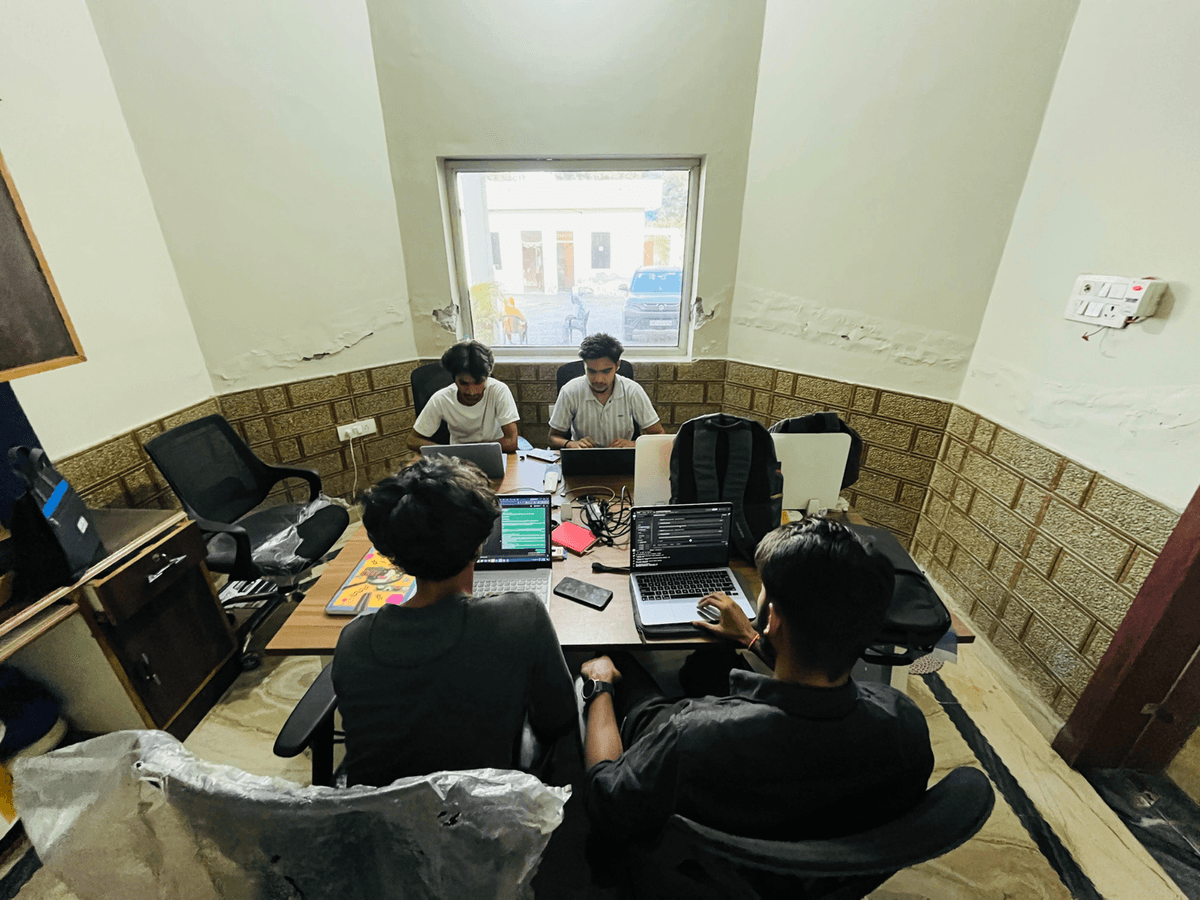
When Abomed's founders approached us in early 2026, they had a clear vision: revolutionize medicine delivery in India by making prescription drugs accessible within 30 minutes. What they didn't have was the technical roadmap to handle complex pharmacy logistics, prescription validation, and real-time inventory management across multiple cities.
Fast-forward eight months, and Abomed now processes over 10,000 medicine orders monthly across Delhi NCR, with a 95% on-time delivery rate and 4.8-star user rating. This medicine delivery app development case study reveals exactly how we built a scalable healthcare platform that's transforming how Indians access essential medications.
The Challenge: Building Trust in Digital Medicine Delivery
Medicine delivery isn't just another e-commerce vertical. When Abomed's team shared their market research, the challenges were immediately clear:
Regulatory Compliance: Every prescription had to be validated by licensed pharmacists. Invalid prescriptions couldn't just be declined — they needed proper documentation for regulatory audits.
Inventory Complexity: Unlike regular products, medicines have batch numbers, expiry dates, and temperature storage requirements. A single medicine might have 15 different variants based on strength and manufacturer.
Time-Critical Delivery: Emergency medicine requests couldn't wait for next-day delivery. The app needed to optimize delivery routes in real-time while maintaining medicine integrity.
Trust Factor: Users were hesitant to upload prescription photos to unknown apps. We needed to build credibility from day one.
At Xenotix Labs, we've shipped 33+ production apps, but healthcare logistics presented unique technical challenges we hadn't encountered in our previous e-commerce builds.
Our Technical Approach: Flutter + Node.js + Smart Architecture
After analyzing Abomed's requirements, we recommended a tech stack optimized for rapid development and future scaling:
Frontend: Flutter for both iOS and Android apps, with a single codebase reducing development time by 40%. The real-time order tracking and pharmacy dashboard also used Flutter Web.
Backend: Node.js with Express.js for API development. We chose Node.js because Abomed needed real-time features — order tracking, delivery updates, and pharmacy notifications — where Node's event-driven architecture excels.
Database: PostgreSQL for structured data (orders, prescriptions, inventory) with Redis for caching frequently accessed medicine catalogs and user sessions.
Cloud Infrastructure: AWS with EC2 for compute, S3 for prescription image storage, and CloudFront for fast medicine image loading across India.
The architecture decision wasn't just about technology — it was about speed to market. Abomed needed to launch within six months to secure their Series A funding.
Thinking About Building a Healthcare App?
We've shipped 33+ production apps for Indian startups. Get a free estimate in 24 hours — no commitment, just clarity on cost, timeline, and tech stack.
Implementation Deep Dive: Solving Complex Healthcare Logistics
Challenge 1: Prescription Validation System
The biggest technical hurdle was building a system that could process prescription images, extract medicine names, and validate them against our inventory — all while maintaining HIPAA-equivalent privacy standards.
Our solution combined AI with human oversight:
- OCR Integration: We integrated Google Cloud Vision API to extract text from prescription images with 89% accuracy
- Medicine Matching Algorithm: Built a fuzzy matching system that could identify medicines even with doctor handwriting variations
- Pharmacist Dashboard: Created a real-time validation interface where licensed pharmacists could review and approve prescriptions within 3 minutes
- Audit Trail: Every prescription validation was logged with timestamps and pharmacist IDs for regulatory compliance
The result? Prescription processing time dropped from 15 minutes (manual) to 3 minutes (AI-assisted), while maintaining 100% pharmacist verification.
Challenge 2: Real-Time Inventory Management
Managing medicine inventory across multiple pharmacy partners required a sophisticated system. Each partner had different inventory management practices, but users needed accurate stock information instantly.
We built a distributed inventory system:
- Partner API Integration: Created standardized APIs that integrated with 8 different pharmacy management systems
- Real-Time Sync: Inventory updates pushed to our system every 30 seconds using webhooks
- Smart Routing: Algorithm that checked availability across nearby pharmacies and selected the fastest delivery option
- Buffer Management: System that accounted for medicines already in delivery queues to prevent overselling
Challenge 3: Delivery Optimization
30-minute medicine delivery isn't just a marketing promise — it's often medically critical. We needed delivery optimization that prioritized urgency while maintaining profitability.
Our delivery algorithm considered:
- Medicine Criticality: Emergency medicines (insulin, heart medications) got priority routing
- Geographic Clusters: Batched deliveries in the same area to optimize delivery partner routes
- Traffic Patterns: Integrated Google Maps API for real-time traffic data
- Partner Availability: Dynamic assignment based on delivery partner location and capacity
The system reduced average delivery time from 45 minutes to 28 minutes while increasing delivery partner efficiency by 35%.
Key Technical Solutions That Made the Difference
Smart Caching Strategy
Medicine searches needed to be instant, but with 50,000+ SKUs, database queries were slow. We implemented a three-tier caching strategy:
- Redis Cache: Most searched medicines cached in memory for sub-100ms response times
- CDN Caching: Medicine images and descriptions cached on CloudFront edge locations
- Application Cache: User's frequent medicines cached locally in the app
Progressive Web App for Pharmacists
Pharmacy partners needed to manage orders on desktop and mobile. Instead of building separate applications, we created a Flutter Web PWA that worked seamlessly across devices. This reduced our development timeline by 3 months.
Microservices Architecture
As Abomed grew from 100 to 10,000 monthly orders, we migrated from a monolith to microservices:
- Order Service: Handled order creation, modification, and tracking
- Inventory Service: Managed stock levels across pharmacy partners
- Delivery Service: Optimized routing and partner assignment
- Notification Service: Managed SMS, push notifications, and emails
This architecture allowed different teams to deploy independently and scale services based on load.
Results: From Idea to 10K Monthly Orders
Eight months post-launch, Abomed's metrics exceeded all projections:
User Adoption:
- 50,000+ app downloads in first 6 months
- 68% month-over-month user growth
- 4.8-star rating on Play Store and App Store
- 85% prescription approval rate within 5 minutes
Operational Metrics:
- 10,000+ monthly orders processed
- 95% on-time delivery rate (under 30 minutes)
- ₹2.5 crore GMV in first 8 months
- 15 pharmacy partners across Delhi NCR
Technical Performance:
- 99.9% app uptime during peak hours
- Average API response time: 150ms
- Zero prescription data breaches
- App crashes reduced to 0.1% of sessions
The success attracted Series A investors, with Abomed raising ₹8 crores in funding by December 2026.
Ready to Build? Let's Talk.
Xenotix Labs turns startup ideas into production apps — fast. From MVP to scale, we've done it 33+ times. Schedule a free consultation or get your project estimate.
Lessons Learned: What Other Healthcare Startups Can Take Away
Start with Compliance, Build for Scale
We spent 30% of development time on regulatory compliance and security. This wasn't overhead — it was investment. When Abomed needed ISO 27001 certification for enterprise clients, our security-first architecture made the process seamless.
AI Should Augment, Not Replace Human Expertise
Our prescription validation system works because it combines AI efficiency with pharmacist expertise. Pure automation would have missed edge cases, while pure manual processing wouldn't have scaled.
Partner Integration Is Product Strategy
Building APIs that integrated with existing pharmacy systems, rather than forcing partners to learn new software, was crucial for partner acquisition. This technical decision became a business advantage.
Performance Optimization Is User Experience
In healthcare, speed isn't just convenience — it's often medical necessity. Our caching and optimization strategies directly translated to user satisfaction and retention.
Technical Architecture: The Foundation of Success
For founders considering mobile app development in healthcare, here's our technical stack breakdown:
Frontend Development:
- Flutter 3.5 for cross-platform mobile apps
- Flutter Web for pharmacy partner dashboard
- State management using Provider pattern
- Local database: Hive for offline prescription storage
Backend Infrastructure:
- Node.js with Express.js framework
- PostgreSQL for transactional data
- Redis for session management and caching
- AWS S3 for prescription image storage with encryption
Third-Party Integrations:
- Google Cloud Vision for OCR processing
- Twilio for SMS notifications
- Razorpay for payment processing
- Google Maps for delivery optimization
- Firebase for push notifications
Scaling Challenges and Solutions
Database Optimization at Scale
As order volume grew, our initial database queries started slowing down. We implemented several optimizations:
- Database Indexing: Created composite indexes on frequently queried columns (medicine_id, pharmacy_id, order_date)
- Query Optimization: Replaced N+1 queries with efficient joins, reducing API response times by 60%
- Read Replicas: Separated read and write operations using PostgreSQL read replicas
- Connection Pooling: Implemented connection pooling to handle concurrent user requests efficiently
Image Processing Pipeline
Processing prescription images became a bottleneck as uploads increased. Our solution:
- Asynchronous Processing: Moved OCR processing to background queues using Bull Queue
- Image Compression: Automatically compressed uploaded images while maintaining readability
- CDN Distribution: Served processed images from CloudFront for faster loading
- Backup Storage: Implemented automated backup of prescription images for regulatory compliance
Security and Privacy Implementation
Healthcare apps handle sensitive data, requiring robust security measures:
Data Encryption: All prescription images encrypted at rest using AES-256. Personal health information encrypted in database columns.
API Security: Implemented JWT token authentication with refresh token rotation. Rate limiting to prevent API abuse.
Network Security: All communications encrypted with TLS 1.3. VPC setup on AWS with private subnets for database access.
Audit Logging: Comprehensive logs of all prescription access, modifications, and deletions for regulatory compliance.
User Experience Decisions That Drove Adoption
Simplified Prescription Upload
Instead of forcing users to crop prescription images perfectly, we built smart image detection that automatically identified prescription boundaries and extracted relevant sections. This reduced user friction by 40%.
Transparent Delivery Tracking
Real-time GPS tracking wasn't enough. We added delivery partner photos, estimated arrival times updated every minute, and proactive delay notifications. User satisfaction scores increased from 4.2 to 4.8 stars after implementing these features.
Smart Medicine Recommendations
Built a recommendation engine that suggested generic alternatives for prescribed brands, helping users save up to 60% on medicine costs. This became a key differentiator against competitors.
The Technology Decisions That Paid Off
Looking back at our AI development and architecture choices, several decisions were crucial to Abomed's success:
Flutter for Cross-Platform: Single codebase reduced development time by 40% and ensured feature parity across iOS and Android. With limited development time, this was crucial.
Node.js for Real-Time Features: The event-driven architecture handled real-time order updates, delivery tracking, and pharmacy notifications efficiently. Perfect for Abomed's use case.
PostgreSQL for Complex Queries: Healthcare data requires complex relationships and ACID compliance. PostgreSQL's advanced querying capabilities were essential for inventory management and reporting.
Microservices Migration: Started with a monolith for faster MVP development, then migrated to microservices as scale demanded. This pragmatic approach balanced speed with scalability.
Future Roadmap: What's Next for Abomed
Based on our ongoing partnership with Abomed, here's what's planned for 2026:
- AI-Powered Health Insights: Machine learning models to predict medication refill needs and health pattern analysis
- Telemedicine Integration: Direct consultation with doctors within the app, with prescriptions automatically processed
- Expansion to Tier-2 Cities: Scaling the delivery network to 50+ cities across India
- B2B Corporate Wellness: Enterprise solution for employee health benefits
The foundation we built supports these ambitious expansion plans without major architectural changes.