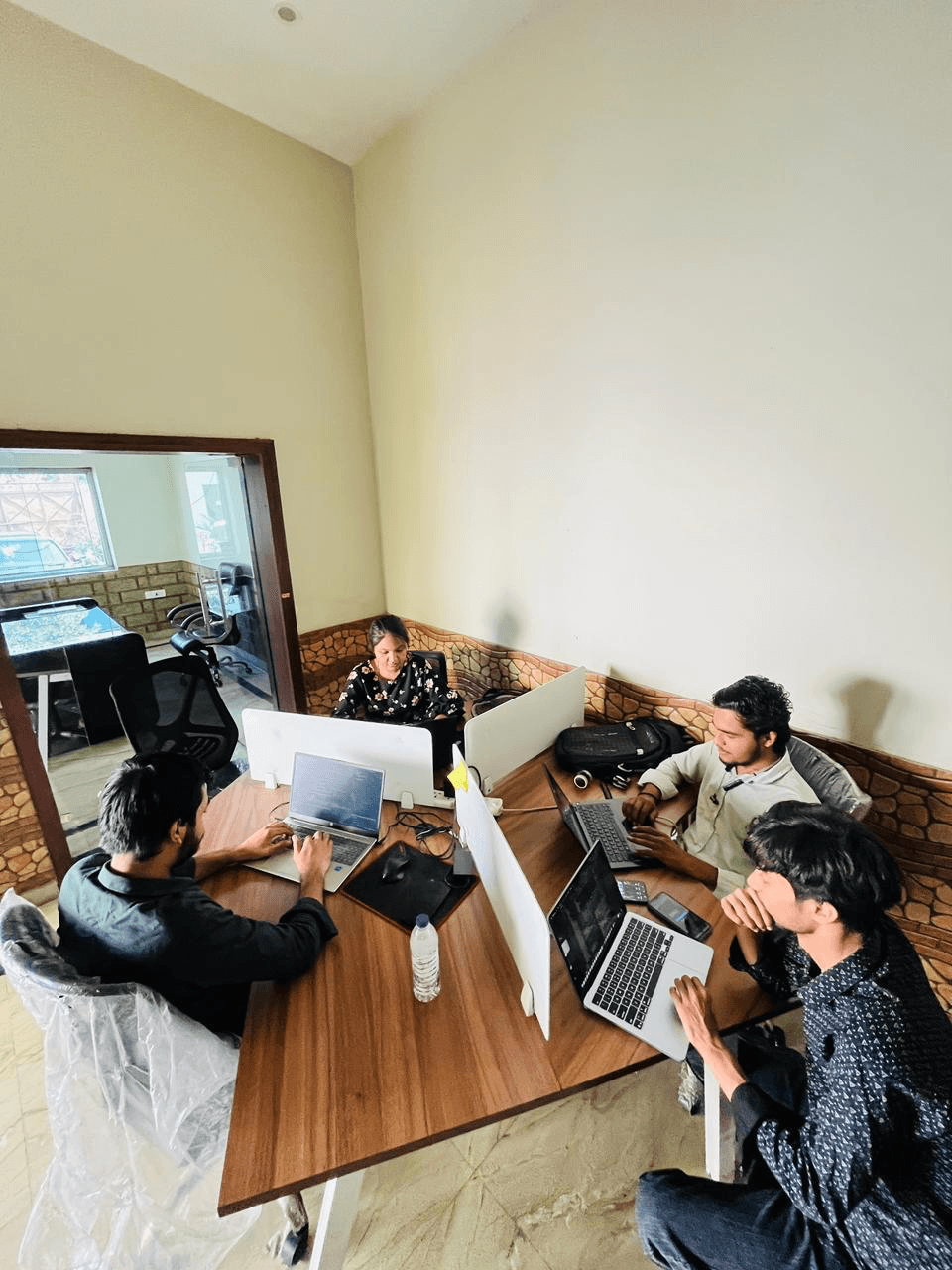
meet the humans who built this →

Frontend Team · UI & Interactions
F

Frontend Team · UI & Interactions

Backend Team · APIs & Infrastructure
B

Backend Team · APIs & Infrastructure

Design Team · UX & Visual Design
D

Design Team · UX & Visual Design

DevOps Team · CI/CD & Deployment
D

DevOps Team · CI/CD & Deployment

QA Team · Testing & Quality
Q

QA Team · Testing & Quality

Unheard Spaces – Anonymous Emotional Listening Platform | Xenotix

Unheard Spaces – Anonymous Emotional Listening Platform | Xenotix

this crew shipped Unheard Spaces – Anonymous Emotional Listening Platform | Xenotix in 10 weeks

Screenshot 1
Screenshot 2
Screenshot 3
Screenshot 4
Screenshot 5
Screenshot 6
Screenshot 7
Screenshot 8

Unheard Spaces – Anonymous Emotional Listening Platform | Xenotix

Unheard Spaces is a safe and anonymous emotional support platform designed to help people express themselves through voice, chat, or private journaling. Built with a calm, human-centered experience, the platform focuses on emotional safety, privacy, and meaningful listening without judgment, pressure, or social exposure.

·For Dheer B Singh··10 Weeks·76 Min Read·15,107 Words
AppAdmin DashboardUI/UX DesignSafe Space PlatformEmotional Support AppVoice Session App
Unheard Spaces – Anonymous Emotional Listening Platform | Xenotix

The Brief.

Unheard Spaces is a safe and anonymous emotional support platform designed to help people express themselves through voice, chat, or private journaling. Built with a calm, human-centered experience, the platform focuses on emotional safety, privacy, and meaningful listening without judgment, pressure, or social exposure.

Project Overview

Unheard Spaces is a thoughtfully designed emotional listening platform created to provide people with a safe, anonymous, and non-judgmental space to express themselves. The platform was envisioned as a calm digital environment where users can speak openly, write privately, or connect with listeners without the pressure of social identity, public visibility, or emotional performance. Unlike traditional social or mental wellness applications, Unheard Spaces focuses on human presence, emotional safety, and respectful listening rather than advice, diagnosis, or engagement-driven interactions.

The project was designed around a privacy-first and emotionally grounded experience. Users, referred to as “Sharers,” can choose between three expression modes — Voice Sessions, Chat Sessions, and Private Journaling. Each flow was carefully structured to reduce emotional pressure and cognitive load while maintaining a sense of control and comfort. The platform avoids aggressive notifications, gamification, performance metrics, and emotionally manipulative patterns commonly found in modern applications.

A major focus of the project was designing for psychological safety. From onboarding to live sessions, every screen was created with calming layouts, soft visual hierarchy, minimal distractions, and reassuring microcopy. The user journey emphasizes emotional continuity, allowing users to move naturally from grounding, expression, matching, and session closure without feeling transactional or rushed. Even monetization flows were intentionally designed to appear only after emotional closure, ensuring that support never feels commercialized.

The platform also includes a dedicated Listener experience. Listeners are not positioned as experts or therapists but as emotionally mature individuals providing a supportive presence. Their onboarding journey includes intent verification, ethical pledges, orientation modules, certification gates, and safety-focused controls. Listener dashboards prioritize wellbeing and burnout prevention through pause controls, soft-hold systems, and mandatory post-session reset flows.

Accessibility and inclusivity were also central to the design process. The app supports multiple languages, voice guidance, screen-reader compatibility, and simplified navigation to ensure a comfortable experience for users with different needs and comfort levels. The visual system uses soft gradients, rounded components, neutral tones, and spacious layouts to create a peaceful and welcoming atmosphere.

From a UI/UX perspective, the project focused heavily on emotional interaction design, ethical product thinking, accessibility, and trust-building experiences. Every interface decision was aligned with the platform’s core philosophy: creating a quiet digital space where people can feel heard without fear of judgment, pressure, or permanence.

Unheard Spaces represents a modern approach to emotional support technology — one that prioritizes empathy, privacy, dignity, and human connection through intentional design.

CLIENT

Company

Unheard Spaces

Industry

Other

Type

App, Admin Dashboard, UI/UX Design

the build log →

Day 07

The Client & Their Vision

The Client & Their Vision

The vision behind Unheard Spaces was rooted in a simple yet deeply meaningful idea — creating a digital environment where people could express themselves honestly without fear of judgment, pressure, or exposure. The client wanted to build more than just another chat or wellness application. Their goal was to create a calm and emotionally safe platform where individuals could feel heard through presence and listening rather than advice, performance, or social validation.

From the very beginning, the client emphasized that Unheard Spaces should not resemble a traditional mental health app, social media platform, or productivity-driven wellness product. They wanted the experience to feel quiet, respectful, and human. The core philosophy centered around emotional expression without identity pressure. Users would not be required to build public profiles, share personal histories, or maintain streaks and activity metrics. Instead, the platform would focus on anonymity, emotional safety, and meaningful listening.

The client identified a growing issue within modern digital communication platforms — people often have spaces to speak, but very few spaces where they genuinely feel heard. Most existing platforms encourage engagement through reactions, likes, follower systems, or algorithm-driven interactions, which can make emotional conversations feel performative. The client envisioned an alternative experience where conversations remained private, temporary, and emotionally grounded.

One of the key ideas introduced during the discovery phase was the concept of “presence over fixing.” The platform was intentionally designed so that listeners would not act as therapists, advisors, or problem-solvers. Instead, listeners would provide a supportive human presence by listening respectfully and allowing sharers to express themselves freely. This distinction became one of the defining principles of the product and heavily influenced the overall user experience, interface design, onboarding process, and safety systems.

The client also wanted to ensure that the platform avoided emotionally manipulative design patterns. Many modern applications rely on urgency, engagement loops, gamification, and monetization tactics that create pressure on users. Unheard Spaces aimed to move in the opposite direction. The product would not include streak systems, public ratings, social popularity metrics, aggressive reminders, or emotionally triggering notifications. Every interaction needed to feel calm, intentional, and respectful of the user’s emotional state.

Privacy and trust were another major pillar of the client’s vision. The platform was designed with anonymity at its core. Conversations would not be publicly visible, journal entries would not be permanently stored, and sessions would not be recorded. Even the monetization strategy was approached carefully to ensure that emotional support never felt transactional or exploitative. The client specifically wanted payment interactions to happen only after emotional closure, allowing users to make decisions calmly rather than during emotionally vulnerable moments.

Another important part of the client’s vision was inclusivity and accessibility. The platform needed to feel welcoming to people from different backgrounds, comfort levels, and communication preferences. Users would be able to choose between voice conversations, chat-based sessions, or private journaling depending on how they felt most comfortable expressing themselves. Accessibility features such as language selection, screen-reader compatibility, voice guidance, and simplified navigation were included to make the experience more inclusive and adaptable.

The listener ecosystem was also designed with great care. The client wanted listeners to feel supported and protected rather than treated like customer service agents or gig workers. This led to the implementation of ethical onboarding flows, listener pledges, orientation modules, certification checks, and burnout prevention systems. Features such as pause controls, soft-hold systems, and mandatory post-session reset flows were introduced to prioritize listener wellbeing and maintain healthy engagement within the platform.

From a design perspective, the client envisioned an interface that visually reflected calmness and emotional safety. The UI direction focused on soft gradients, muted colors, rounded layouts, spacious composition, and minimal distractions. The interface needed to feel approachable and emotionally lightweight while still maintaining a modern and polished appearance. Every interaction, transition, and piece of microcopy was expected to reinforce trust and emotional comfort.

Throughout the project, the client remained highly focused on ethical product thinking. Decisions were consistently evaluated not only from a usability perspective but also from an emotional and psychological perspective. The goal was not simply to increase engagement or retention but to create a product experience that respected users’ emotional boundaries and personal agency.

Ultimately, the client’s vision for Unheard Spaces was to build a digital sanctuary where people could pause, express themselves honestly, and feel supported through human listening rather than performance-driven interaction. The platform represents a new direction in emotional support technology — one that values privacy, empathy, accessibility, and dignity at every stage of the user journey.

Screenshot 2026-05-21 161432.png
S

Screenshot 2026-05-21 161432.png

Day 14

Problem Statement & Challenges

Problem Statement & Challenges

In today’s digital world, people are more connected than ever, yet emotional isolation continues to grow rapidly. Most communication platforms encourage constant interaction, sharing, and visibility, but very few truly provide a safe environment where individuals can express themselves honestly without fear of judgment, exposure, or pressure. This gap became the foundation of the Unheard Spaces project.

The primary problem identified by the client was that existing platforms often fail to create emotionally safe environments for vulnerable conversations. Social media platforms are built around visibility and engagement, while many wellness platforms unintentionally become clinical, transactional, or overly therapeutic in nature. Users who simply want to speak, vent, reflect, or feel heard are frequently left navigating environments filled with distractions, algorithms, performance metrics, or emotional expectations.

Unheard Spaces was conceptualized to solve this problem by creating a privacy-first emotional listening platform where users could express themselves anonymously through voice, chat, or journaling. However, designing such a platform introduced several complex challenges across user experience, emotional psychology, ethical design, accessibility, privacy, and system architecture.

One of the biggest challenges was designing for emotional safety without making the product feel clinical or therapeutic. The platform intentionally avoids positioning itself as therapy, counseling, or crisis intervention. This created a delicate balance in the product language and interface design. The experience needed to feel emotionally supportive while also clearly communicating boundaries. Every screen, interaction, and microcopy element had to reinforce that listeners were present to listen, not diagnose or provide professional advice.

Another major challenge was maintaining anonymity while still enabling trust and accountability. Most digital platforms build trust through identity, profiles, ratings, and social proof. Unheard Spaces intentionally removed many of these conventional systems. There are no public profiles, no follower systems, no social metrics, and no visible ratings. While this supported privacy and emotional comfort, it also required the design team to rethink how reassurance, credibility, and safety could be communicated through interface behavior, onboarding, and interaction patterns rather than identity-based validation.

The onboarding flow itself became a significant design challenge. Traditional onboarding experiences focus on efficiency and conversion, but this product required emotional pacing. Users entering the platform could already be emotionally vulnerable, overwhelmed, anxious, or mentally exhausted. As a result, the onboarding process had to feel calm, respectful, and emotionally lightweight. Instead of aggressive prompts or feature-heavy introductions, the onboarding journey focused on reassurance, clarity, consent, and emotional grounding.

Another critical challenge involved the balance between emotional continuity and monetization. The platform includes paid continuation options for voice and chat sessions, but monetization needed to feel ethical and non-exploitative. Modern digital products often interrupt emotional experiences with payment walls, urgency messaging, or conversion tactics. For Unheard Spaces, this approach would directly conflict with the platform’s philosophy. The challenge was to design a continuation system that respected the user’s emotional state while still supporting the platform’s operational sustainability.

To solve this, monetization was intentionally delayed until after emotional closure. Users first see a calm emotional bridge screen after a session ends rather than a pricing or wallet interface. Only after the user chooses to continue does the payment flow appear. This design decision required careful restructuring of the session lifecycle and introduced additional UX complexity around session continuity, listener availability, and reconnection logic.

Another challenge emerged in the design of the listener ecosystem. Unlike typical support or marketplace platforms, listeners on Unheard Spaces are not treated as service providers competing for ratings, visibility, or financial incentives. The client wanted listeners to feel emotionally protected and ethically supported. This meant avoiding dashboards that promoted performance pressure, earnings competition, or session quotas.

Designing the listener experience therefore required a completely different philosophy. Listener onboarding included ethical pledges, orientation flows, certification checks, and safety preparation modules. The platform also introduced mandatory post-session reset systems to reduce emotional fatigue and burnout. Creating these flows without making the experience feel clinical or emotionally invasive was a significant challenge.

The “purging” and listener reset system became one of the most unique UX challenges within the project. After every session, listeners are required to complete a lightweight emotional reset before returning to availability. However, the system was intentionally designed not to store emotional reflections, qualitative text, or emotional analytics. The interface needed to feel operational rather than therapeutic. This required designing emotionally neutral flows that still encouraged healthy pacing and self-awareness without becoming a mental health tracking system.

Accessibility and inclusivity introduced another layer of complexity. Since the platform was intended for a broad range of users, including individuals who may prefer voice guidance, screen readers, or larger text experiences, the design system needed to support accessibility from the beginning rather than treating it as a secondary enhancement. The challenge was to integrate accessibility features in a way that felt natural and empowering instead of technical or medicalized.

Language selection and accessibility setup flows were therefore designed using inclusive, feature-focused language. Instead of labeling users by disabilities or limitations, the platform emphasized comfort and preference. This subtle design decision helped maintain dignity and emotional neutrality throughout the experience.

Privacy and data retention policies also created substantial product design and technical constraints. The platform was intentionally built around ephemerality. Voice conversations are not recorded, chat content is not retained, and journal entries are deleted immediately after session closure. This introduced challenges in areas such as continuity, analytics, moderation, and user trust.

Most modern platforms rely heavily on stored user behavior and historical data to personalize experiences, generate insights, or improve engagement. Unheard Spaces intentionally avoided emotional profiling, behavioral scoring, and stored conversation histories. As a result, many conventional UX patterns had to be redesigned from the ground up. The product needed to communicate trust and reliability while collecting as little emotional data as possible.

Another challenge involved preventing the platform from unintentionally encouraging emotional dependency. Many emotional support platforms create strong reliance loops by constantly encouraging users to return, continue sessions, or engage with support systems. The client specifically wanted to avoid this pattern. Features such as urgency notifications, endless session prompts, emotional streaks, or dependency-based retention mechanisms were intentionally excluded.

This philosophy also influenced the session scheduling and matching experience. Scheduling was designed around soft availability windows rather than fixed commitments. Listeners were not pre-assigned, and the system emphasized flexibility over obligation. Designing this interaction while still maintaining clarity and reducing uncertainty required thoughtful UX communication and matching logic.

The project also faced the challenge of creating emotional warmth without overwhelming visual design. Since users may already be emotionally overloaded, the interface needed to remain visually lightweight and psychologically breathable. This influenced decisions around spacing, typography, colors, motion design, and information density. Soft gradients, rounded components, muted palettes, and minimal interface clutter became essential parts of the overall visual language.

Another important challenge was defining what the platform should deliberately exclude. During the strategy and UX planning phase, many conventional product features were intentionally rejected because they conflicted with the product philosophy. Features such as public reviews, social feeds, listener leaderboards, AI-generated emotional analysis, chat histories, emotional analytics dashboards, and gamification systems were consciously avoided. Designing a compelling platform while removing many of the engagement patterns common in modern applications required a highly intentional product design approach.

Ultimately, the biggest challenge throughout the project was balancing technology with emotional ethics. Every feature needed to answer not only functional questions but also emotional and psychological ones. The design process constantly evaluated whether an interaction respected the user’s dignity, emotional state, privacy, and autonomy.

Unheard Spaces is not simply a communication platform. It is an exercise in ethical digital experience design. The project challenged conventional assumptions about engagement, monetization, support systems, and emotional interaction within technology. By prioritizing emotional safety, privacy, accessibility, and intentional simplicity, the platform represents a thoughtful alternative to the overstimulating and performance-driven environments that dominate most digital experiences today.

Project visual 2
Day 21

Our Approach & Methodology

Our Approach & Methodology

Designing Unheard Spaces required far more than creating an aesthetically pleasing mobile application. The project demanded a deeply intentional and ethically grounded design methodology focused on emotional safety, privacy, accessibility, and calm human interaction. From the earliest discovery sessions to the final UI systems, every design decision was evaluated through the lens of emotional impact rather than just functionality or engagement metrics.

Our approach centered around one core principle:

Technology should create space for emotional expression without pressure, performance, or exploitation.

This philosophy shaped the entire product strategy, user journey architecture, interaction design, accessibility systems, and visual language of the platform.

The methodology followed for Unheard Spaces combined human-centered UX design, ethical product thinking, accessibility-first planning, and emotional interaction design to create an experience that feels safe, respectful, and psychologically lightweight.


1. Discovery & Product Understanding

The project began with extensive discovery sessions focused on understanding the client’s vision, user intent, emotional context, and ethical boundaries. Unlike traditional app projects where business goals are usually centered around retention, conversion, or monetization, this product required a fundamentally different mindset.

The client made it clear from the beginning that Unheard Spaces was not intended to become:

  • A social network

  • A therapy platform

  • A productivity tool

  • A gig marketplace

  • A performance-driven wellness app

Instead, the platform needed to become a calm digital environment where users could:

  • Speak anonymously

  • Feel emotionally safe

  • Be heard without judgment

  • Express themselves privately

  • Leave anytime without pressure

This initial discovery phase helped define the emotional architecture of the product before any interface design began.

We identified four foundational pillars that guided the entire project:

• Emotional Safety

Every interaction should reduce emotional pressure rather than increase it.

• Privacy First

The product should minimize emotional data collection and avoid unnecessary retention.

• Presence Over Performance

The platform should focus on listening and human presence rather than metrics, engagement, or productivity.

• Ethical Monetization

Payment flows should never interrupt vulnerable emotional moments.

These principles became the framework for every UX and UI decision throughout the project lifecycle.


2. User Journey Mapping

Once the foundational philosophy was established, we moved into detailed user journey mapping for both primary roles within the platform:

  • Sharer

  • Listener

Unlike conventional applications where journeys are mostly task-driven, the journeys in Unheard Spaces were emotionally driven.

This meant that we mapped:

  • Emotional states

  • Cognitive load

  • Anxiety points

  • Trust moments

  • Vulnerability transitions

  • Exit comfort

At every stage of the flow.

For example, we identified that users entering the platform may already be:

  • Overwhelmed

  • Emotionally exhausted

  • Hesitant

  • Anxious

  • Unsure whether to speak

As a result, we intentionally avoided aggressive onboarding patterns, feature-heavy introductions, or overwhelming dashboard experiences.

Instead, the flows were designed to feel gradual, quiet, and emotionally breathable.


3. Designing Emotional Continuity

One of the most important aspects of our methodology was preserving emotional continuity throughout the user journey.

Most digital products interrupt user experiences with:

  • Popups

  • Notifications

  • Upsell prompts

  • Performance dashboards

  • Complex navigation

For Unheard Spaces, these interruptions would directly conflict with the emotional nature of the platform.

To solve this, we designed the experience as a linear emotional progression rather than a feature-based application structure.

The Sharer journey followed a calm sequence:

Emotional Grounding → Expression Choice → Safety Framing → Login → Matching → Session → Closure → Optional Continuation

Each transition was intentionally softened using:

  • Gentle microcopy

  • Minimal visual distractions

  • Smooth motion design

  • Clear reassurance language

  • Spacious layouts

This methodology helped maintain emotional stability throughout the experience.


4. Ethical UX Decision-Making

A defining characteristic of the project was the use of ethical UX evaluation during every major design decision.

Instead of asking only:

“Is this usable?”

We continuously asked:

“How does this interaction emotionally affect the user?”

This shifted many traditional product decisions.

For example:

Traditional Product Pattern

Show monetization immediately after session completion.

Ethical UX Decision

Introduce emotional closure first before discussing continuation or payment.

Similarly:

Traditional Product Pattern

Use countdown timers and urgency messaging.

Ethical UX Decision

Use calm session transition language without creating pressure.

This methodology helped ensure that the product remained emotionally respectful rather than engagement-driven.


5. Information Architecture Simplification

Another major focus of our methodology was reducing cognitive overload.

Emotionally vulnerable users often struggle with:

  • Decision fatigue

  • Information processing

  • Complex navigation

  • Overstimulating interfaces

To address this, we simplified the platform architecture significantly.

We intentionally reduced:

  • Excessive menu systems

  • Deep navigation layers

  • Overloaded dashboards

  • Feature clutter

  • Visual noise

The MVP experience focused only on essential actions:

  • Talk

  • Chat

  • Journal

  • Pause

  • Continue

  • Exit

This reductionist approach created a calmer and more approachable user experience.


6. Accessibility-First Design

Accessibility was integrated from the beginning rather than added as an afterthought.

The platform supports users with varying communication preferences and accessibility needs through:

  • Voice guidance

  • Screen-reader compatibility

  • Larger text support

  • Multi-language support

  • Simplified navigation

  • High-contrast readability

However, an important part of our methodology was ensuring that accessibility never felt clinical or isolating.

Instead of labeling users through disability-focused language, we used preference-focused communication such as:

  • “Voice guidance”

  • “Larger text”

  • “Choose what makes you comfortable”

This subtle but important decision reinforced dignity and inclusivity throughout the experience.


7. Human-Centered Microcopy Strategy

The writing system inside Unheard Spaces played a major role in the emotional experience.

We developed a dedicated microcopy framework focused on:

  • Calmness

  • Neutrality

  • Emotional reassurance

  • Non-judgmental communication

The platform intentionally avoids:

  • Motivational pressure

  • Toxic positivity

  • Clinical terminology

  • Engagement-driven wording

  • Emotional manipulation

Examples include:

  • “You can leave anytime.”

  • “Nothing is recorded.”

  • “This space is here when you’re ready.”

These small language decisions helped reinforce emotional trust at every interaction point.


8. Designing for Privacy & Ephemerality

One of the most technically and ethically unique aspects of the project was designing around temporary emotional expression.

The platform intentionally avoids:

  • Storing journals permanently

  • Recording voice sessions

  • Maintaining emotional transcripts

  • Building emotional analytics profiles

This required us to rethink many common UX assumptions.

Most platforms rely on:

  • History

  • Saved conversations

  • Personalized behavior tracking

  • Emotional analytics

Unheard Spaces intentionally minimized these systems.

The methodology focused on:

  • Ephemeral experiences

  • Temporary emotional presence

  • Minimal emotional data retention

  • Trust through transparency

This created a fundamentally different relationship between the user and the product.


9. Listener Experience Methodology

Designing the Listener experience required a completely different approach compared to standard support or marketplace platforms.

Listeners were not positioned as:

  • Experts

  • Therapists

  • Coaches

  • Gig workers

Instead, they were framed as emotionally mature participants offering presence and listening.

To support this philosophy, the Listener journey included:

  • Intent verification

  • Ethical pledges

  • Orientation modules

  • Certification checks

  • Controlled activation systems

We also introduced burnout prevention systems including:

  • Pause controls

  • Session reset flows

  • Soft-hold logic

  • Purging interactions

  • Auto-pause mechanisms

These systems were designed operationally rather than therapeutically.

The goal was:

  • Prevent emotional exhaustion

  • Maintain listener wellbeing

  • Reduce emotional carryover

  • Encourage healthy pacing

Without creating surveillance or emotional scoring systems.


10. Visual Design Methodology

The visual system for Unheard Spaces was intentionally designed to feel emotionally lightweight.

Our UI methodology focused on:

  • Soft gradients

  • Rounded geometry

  • Muted color palettes

  • Spacious layouts

  • Reduced visual density

  • Calm interaction rhythms

We avoided:

  • Bright attention-grabbing colors

  • Gamified visuals

  • High-pressure notifications

  • Excessive motion

  • Competitive UI patterns

Typography was chosen for readability and warmth, while spacing systems were designed to create visual breathing room.

Animations remained subtle and functional:

  • Fade transitions

  • Soft slide-ins

  • Gentle state changes

Nothing in the interface was designed to create urgency or overstimulation.


11. Iterative Validation & Flow Refinement

As the project evolved, we continuously reviewed and refined flows against the platform’s emotional philosophy.

Several UX decisions were intentionally revised during the process, including:

  • Removing immediate post-login dashboards

  • Reducing monetization visibility

  • Simplifying continuation flows

  • De-emphasizing wallet systems

  • Softening matching interactions

This iterative process ensured that the product remained aligned with its emotional and ethical objectives rather than drifting toward conventional engagement-driven patterns.


12. MVP-Focused Execution Strategy

Since the project was being developed as an MVP, prioritization became extremely important.

Rather than overbuilding features, we focused on:

  • Emotional clarity

  • Stability

  • Core listening flows

  • Ethical interaction systems

  • Trust-building experiences

Many potential features were intentionally postponed, including:

  • Advanced analytics

  • AI emotional summaries

  • Social features

  • Community systems

  • Performance dashboards

This helped maintain product simplicity and philosophical consistency during the initial release phase.


Conclusion

Our approach to designing Unheard Spaces was rooted in intentional simplicity, emotional ethics, and human-centered design thinking. Every part of the methodology focused on creating a platform that respects vulnerability, prioritizes dignity, and reduces emotional pressure rather than exploiting it.

Instead of optimizing for endless engagement or aggressive monetization, the project prioritized:

  • Emotional safety

  • Calm interaction

  • Privacy

  • Accessibility

  • Ethical UX

  • Human presence

The result is a thoughtfully designed emotional listening platform that challenges conventional digital product patterns and demonstrates how technology can support people in quieter, more respectful, and emotionally responsible ways.

Screenshot 2026-05-21 161518.png
S

Screenshot 2026-05-21 161518.png

Day 28

Design Process — Figma to Production

Design Process — Figma to Production

Designing Unheard Spaces required a highly intentional and emotionally aware design process that extended far beyond conventional mobile application workflows. The project was not simply about building screens or creating attractive visuals — it involved translating complex emotional principles into a functional, scalable, and production-ready digital experience.

From early wireframes in Figma to developer-ready design systems and interaction logic, every phase of the process focused on preserving emotional safety, privacy, clarity, and calmness. The transition from concept to production required continuous collaboration between UX thinking, UI systems, interaction design, accessibility planning, and technical implementation.

The overall process followed a structured progression:

Research & UX Strategy → User Flows → Wireframing → Emotional Interaction Design → UI System Creation → Prototyping → Developer Handoff → Production Refinement

Each stage played a critical role in shaping the final product experience.


1. UX Discovery & Flow Architecture

Before any visual design work began, the first step involved understanding the emotional and behavioral structure of the platform.

Unlike traditional products where journeys are primarily feature-based, Unheard Spaces required emotionally driven user flow planning. The platform needed to account for:

  • Emotional vulnerability

  • Anxiety reduction

  • Trust-building

  • Psychological pacing

  • Ethical transitions

  • Non-transactional interactions

This meant the UX architecture was designed around emotional continuity rather than application complexity.

Two primary user roles were mapped:

  • Sharers

  • Listeners

Each role required a completely different interaction philosophy.

The Sharer journey focused on:

  • Expression

  • Comfort

  • Safety

  • Emotional control

The Listener journey focused on:

  • Presence

  • Boundaries

  • Burnout prevention

  • Ethical participation

During this stage, user flow diagrams were created to map:

  • Entry points

  • Emotional states

  • Session logic

  • Matching scenarios

  • Safety exits

  • Monetization timing

  • Accessibility paths

One of the most important discoveries during flow planning was the need to avoid abrupt emotional interruptions. As a result, the entire product architecture was simplified to support smooth transitions and reduced cognitive load.


2. Low-Fidelity Wireframing in Figma

Once the emotional flow architecture was finalized, the process moved into low-fidelity wireframing inside Figma.

The purpose of this phase was not aesthetics but structural clarity.

The wireframes focused on:

  • Content hierarchy

  • Interaction simplicity

  • Decision flow

  • Accessibility spacing

  • Screen pacing

  • Emotional readability

At this stage, the screens intentionally used:

  • Grayscale layouts

  • Minimal typography

  • Placeholder structures

  • Simple component blocks

This helped the team focus entirely on UX logic before visual styling was introduced.

Special attention was given to:

  • Button placement

  • Breathing space

  • Reading comfort

  • Interaction weight

  • Emotional pacing

Several conventional mobile app patterns were intentionally removed during this phase, including:

  • Overloaded navigation

  • Excessive notifications

  • Multi-column layouts

  • Dashboard-heavy structures

  • Aggressive CTA placement

The wireframing process also introduced the concept of “quiet screens” — screens designed specifically to reduce emotional stimulation by limiting content density and interaction complexity.


3. Designing Emotional Interaction Patterns

One of the most unique aspects of the project was the development of emotional interaction systems.

Rather than designing purely functional UI flows, the design process focused heavily on:

  • How transitions feel

  • How wording affects emotional comfort

  • How users experience pauses and waiting states

  • How pressure can unintentionally be created

For example, traditional loading or waiting screens often use countdown timers or animated urgency indicators. In Unheard Spaces, these patterns were replaced with softer emotional reassurance.

Examples included:

  • “Finding a listener for you…”

  • “You can leave anytime.”

  • “This space is here when you’re ready.”

Similarly, monetization flows were intentionally delayed until emotional closure was completed.

This required designing entirely new interaction patterns for:

  • Session endings

  • Continuation flows

  • Soft-hold systems

  • Listener reconnection

  • Ethical monetization timing

These decisions significantly influenced the final UX structure and interaction hierarchy.


4. Building the Visual Identity System

After the UX foundation was validated, the project moved into visual design exploration.

The visual identity of Unheard Spaces was intentionally designed to feel:

  • Calm

  • Soft

  • Breathable

  • Human

  • Non-clinical

  • Non-corporate

The UI system avoided overstimulation and visual pressure.

The design language included:

  • Soft gradients

  • Rounded geometry

  • Muted neutral colors

  • Spacious layouts

  • Minimal visual noise

The color palette primarily used:

  • Warm greys

  • Muted blues

  • Soft beige tones

  • Dusty lavender accents

Bright or high-energy colors were intentionally minimized because they conflicted with the emotional tone of the platform.

Typography selection focused on:

  • Readability

  • Warmth

  • Simplicity

  • Accessibility

Spacing systems were carefully refined to create visual breathing room throughout the interface.

This became especially important because users entering the platform may already be emotionally overwhelmed or mentally exhausted.


5. Creating the Design System in Figma

As the visual direction matured, a scalable design system was created inside Figma to ensure consistency across the entire product.

The design system included:

  • Color tokens

  • Typography hierarchy

  • Button systems

  • Input components

  • Card layouts

  • Modal structures

  • Accessibility states

  • Notification patterns

  • Interaction states

Every component was designed using reusable Auto Layout structures to improve scalability and developer implementation.

The design system emphasized:

  • Simplicity

  • Reusability

  • Accessibility

  • Consistency

Component variants were created for:

  • Active states

  • Disabled states

  • Accessibility modes

  • Error states

  • Soft notifications

  • Confirmation flows

Special attention was also given to tactile interaction design. Buttons and touch targets were intentionally larger and more spacious to reduce interaction friction and support accessibility needs.


6. Accessibility & Inclusive Design Integration

Accessibility was integrated directly into the design system rather than treated as a secondary optimization.

Inside Figma, accessibility considerations included:

  • Contrast validation

  • Dynamic text spacing

  • Voice guidance compatibility

  • Screen-reader labeling

  • Larger text support

  • Touch target sizing

The platform also included:

  • Hindi & English language support

  • Voice guidance onboarding

  • Simplified accessibility settings

An important part of the design process was ensuring that accessibility language remained empowering rather than medicalized.

Instead of using disability-focused terminology, the interface emphasized comfort and preference:

  • “Voice guidance”

  • “Larger text”

  • “Choose what works for you”

This subtle language strategy reinforced inclusivity throughout the experience.


7. Prototyping & Interaction Testing

After high-fidelity screens were completed, interactive prototypes were built in Figma to simulate real user journeys.

These prototypes focused heavily on:

  • Emotional pacing

  • Transition smoothness

  • Reading flow

  • Navigation simplicity

  • Interaction comfort

Testing scenarios included:

  • First-time onboarding

  • Emotional grounding flows

  • Live session entry

  • Listener onboarding

  • Session continuation

  • Post-session closure

  • Accessibility interactions

The goal was not only to verify usability but also to evaluate emotional impact.

During prototype reviews, several refinements were made:

  • Reducing screen density

  • Simplifying copy

  • Softening transitions

  • Removing visual pressure points

  • De-emphasizing monetization

This iterative testing process helped ensure the platform remained emotionally lightweight and psychologically safe.


8. Designing Production-Ready Components

As the project approached implementation, the design process shifted toward production readiness.

Figma files were organized into:

  • Modular component libraries

  • Developer-ready flows

  • Responsive layouts

  • State-based interaction systems

Design specifications included:

  • Spacing values

  • Typography scales

  • Component behavior

  • Animation guidance

  • Interaction timing

  • Accessibility notes

Clear naming conventions were established to improve communication between design and development teams.

The component structure was optimized for:

  • Scalability

  • Faster development

  • Easier maintenance

  • Cross-platform consistency


9. Developer Handoff & Collaboration

The transition from Figma to production involved close collaboration with the engineering team.

Developer handoff included:

  • Annotated screens

  • Interaction logic

  • State explanations

  • Accessibility behaviors

  • Edge-case documentation

  • Session flow logic

Particular focus was placed on:

  • Session continuity systems

  • Soft-hold reconnection logic

  • Privacy-first behaviors

  • Non-storage policies

  • Accessibility interactions

Because the platform intentionally avoids storing emotional data, several production decisions required additional technical clarification.

This collaborative process ensured that:

  • UX philosophy survived implementation

  • Emotional behaviors remained consistent

  • Accessibility standards were preserved

  • Ethical interaction patterns were maintained


10. Refinement During Production

As implementation progressed, additional refinements were made based on real-world interaction behavior and emotional review sessions.

Some of the most important refinements included:

  • Removing unnecessary dashboard elements

  • Simplifying wallet visibility

  • Softening post-session transitions

  • Reducing monetization prominence

  • Refining listener burnout prevention flows

These adjustments helped align the final product more closely with the platform’s core philosophy:

  • Calmness

  • Privacy

  • Emotional dignity

  • Human-centered interaction


11. Balancing Product Design & Emotional Ethics

Perhaps the most defining aspect of the entire design-to-production process was the constant balance between usability and emotional ethics.

Most modern product design frameworks optimize for:

  • Engagement

  • Retention

  • Monetization

  • Frequency

Unheard Spaces required a fundamentally different mindset.

The design process consistently prioritized:

  • Emotional comfort

  • User control

  • Psychological safety

  • Ethical interaction timing

  • Reduced pressure

  • Quiet usability

This required rejecting many conventional growth-oriented patterns in favor of more respectful and emotionally responsible experiences.


Conclusion

The design process behind Unheard Spaces was an extensive exploration of how thoughtful UX, emotionally aware interaction design, accessibility-first systems, and ethical product thinking can come together to create a meaningful digital experience.

From low-fidelity wireframes in Figma to production-ready components and developer collaboration, every phase focused on translating emotional safety into tangible design decisions.

The result is a carefully crafted platform that demonstrates how technology can support human expression through calmness, simplicity, privacy, and intentional design rather than pressure, overstimulation, or performance-driven interaction.

Screenshot 2026-05-21 161553.png
S

Screenshot 2026-05-21 161553.png

Day 35

Tech Stack Deep Dive

Tech Stack Deep Dive

Building Unheard Spaces required a carefully selected technology stack capable of supporting emotional interaction design, privacy-first architecture, accessibility-focused experiences, real-time communication, and scalable mobile performance. Unlike traditional social or communication platforms that rely heavily on engagement tracking and persistent data systems, Unheard Spaces demanded a technology foundation aligned with ethical product design principles.

The platform needed to support:

  • Real-time voice and chat communication

  • Anonymous user experiences

  • Privacy-focused session handling

  • Ephemeral journaling

  • Accessibility support

  • Secure authentication

  • Ethical monetization systems

  • Scalable backend architecture

  • Low-friction mobile interactions

At the same time, the product had to maintain a calm, lightweight, and responsive experience across multiple user journeys.

The technology stack was therefore selected not only for performance and scalability but also for flexibility, security, and maintainability.


1. Frontend Framework & Mobile Application Architecture

The frontend architecture focused on creating a smooth, responsive, and emotionally lightweight mobile experience.

For a platform like Unheard Spaces, the mobile layer needed to prioritize:

  • Fast screen transitions

  • Real-time responsiveness

  • Stable session handling

  • Accessibility support

  • Cross-platform consistency

A cross-platform mobile development approach was chosen to ensure:

  • Faster MVP development

  • Consistent UI behavior

  • Shared component architecture

  • Reduced maintenance overhead

Recommended Frontend Technologies

React Native

React Native was selected as a strong fit for the project because of:

  • Cross-platform support

  • High-performance UI rendering

  • Reusable component systems

  • Strong real-time communication compatibility

  • Accessibility APIs

  • Mature ecosystem

The framework allows both Android and iOS applications to share a large portion of the codebase while still maintaining native-like performance.

For a UX-heavy platform such as Unheard Spaces, React Native also supports:

  • Smooth animations

  • Gesture handling

  • Dynamic layouts

  • Accessibility scaling

  • Voice guidance integration


2. UI Component Architecture

The UI system was built around modular and reusable design components.

Key frontend principles included:

  • Atomic component structure

  • Reusable UI cards

  • Shared typography systems

  • Dynamic theme support

  • State-based interaction components

Reusable components included:

  • Session cards

  • Emotion chips

  • Modal systems

  • Voice/chat controls

  • Accessibility toggles

  • Notification banners

  • Safety reminder components

The frontend architecture emphasized:

  • Minimal visual rendering overhead

  • Faster screen load times

  • Scalable feature expansion

Because the platform uses emotionally calm interfaces with reduced clutter, the component architecture intentionally focused on simplicity and consistency.


3. State Management Strategy

State management played a critical role because the platform involves:

  • Authentication flows

  • Real-time session states

  • Listener matching

  • Temporary emotional interactions

  • Accessibility settings

  • Session continuity

A centralized state management solution was necessary to maintain predictable app behavior.

Recommended State Management

Redux Toolkit / Zustand

For scalable state handling:

  • Redux Toolkit provides predictable global state architecture.

  • Zustand offers lightweight state management for smaller interaction modules.

Potential state categories included:

  • Authentication state

  • Session status

  • Listener availability

  • Accessibility preferences

  • Temporary emotional selections

  • Voice/chat connection state

An important architectural decision was minimizing persistent emotional state storage.

The platform intentionally avoids:

  • Long-term emotional tracking

  • Stored emotional histories

  • Behavioral analytics systems

As a result, most emotional interaction states remain temporary and session-scoped.


4. Backend Architecture

The backend architecture needed to balance:

  • Real-time communication

  • Security

  • Privacy

  • Scalability

  • Ephemeral session handling

Unlike traditional social applications that heavily rely on persistent user-generated content, Unheard Spaces intentionally minimizes stored emotional data.

This required a backend designed around:

  • Temporary session management

  • Lightweight user metadata

  • Secure communication orchestration

  • Controlled data retention policies


5. Server Environment & Infrastructure

Node.js Backend

Node.js was selected because of its strengths in:

  • Real-time communication

  • Event-driven architecture

  • WebSocket handling

  • Lightweight asynchronous processing

This made it particularly suitable for:

  • Voice session coordination

  • Chat session management

  • Live listener matching

  • Notification systems

  • Soft-hold reconnection logic

The asynchronous architecture also supports scalable concurrent sessions efficiently.


6. API Architecture

The backend API layer was structured around:

  • REST APIs for standard operations

  • WebSocket connections for live communication

REST API Responsibilities

REST APIs handled:

  • Authentication

  • Profile management

  • Listener onboarding

  • Availability scheduling

  • Session metadata

  • Wallet operations

  • Accessibility settings

WebSocket Responsibilities

WebSockets supported:

  • Live chat

  • Session state updates

  • Matching status

  • Real-time listener availability

  • Voice session synchronization

This hybrid architecture ensured responsiveness while maintaining scalable communication flows.


7. Database Architecture

Database selection was heavily influenced by the platform’s privacy-first philosophy.

The system intentionally avoids storing:

  • Session transcripts

  • Emotional conversations

  • Voice recordings

  • Long-term emotional analytics

The database therefore focused primarily on:

  • User authentication

  • Session metadata

  • Availability systems

  • Payment records

  • Temporary operational states

Recommended Databases

PostgreSQL

PostgreSQL was ideal for:

  • Structured relational data

  • Authentication systems

  • Scheduling logic

  • Wallet transactions

  • Listener certifications

  • System configurations

Its reliability and scalability made it suitable for operational consistency.

Redis

Redis supported:

  • Temporary session state

  • Real-time matching queues

  • Session timers

  • Soft-hold logic

  • Active listener pools

Redis was especially valuable for:

  • Low-latency temporary operations

  • Ephemeral interaction handling

  • Fast in-memory processing


8. Real-Time Voice & Chat Infrastructure

Voice and chat functionality formed the core experience of the platform.

The communication stack needed to support:

  • Anonymous sessions

  • Stable low-latency audio

  • Secure session routing

  • Minimal technical friction

Recommended Real-Time Technologies

WebRTC

WebRTC was the preferred technology for:

  • Peer-to-peer voice communication

  • Low-latency audio streaming

  • Secure real-time media transfer

Advantages included:

  • Native browser/mobile support

  • Encrypted communication

  • Reduced server load

  • Real-time responsiveness

WebRTC significantly reduced communication latency while supporting privacy-focused interactions.

Socket.IO

Socket.IO supported:

  • Session signaling

  • Live status updates

  • Chat messaging

  • Session synchronization

Together, WebRTC + Socket.IO created a stable communication layer for real-time emotional conversations.


9. Authentication & Security

Authentication was intentionally designed to remain lightweight and anonymous.

The platform avoids:

  • Public profiles

  • Social sign-ins

  • Identity-heavy onboarding

Authentication Approach

OTP-Based Authentication

Phone-number OTP verification was selected because it:

  • Reduces onboarding friction

  • Improves accessibility

  • Maintains lightweight account creation

  • Supports anonymous participation

Authentication systems included:

  • Secure token handling

  • Session expiration management

  • Device verification

  • Minimal personal data retention


10. Privacy & Data Protection Systems

Privacy was not simply a feature — it was a foundational architectural requirement.

The backend included policies and infrastructure for:

  • Temporary journaling

  • Ephemeral session handling

  • Minimal metadata retention

  • Secure deletion workflows

Key Privacy Rules

The system intentionally avoids:

  • Storing emotional text

  • Saving voice recordings

  • Retaining journal content

  • Building emotional analytics profiles

Temporary session data is either:

  • Destroyed after use

  • Minimized operationally

  • Stored only for essential system functions

This privacy-first architecture significantly shaped both frontend and backend implementation decisions.


11. Accessibility Technology Integration

Accessibility support was integrated directly into the technical stack.

Features included:

  • Screen reader compatibility

  • Voice guidance

  • Dynamic text scaling

  • High-contrast support

  • Multi-language systems

Accessibility APIs

React Native accessibility APIs supported:

  • Screen narration

  • Semantic labeling

  • Dynamic text sizing

  • Voice interaction compatibility

The app architecture was designed to ensure accessibility remained deeply integrated rather than layered on afterward.


12. Payment & Wallet Systems

Monetization systems were intentionally designed with emotional sensitivity.

The payment architecture supported:

  • Single-session credits

  • Session continuation flows

  • Wallet-based logic

  • Non-subscription billing

Payment Gateway Integration

Razorpay / Stripe

Potential integrations included:

  • Razorpay (India-focused payments)

  • Stripe (global scalability)

Supported features:

  • Credit purchases

  • Secure transactions

  • Lightweight checkout flows

  • Session continuation payments

Importantly:

  • Payments never interrupt active sessions.

  • Monetization appears only after emotional closure flows.

This required tightly coordinated backend session timing logic.


13. Notification System Architecture

The notification system intentionally avoided aggressive engagement strategies.

Notifications were limited to:

  • Session scheduling updates

  • Listener availability

  • Session reminders

  • Safety/system announcements

Push Notification Services

Firebase Cloud Messaging (FCM)

FCM supported:

  • Android notifications

  • Scheduled updates

  • Real-time communication prompts

The notification architecture intentionally minimized:

  • Engagement nudges

  • Emotional urgency

  • Retention pressure


14. DevOps & Deployment Infrastructure

Scalable infrastructure planning was critical for:

  • Real-time session stability

  • Future user growth

  • Session synchronization

  • Secure communication handling

Recommended Infrastructure

AWS / Google Cloud

Cloud services supported:

  • Scalable backend deployment

  • Real-time traffic handling

  • Session orchestration

  • Secure data management

Core services potentially included:

  • EC2 / Compute Engine

  • Load balancing

  • Managed databases

  • Redis hosting

  • Secure storage layers


15. Monitoring & Operational Stability

Monitoring systems focused primarily on:

  • Performance

  • Reliability

  • Session stability

  • Error handling

Importantly, the platform intentionally avoided:

  • Emotional behavior tracking

  • User sentiment scoring

  • Psychological analytics dashboards

Monitoring tools focused only on technical health.

Potential tools included:

  • Sentry

  • Firebase Crashlytics

  • Cloud monitoring dashboards


16. Scalability Considerations

Even as an MVP, the architecture was designed with future scalability in mind.

The modular structure allows future expansion into:

  • AI-assisted moderation

  • Guided emotional grounding

  • Expanded accessibility systems

  • Multi-region support

  • Advanced scheduling

  • Community support systems

However, the foundational architecture still preserves:

  • Privacy

  • Ethical interaction timing

  • Emotional safety

As core product principles.


Conclusion

The technology stack behind Unheard Spaces was carefully selected to support far more than functional communication. Every layer of the architecture — from frontend frameworks and real-time communication systems to privacy policies and accessibility infrastructure — was aligned with the platform’s emotional philosophy.

The project demonstrates how modern technologies can be combined to create:

  • Privacy-first experiences

  • Emotionally safe interactions

  • Accessible communication systems

  • Ethical monetization flows

  • Calm digital environments

Rather than optimizing for endless engagement or emotional data extraction, the technical architecture of Unheard Spaces prioritizes dignity, intentionality, and human-centered interaction at every level of the stack.

Project visual 5
Day 42

Architecture & System Design

Architecture & System Design

The architecture and system design of Unheard Spaces were built around a unique challenge: creating a real-time emotional listening platform that prioritizes privacy, emotional safety, accessibility, and ethical interaction rather than engagement-driven behavior. Unlike conventional communication or social platforms, the system needed to support human connection while intentionally minimizing emotional data retention, psychological pressure, and transactional friction.

From the beginning, the platform architecture was designed using a privacy-first and emotionally responsible approach. Every technical layer — frontend, backend, database, communication infrastructure, and operational systems — was carefully structured to support calm, secure, and scalable interactions between Sharers and Listeners.

The architecture focused on five core objectives:

  • Real-time communication stability

  • Anonymous and privacy-first interaction

  • Emotionally lightweight user flows

  • Scalable session management

  • Ethical operational systems

These principles heavily influenced both the product structure and the technical implementation strategy.


1. High-Level System Architecture

The overall system architecture follows a modular client-server model designed to support:

  • Mobile-first interactions

  • Real-time voice and chat communication

  • Temporary emotional session handling

  • Listener availability systems

  • Accessibility-first experiences

The architecture can be divided into six primary layers:

  1. Mobile Application Layer

  2. API Gateway Layer

  3. Real-Time Communication Layer

  4. Core Backend Services

  5. Database & Temporary State Layer

  6. Infrastructure & Monitoring Layer

Each layer was intentionally designed to remain lightweight, scalable, and operationally secure.


2. Mobile Application Layer

The mobile application acts as the primary interaction point for both Sharers and Listeners.

The app architecture follows a modular component-based structure designed to support:

  • Fast navigation

  • Smooth transitions

  • Accessibility compatibility

  • Dynamic state management

  • Reusable UI systems

The frontend is divided into feature modules such as:

  • Authentication

  • Emotional grounding

  • Session matching

  • Voice & chat sessions

  • Journal experience

  • Listener onboarding

  • Wallet & continuation flows

  • Accessibility settings

Because emotional comfort was a priority, the application architecture intentionally minimizes:

  • Heavy navigation systems

  • Deep menu hierarchies

  • Excessive notifications

  • Background complexity

This results in a cleaner and emotionally calmer application experience.


3. Client-Side State Architecture

State management plays a critical role in maintaining consistency across real-time user flows.

The system manages:

  • Authentication states

  • Session lifecycle states

  • Listener availability

  • Temporary emotional selections

  • Accessibility preferences

  • Live communication status

  • Reconnection flows

The architecture separates:

  • Persistent operational state

  • Temporary emotional interaction state

This separation was extremely important because the platform intentionally avoids storing emotional histories or psychological analytics.

Examples:

Persistent State

  • User authentication

  • Listener certification status

  • Wallet balance

  • Availability schedules

Temporary State

  • Emotion selection

  • Session matching state

  • Temporary journal content

  • Live conversation state

Temporary states are destroyed after the interaction flow completes.

This approach significantly reduces emotional data persistence across the system.


4. API Gateway Architecture

The API layer acts as the communication bridge between the mobile application and backend services.

The API architecture follows a modular REST + WebSocket hybrid structure.

REST APIs Handle:

  • Authentication

  • Profile management

  • Listener onboarding

  • Scheduling

  • Wallet operations

  • Settings management

  • Certification workflows

WebSockets Handle:

  • Real-time matching

  • Session status updates

  • Chat messaging

  • Presence detection

  • Reconnection synchronization

  • Listener availability states

This separation ensures that:

  • Static operations remain efficient

  • Real-time interactions remain responsive

The API gateway also centralizes:

  • Authentication validation

  • Session authorization

  • Security middleware

  • Rate limiting

  • Logging controls


5. Real-Time Communication Architecture

Real-time communication is the core operational layer of Unheard Spaces.

The system supports:

  • Anonymous voice sessions

  • Real-time chat sessions

  • Session continuity

  • Soft-hold reconnections

The communication architecture prioritizes:

  • Low latency

  • Stability

  • Security

  • Session privacy


Voice Communication System

Voice sessions are powered through a peer-to-peer communication model using WebRTC.

Why WebRTC?

WebRTC provides:

  • Real-time encrypted audio communication

  • Low latency

  • Reduced server dependency

  • Scalable communication routing

The communication process includes:

  1. Session request creation

  2. Listener matching

  3. Signaling server coordination

  4. Peer connection establishment

  5. Secure audio streaming

Voice data is transmitted in real time and is not stored.

This architecture aligns directly with the platform’s privacy philosophy.


Chat Communication System

Chat sessions use persistent WebSocket connections for:

  • Real-time messaging

  • Typing synchronization

  • Session state updates

  • Delivery confirmation

The architecture intentionally avoids:

  • Long-term message storage

  • Transcript archiving

  • Emotional conversation indexing

Messages remain session-scoped and temporary.


6. Matching & Availability Architecture

The matching system is responsible for connecting Sharers with available Listeners.

The matching engine considers:

  • Listener availability

  • Preferred communication mode

  • Language compatibility

  • Session type

  • Active status

Importantly, the architecture avoids:

  • Popularity ranking

  • Listener ratings

  • Algorithmic performance scoring

The matching flow follows a calm operational sequence:

  1. Sharer enters matching

  2. System checks active listener pool

  3. Compatible listener identified

  4. Session request initiated

  5. Listener accepts or declines

  6. Session established

The matching infrastructure was intentionally designed to avoid:

  • Competitive dynamics

  • Gig-economy behavior

  • Pressure-based prioritization


7. Soft-Hold Continuation Architecture

One of the most unique system design components is the soft-hold continuation logic.

After a free session ends:

  • The Listener enters a temporary soft-hold state

  • The Sharer receives emotional closure first

  • Payment appears only if continuation is chosen

The system then attempts:

  1. Reconnection with same Listener

  2. Session restoration

  3. Continuation confirmation

If unavailable:

  • Rematching occurs

  • Or user exits safely

Importantly:

  • The Listener never sees aggressive waiting states

  • Countdown pressure is minimized

  • Emotional responsibility is removed from the Listener experience

This architecture required careful synchronization between:

  • Session timers

  • Availability states

  • Wallet systems

  • Reconnection services


8. Journal Architecture & Ephemeral Storage

The journaling system was intentionally designed around temporary emotional expression.

The architecture supports:

  • Private writing sessions

  • Temporary local state

  • Session-based deletion

Critical privacy rule:
Journal entries are not permanently stored.

The flow works as:

  1. User writes privately

  2. Content remains session-scoped

  3. On exit or closure:

    • Journal content is deleted

    • Temporary state cleared

This ephemeral architecture minimizes emotional data retention while preserving user trust.


9. Listener Protection Architecture

Listener wellbeing was treated as a system-level design priority.

The architecture includes:

  • Burnout prevention systems

  • Pause controls

  • Mandatory reset flows

  • Auto-pause mechanisms

  • Soft operational reminders


Micro-Purge System

After every session:

  • Listener must complete a reset interaction

  • No emotional text is collected

  • Only temporary operational counters are used

Possible responses:

  • Clear

  • A bit heavy

  • Need a break

If “Need a break” is selected:

  • Listener auto-pauses temporarily

  • Availability removed from matching pool

No emotional analytics are retained.


Auto-Pause Logic

The system monitors operational fatigue indicators:

  • Multiple consecutive sessions

  • Repeated “Need a break” selections

Triggers:

  • Temporary pause

  • Gentle operational nudge

  • Availability reset

Importantly:

  • No emotional scoring occurs

  • No listener ranking system exists


10. Authentication & Security Architecture

The authentication system prioritizes:

  • Simplicity

  • Privacy

  • Minimal friction

The platform uses:

  • Phone number verification

  • OTP-based authentication

  • Session tokens

  • Secure API authorization

The architecture intentionally avoids:

  • Public identity systems

  • Social sign-ins

  • Complex profile creation

Security layers include:

  • Token validation

  • Secure API middleware

  • Encrypted communication

  • Session expiration handling


11. Privacy-Centric Data Architecture

Privacy architecture became one of the defining technical characteristics of the platform.

The system intentionally minimizes emotional data storage.

The architecture avoids:

  • Voice recording storage

  • Emotional transcripts

  • Long-term journals

  • Psychological analytics

  • Emotional behavior profiling

Stored data is limited to:

  • Operational metadata

  • Authentication records

  • Session counts

  • Payment records

  • Listener certifications

This drastically reduces emotional exposure risk while strengthening user trust.


12. Wallet & Monetization Architecture

The monetization architecture follows ethical interaction principles.

The system supports:

  • Single-session continuation

  • Credit-based logic

  • Non-subscription billing

  • Soft continuation flows

Importantly:

  • Wallet systems remain intentionally de-emphasized

  • Payment never interrupts active sessions

  • Listener earnings are hidden from primary navigation

The architecture separates:

  • Emotional closure flow

  • Payment interaction flow

This reduces transactional pressure during vulnerable moments.


13. Accessibility Architecture

Accessibility support was deeply integrated into the system architecture.

Supported features include:

  • Voice guidance

  • Screen-reader compatibility

  • Dynamic text scaling

  • Multi-language support

  • High-contrast readability

Accessibility settings are stored independently and applied globally across the application.

The system architecture ensures accessibility remains:

  • Lightweight

  • Consistent

  • Non-invasive


14. Infrastructure & Scalability Design

The infrastructure architecture was designed for scalability and operational reliability.

Core infrastructure goals included:

  • Real-time stability

  • Horizontal scalability

  • Session resilience

  • Fault tolerance

Infrastructure layers include:

  • Load balancing

  • WebSocket scaling

  • Session orchestration

  • Redis-based temporary state handling

  • Cloud deployment systems

Because emotional sessions require continuity and stability, uptime and connection reliability were treated as critical architectural priorities.


15. Monitoring & Operational Health

The monitoring architecture focuses exclusively on:

  • Technical reliability

  • Session performance

  • Error tracking

  • Infrastructure health

The system intentionally avoids:

  • Emotional behavior monitoring

  • Psychological scoring

  • User sentiment analysis

Monitoring remains operational rather than emotionally analytical.


Conclusion

The architecture and system design of Unheard Spaces represent a carefully balanced combination of:

  • Real-time communication engineering

  • Privacy-first infrastructure

  • Ethical interaction systems

  • Accessibility-focused design

  • Emotionally responsible technology

Every layer of the architecture was intentionally designed to reduce pressure, protect vulnerability, and maintain trust while still delivering a stable and scalable modern mobile platform.

Rather than optimizing for behavioral extraction or endless engagement, the system prioritizes:

  • Emotional dignity

  • Human presence

  • Temporary expression

  • Calm interaction

  • Ethical digital experiences

The result is a thoughtfully engineered platform that demonstrates how modern technology can support emotional wellbeing through intentional architecture and responsible system design.

Screenshot 2026-05-21 161942.png
S

Screenshot 2026-05-21 161942.png

Day 49

Development Journey

Development Journey

The development journey of Unheard Spaces was unlike a conventional mobile application project. This was not simply a platform built around messaging or communication — it was an emotionally sensitive digital experience designed to prioritize privacy, psychological safety, calm interaction, and ethical engagement. As a result, the development process required continuous alignment between product philosophy, UX strategy, system architecture, accessibility planning, and scalable engineering practices.

From early concept validation to production-ready implementation planning, the development journey focused on one central challenge:

How do we build a real-time emotional support platform that feels deeply human while remaining technically scalable, ethically responsible, and operationally secure?

Answering this question shaped every stage of the development lifecycle.

The overall journey evolved through multiple interconnected phases:

  • Discovery & Requirement Alignment

  • UX & Interaction Planning

  • System Architecture Design

  • UI System Development

  • Real-Time Communication Planning

  • Privacy & Security Engineering

  • Accessibility Integration

  • Ethical Monetization Logic

  • Iterative Refinement & MVP Optimization

Each phase played a critical role in transforming the vision of Unheard Spaces into a scalable and production-ready platform.


1. Understanding the Emotional Nature of the Product

The first and perhaps most important stage of the development journey involved deeply understanding the emotional context of the platform.

Unlike traditional social or communication apps, users entering Unheard Spaces may already be:

  • Emotionally overwhelmed

  • Anxious

  • Lonely

  • Mentally exhausted

  • Hesitant to open up

This immediately changed how the development team approached the product.

The project could not rely on:

  • High-pressure engagement systems

  • Addictive interaction loops

  • Gamification mechanics

  • Attention-grabbing notifications

  • Transaction-first UX patterns

Instead, the platform needed to feel:

  • Calm

  • Lightweight

  • Emotionally respectful

  • Non-judgmental

  • Safe to leave at any time

This understanding heavily influenced both technical and product-level decisions throughout the project lifecycle.


2. Early Product Planning & Feature Prioritization

Once the emotional framework was defined, the next phase focused on MVP planning and feature prioritization.

A major challenge during this stage was deciding what should intentionally NOT exist in the platform.

Many conventional app features were deliberately removed because they conflicted with the emotional philosophy of the product.

Features intentionally excluded included:

  • Public profiles

  • Ratings and reviews

  • Social feeds

  • Leaderboards

  • Emotional analytics

  • Chat history archives

  • AI-generated emotional summaries

  • Listener popularity systems

  • Engagement streaks

This simplification process helped the team remain focused on the core listening experience rather than feature overload.

The MVP scope centered around:

  • Anonymous onboarding

  • Emotional grounding

  • Voice & chat sessions

  • Temporary journaling

  • Listener onboarding

  • Ethical continuation flows

  • Accessibility support

  • Privacy-focused architecture

This focused scope significantly improved development clarity and reduced unnecessary system complexity.


3. Designing for Emotional Continuity

One of the most unique aspects of the development process was building around emotional continuity rather than traditional feature progression.

Most modern apps prioritize:

  • Fast conversion

  • Engagement frequency

  • Multi-action dashboards

  • Notification loops

Unheard Spaces required the opposite.

The development process therefore emphasized:

  • Linear emotional flows

  • Reduced cognitive load

  • Gentle transitions

  • Quiet interface behavior

This meant the application logic itself needed to support emotional pacing.

For example:

  • Users are not pushed immediately into dashboard-heavy screens

  • Monetization appears only after emotional closure

  • Session transitions avoid urgency

  • Exit flows remain emotionally soft

These decisions required both frontend and backend logic to work together carefully.


4. Translating Figma Designs into Scalable Components

Once the UX systems were finalized, development moved toward translating the Figma design system into reusable frontend architecture.

The engineering team focused on creating:

  • Reusable UI components

  • Modular screen structures

  • Shared interaction patterns

  • Dynamic state-based rendering systems

Key frontend modules included:

  • Emotion selection cards

  • Session matching components

  • Voice/chat controls

  • Accessibility panels

  • Notification banners

  • Soft modal systems

  • Session closure flows

Special attention was given to:

  • Animation smoothness

  • Gesture responsiveness

  • Readability

  • Accessibility spacing

  • Visual consistency

Because the product intentionally uses calm and spacious UI layouts, the frontend implementation focused heavily on reducing rendering clutter and maintaining smooth interaction flow.


5. Building the Real-Time Communication System

Real-time voice and chat communication became one of the most technically demanding aspects of the project.

The communication infrastructure needed to support:

  • Anonymous interactions

  • Stable low-latency voice sessions

  • Real-time chat synchronization

  • Session continuity

  • Secure communication

  • Soft reconnection flows

The development team implemented a WebRTC-based voice architecture combined with WebSocket communication for session signaling and live chat.

The communication pipeline included:

  1. Session request initiation

  2. Listener availability detection

  3. Matching logic execution

  4. Secure peer connection setup

  5. Real-time session synchronization

One of the biggest challenges was ensuring stable communication without creating technically intrusive user experiences.

For example:

  • Reconnection attempts needed to feel invisible

  • Loading states needed to remain emotionally calm

  • Network interruptions required soft recovery flows

The engineering process therefore focused not only on functionality but also on emotional interaction quality.


6. Privacy-First Development Challenges

Privacy was one of the defining engineering principles of the platform.

Unlike conventional communication apps that store conversations and behavioral data, Unheard Spaces intentionally minimizes emotional data retention.

This created several development challenges.

The system needed to support:

  • Temporary journaling

  • Non-recorded voice sessions

  • Session-scoped chats

  • Ephemeral emotional interactions

Without relying on persistent emotional storage.

The engineering team carefully separated:

  • Operational data

  • Emotional interaction data

Stored data included:

  • Authentication details

  • Session metadata

  • Wallet transactions

  • Listener certifications

The platform intentionally avoids storing:

  • Journal entries

  • Voice recordings

  • Emotional transcripts

  • Psychological analytics

This required additional backend architecture planning to ensure temporary states were securely destroyed after session completion.


7. Listener Safety & Burnout Prevention Systems

One of the most innovative parts of the development journey involved creating systems specifically designed to protect listener wellbeing.

Traditional support platforms often optimize listeners for:

  • Higher session volume

  • Faster response rates

  • Financial performance

Unheard Spaces intentionally avoided this model.

Instead, the development process introduced:

  • Pause systems

  • Session reset flows

  • Auto-pause logic

  • Soft operational nudges

  • Purging interactions

After every session, listeners are required to complete a lightweight emotional reset before returning to active availability.

The engineering challenge was ensuring this process:

  • Felt operational rather than therapeutic

  • Did not collect emotional analytics

  • Did not create additional emotional burden

The system only uses temporary counters such as:

  • Sessions since last pause

  • Consecutive session count

No emotional text or psychological scoring is stored.

This required carefully structured backend state handling and frontend interaction design.


8. Ethical Monetization Development

The monetization flow became another major development challenge.

Most communication platforms interrupt sessions with:

  • Payment walls

  • Urgency prompts

  • Subscription pushes

Unheard Spaces intentionally avoids these patterns.

The development team implemented:

  • Emotion-first continuation flows

  • Soft listener hold systems

  • Delayed payment interactions

The session flow works as follows:

  1. Free session ends

  2. Emotional closure screen appears

  3. User chooses whether to continue

  4. Payment appears only after intentional confirmation

  5. System attempts same-listener reconnection

This required careful synchronization between:

  • Session timers

  • Listener availability

  • Wallet systems

  • Real-time communication infrastructure

Importantly:

  • Listeners never see pressure-based countdowns

  • Wallet systems remain intentionally de-emphasized

This significantly influenced the application logic and UI hierarchy.


9. Accessibility-Focused Engineering

Accessibility was deeply integrated throughout the development process.

The engineering team implemented support for:

  • Voice guidance

  • Screen readers

  • Dynamic text scaling

  • Hindi & English language support

  • Simplified interaction patterns

Accessibility systems were designed to remain:

  • Lightweight

  • Seamless

  • Emotionally neutral

The app avoids making accessibility feel like a separate or clinical experience.

Instead, accessibility preferences are integrated naturally into onboarding and settings flows.

This required:

  • Semantic labeling

  • Dynamic UI scaling

  • Cross-platform accessibility testing

  • Interaction simplification


10. Iterative Refinement & Product Corrections

As the project evolved, multiple refinements were made based on:

  • UX philosophy reviews

  • Emotional safety evaluations

  • Flow simplification

  • Product alignment discussions

Several important adjustments included:

  • Removing dashboard-heavy post-login screens

  • De-emphasizing wallet visibility

  • Softening session continuation interactions

  • Simplifying matching logic

  • Reducing monetization pressure

This iterative process helped keep the platform aligned with its original philosophy rather than drifting toward conventional engagement-driven product behavior.


11. Collaboration Between Design & Development

One of the strongest aspects of the project was the close collaboration between design and engineering teams.

Because the platform involved emotionally sensitive interactions, implementation required more than visual accuracy.

Developers needed to understand:

  • Emotional pacing

  • UX intent

  • Psychological safety

  • Accessibility behavior

  • Ethical interaction timing

The collaboration process included:

  • Annotated design systems

  • Flow documentation

  • Edge-case planning

  • Interaction behavior discussions

  • Session continuity mapping

This helped ensure that the final implementation preserved the emotional philosophy established during the UX phase.


12. Preparing for Future Scalability

Although Unheard Spaces launched as an MVP-focused product, the development process intentionally prepared the platform for future scalability.

The modular architecture allows future expansion into:

  • AI-assisted moderation

  • Expanded language support

  • Advanced accessibility systems

  • Community listening spaces

  • Guided grounding experiences

  • Enhanced scheduling systems

At the same time, the foundational engineering principles remain:

  • Privacy-first architecture

  • Ethical monetization

  • Emotionally respectful interactions

  • Minimal emotional data retention

This creates a scalable yet philosophically consistent technical foundation.


Conclusion

The development journey of Unheard Spaces was a deeply collaborative and ethically driven process focused on building a technology platform that respects emotional vulnerability rather than exploiting it.

Every stage of development — from architecture planning and real-time communication systems to accessibility engineering and emotional interaction design — was guided by the principles of:

  • Calmness

  • Privacy

  • Human presence

  • Emotional safety

  • Ethical UX

Rather than optimizing for attention and behavioral engagement, the project prioritized meaningful interaction, temporary emotional expression, and psychologically respectful digital experiences.

The result is a thoughtfully engineered platform that demonstrates how modern technology can support emotionally safe communication while maintaining scalability, accessibility, and strong technical performance.

Screenshot 2026-05-21 161851.png
S

Screenshot 2026-05-21 161851.png

Day 56

Key Features Breakdown

Key Features Breakdown

Unheard Spaces was designed as a privacy-first emotional listening platform focused on creating calm, human-centered digital interactions. Unlike traditional communication or wellness platforms that rely on social visibility, engagement loops, or emotionally manipulative mechanics, Unheard Spaces was intentionally built around emotional safety, anonymous expression, and ethical interaction design.

Every feature within the platform was carefully planned to support:

  • Psychological comfort

  • Human presence

  • Accessibility

  • Listener wellbeing

  • Ethical monetization

  • Privacy-first communication

The feature ecosystem was intentionally minimal yet deeply purposeful. Rather than overwhelming users with dashboards, metrics, or complex social systems, the product focused on meaningful emotional interaction through carefully designed flows and operational simplicity.

Below is a detailed breakdown of the platform’s core features and how each contributes to the overall user experience.


1. Anonymous Emotional Expression

One of the foundational features of Unheard Spaces is the ability for users to express themselves anonymously.

The platform intentionally avoids:

  • Public identities

  • Social profiles

  • Follower systems

  • Public interaction history

Users are not required to present themselves socially before opening up emotionally.

This feature creates:

  • Reduced fear of judgment

  • Emotional comfort

  • Psychological safety

  • Lower hesitation during onboarding

Anonymous interaction is especially important for users who may:

  • Feel emotionally vulnerable

  • Fear social stigma

  • Struggle with emotional exposure

  • Prefer privacy while sharing

The anonymous architecture supports both:

  • Voice conversations

  • Real-time chat sessions

Without exposing personal identity publicly.


2. Emotional Grounding System

The Emotional Grounding flow acts as the platform’s emotional entry point.

Before entering a conversation or journal flow, users are gently guided to acknowledge how they currently feel.

The feature includes:

  • Emotion chips

  • Optional emotional text input

  • Calm interaction design

  • No emotional scoring

Example emotion options include:

  • Anxious

  • Heavy

  • Confused

  • Numb

  • Restless

  • Overwhelmed

Users may also optionally describe their feelings in their own words.

Importantly:

  • No emotional analysis occurs

  • No psychological profiling is generated

  • Entries are not permanently stored

The goal of this feature is not diagnosis but emotional grounding and self-awareness.

This creates:

  • Emotional pause before interaction

  • Reduced mental clutter

  • Better self-recognition

  • Gentle emotional preparation


3. Expression Choice System

Different users feel comfortable expressing themselves in different ways.

To support this, Unheard Spaces includes a flexible expression choice system.

Users can choose between:

  • 💬 Chat

  • 🎙 Voice

  • ✍️ Private Journal

This feature empowers users with emotional control and communication flexibility.


Chat-Based Expression

Chat sessions allow users to:

  • Communicate privately in text

  • Express emotions gradually

  • Avoid voice-based anxiety

  • Maintain communication comfort

The chat experience is intentionally minimal and calm.

Features include:

  • Anonymous messaging

  • Session-scoped conversations

  • Real-time listener interaction

  • Temporary message visibility

Messages are not permanently archived.


Voice-Based Expression

Voice sessions provide a more human and emotionally connected interaction experience.

Voice features include:

  • Real-time anonymous communication

  • Non-recorded sessions

  • Low-latency audio connection

  • Simple session controls

Voice sessions are designed to feel:

  • Quiet

  • Safe

  • Non-performative

  • Pressure-free

The platform intentionally avoids:

  • Video calls

  • Public identity exposure

  • Session recordings


Private Journaling

The journal feature supports silent emotional expression.

Users can:

  • Write privately

  • Reflect quietly

  • Express emotions without interaction pressure

The journaling experience includes:

  • Optional prompts

  • Free writing space

  • Session-only visibility

  • Automatic deletion after closure

A persistent reassurance message reminds users:
“This entry exists only in this session.”

The journal system reinforces:

  • Emotional privacy

  • Temporary expression

  • Non-judgmental reflection


4. Human Safety Framing

One of the platform’s most important trust-building features is its human-centered safety framing system.

Instead of overwhelming users with legal or clinical language, the platform uses calm and emotionally respectful reassurance.

Examples include:

  • This is a listening space, not therapy

  • Nothing is recorded or stored

  • You can leave anytime

This feature creates:

  • Emotional clarity

  • Reduced uncertainty

  • Trust without fear

Importantly:

  • The language remains human rather than institutional

  • The platform avoids emotionally cold legal messaging

This distinction significantly improves user comfort during vulnerable moments.


5. Ethical Login & Consent Flow

The authentication system was intentionally designed to remain lightweight and emotionally non-intrusive.

The login process includes:

  • Phone number authentication

  • OTP verification

  • Minimal data collection

The platform also includes:

  • Legal consent acknowledgment

  • Simplified “Read in 30 seconds” summaries

  • Age confirmation

Unlike traditional onboarding systems, the process avoids:

  • Long registration forms

  • Public profile creation

  • Social sign-in pressure

This helps users enter emotional spaces quickly and safely.


6. Real-Time Listener Matching

One of the core operational features of the platform is the listener matching system.

The matching engine connects Sharers with available Listeners based on:

  • Availability

  • Preferred communication mode

  • Language compatibility

  • Active session status

The matching experience was intentionally designed to reduce anxiety.

Instead of:

  • Countdown pressure

  • Aggressive searching indicators

  • Queue stress

The system uses calm interaction messaging such as:
“Finding a listener for you…”

The matching system avoids:

  • Listener ratings

  • Popularity ranking

  • Competitive prioritization

This keeps the ecosystem emotionally balanced and non-transactional.


7. Live Session Experience

The live session environment forms the emotional core of the platform.

Both voice and chat sessions are designed around:

  • Privacy

  • Presence

  • Psychological comfort

  • Minimal distractions

Session headers display:

  • Anonymous

  • Private

  • Not recorded

Listeners receive reminders such as:
“You don’t need to solve anything.”

Sharers receive reassurance such as:
“You can speak at your own pace.”

Session controls remain intentionally simple:

  • End Session

  • Exit Safely

The platform avoids:

  • Performance indicators

  • Session ratings

  • Emotional scoring

This creates a calmer and more human interaction environment.


8. Ethical Session Continuation System

One of the most unique features of Unheard Spaces is its ethical continuation flow.

Most communication platforms interrupt emotional moments with:

  • Payment walls

  • Upsell prompts

  • Subscription pressure

Unheard Spaces intentionally avoids this behavior.

After a free session ends:

  1. Emotional closure appears first

  2. User chooses whether to continue

  3. Payment appears only after intentional confirmation

The continuation system also attempts:

  • Same-listener reconnection

  • Soft session continuity

  • Reduced emotional interruption

This feature creates:

  • Ethical monetization

  • Reduced transactional pressure

  • Better emotional continuity


9. Listener Wellbeing & Burnout Prevention

Unlike gig-based support systems, Unheard Spaces actively protects listener wellbeing.

The platform includes:

  • Availability controls

  • Pause systems

  • Session reset flows

  • Auto-pause logic

  • Emotional decompression systems


Micro-Purge System

After every session, listeners complete a lightweight reset flow.

Options include:

  • Clear

  • A bit heavy

  • Need a break

If “Need a break” is selected:

  • Listener availability pauses automatically

Importantly:

  • No emotional data is permanently stored

  • No psychological analytics are generated

This feature helps:

  • Prevent emotional fatigue

  • Encourage healthy pacing

  • Reduce burnout risk


10. Listener Certification & Ethical Onboarding

Listeners undergo a structured onboarding journey before activation.

The onboarding includes:

  • Listener intent submission

  • Ethical pledge acknowledgment

  • Orientation modules

  • Certification process

  • Manual review

The Listener Pledge includes principles such as:

  • Listen, not fix

  • Respect silence

  • No diagnosis

  • Exit safely when needed

The system also includes:

  • Certification fail states

  • Non-activation notices

  • Reapply guidance

This helps maintain platform trust and emotional integrity.


11. Accessibility & Inclusive Design Features

Accessibility is deeply integrated throughout the platform.

Features include:

  • Hindi & English language support

  • Voice guidance mode

  • Larger text support

  • Screen-reader compatibility

  • Simplified interaction flows

Importantly, accessibility is presented through:

  • Comfort-focused language

  • Preference-based interaction

  • Inclusive UI systems

This ensures the platform remains welcoming and emotionally neutral.


12. Privacy-First Data Handling

Privacy is one of the platform’s defining features.

The platform intentionally avoids:

  • Recording sessions

  • Storing emotional transcripts

  • Maintaining permanent journals

  • Building emotional analytics dashboards

Stored data is limited to:

  • Operational metadata

  • Authentication

  • Wallet transactions

  • Session counts

This privacy-first approach builds:

  • Trust

  • Emotional safety

  • Reduced vulnerability exposure


13. Intentional Wallet & Monetization Design

The wallet system is intentionally de-emphasized.

For Listeners:

  • Wallet access is hidden from primary navigation

  • Earnings are not constantly visible

  • Access requires intentional interaction

This design prevents:

  • Gig-style emotional labor behavior

  • Transaction-first motivation

  • Monetization pressure

The platform prioritizes presence over performance.


14. Soft Notifications & Calm Communication

Notifications are intentionally lightweight and non-invasive.

The platform sends updates for:

  • Scheduled sessions

  • Listener availability

  • Session reminders

  • Safety updates

It avoids:

  • Emotional urgency

  • Aggressive engagement prompts

  • Retention manipulation

This helps preserve the platform’s calm experience.


Conclusion

The features within Unheard Spaces were designed not simply for functionality but for emotional responsibility. Every system — from anonymous journaling and ethical continuation flows to listener burnout prevention and privacy-first communication — was intentionally crafted to create a calmer, safer, and more human digital experience.

Rather than maximizing engagement or extracting emotional behavior data, the platform prioritizes:

  • Emotional safety

  • Human presence

  • Accessibility

  • Privacy

  • Ethical interaction

  • Intentional simplicity

The result is a thoughtfully designed emotional listening platform that demonstrates how modern technology can support vulnerable conversations while respecting dignity, autonomy, and emotional wellbeing.

Project visual 8
Day 63

Testing & QA

Testing & QA

Testing and quality assurance played a critical role in the development of Unheard Spaces. Because the platform is designed around emotionally sensitive interactions, anonymous communication, privacy-first architecture, and real-time session experiences, the QA process extended far beyond traditional bug testing. Every interaction had to be evaluated not only for functionality but also for emotional safety, accessibility, responsiveness, stability, and ethical consistency.

The testing approach focused on ensuring that the platform remained calm, reliable, secure, and emotionally respectful across all user journeys. Since users may enter the platform during emotionally vulnerable moments, even minor usability issues or confusing interactions could negatively affect the overall experience. As a result, the QA process prioritized emotional continuity, interaction clarity, and friction reduction alongside technical performance.

The testing lifecycle was divided into several key areas:

  • Functional Testing

  • UX & Emotional Flow Validation

  • Real-Time Communication Testing

  • Accessibility Testing

  • Security & Privacy Validation

  • Performance Testing

  • Cross-Platform Testing

  • Edge Case & Failure Scenario Testing

Each category helped ensure that the platform delivered a stable and emotionally safe user experience.


1. Functional Testing

Functional testing focused on verifying that all platform features worked correctly across both Sharer and Listener journeys.

The QA team validated:

  • Authentication flows

  • OTP verification

  • Session matching

  • Voice and chat functionality

  • Journal interactions

  • Scheduling flows

  • Listener onboarding

  • Wallet access logic

  • Session continuation flows

  • Notification delivery

Every user action was tested under multiple conditions to ensure smooth interaction behavior and reliable state management.

Special attention was given to:

  • Session lifecycle handling

  • Listener availability updates

  • Matching queue transitions

  • Accessibility preference persistence

  • Soft-hold reconnection logic

Because the platform contains several temporary and session-scoped states, testing also ensured that:

  • Temporary emotional data cleared correctly

  • Session resets triggered properly

  • Listener availability updated in real time


2. Emotional Flow & UX Validation

One of the most unique aspects of QA for Unheard Spaces was emotional experience validation.

Traditional testing often focuses primarily on functionality and interface consistency. However, this platform required additional evaluation of:

  • Emotional pacing

  • Cognitive load

  • User reassurance

  • Transition smoothness

  • Emotional pressure reduction

The UX validation process reviewed whether:

  • The onboarding flow felt calm and approachable

  • Matching screens reduced anxiety

  • Safety framing felt human rather than legalistic

  • Monetization interruptions were avoided

  • Exit flows felt emotionally soft

The team carefully evaluated:

  • Microcopy tone

  • CTA positioning

  • Notification behavior

  • Transition timing

  • Interaction density

Several refinements were made during this phase, including:

  • Reducing visual clutter

  • Softening system language

  • Simplifying navigation

  • Delaying monetization prompts

  • Improving emotional continuity between screens

This ensured the platform experience remained emotionally lightweight and psychologically safe.


3. Real-Time Communication Testing

Because voice and chat sessions form the core experience of the platform, extensive real-time communication testing was conducted.

The communication testing process validated:

  • Audio connection stability

  • WebRTC session handling

  • WebSocket synchronization

  • Message delivery reliability

  • Session reconnection logic

  • Low-latency performance

Voice sessions were tested under:

  • Weak network conditions

  • Interrupted connections

  • Background app switching

  • Device lock/unlock scenarios

Chat sessions were tested for:

  • Real-time message synchronization

  • Delivery consistency

  • Typing responsiveness

  • Session termination behavior

The QA process also verified that:

  • Voice sessions were not recorded

  • Chat content remained session-scoped

  • Temporary communication states cleared properly after session closure

This was especially important because privacy and ephemerality are central to the platform philosophy.


4. Accessibility Testing

Accessibility testing ensured that the platform remained usable and inclusive for users with different communication preferences and accessibility needs.

The QA team validated:

  • Voice guidance compatibility

  • Screen-reader support

  • Dynamic text resizing

  • Multi-language switching

  • Button accessibility

  • Touch target spacing

  • Readability across devices

Testing included:

  • Android accessibility services

  • iOS VoiceOver compatibility

  • High text scale layouts

  • Navigation through assistive technologies

Special attention was given to ensuring that:

  • Accessibility settings applied globally

  • UI layouts remained stable at larger text sizes

  • Voice guidance interactions felt natural and non-disruptive

The platform was also reviewed to ensure accessibility language remained:

  • Respectful

  • Inclusive

  • Emotionally neutral

This helped maintain the calm and human-centered tone of the application.


5. Security & Privacy Testing

Privacy-first behavior was one of the most critical aspects of the QA process.

The security testing phase focused on:

  • OTP authentication security

  • Session token handling

  • API authorization

  • Secure communication channels

  • Data deletion behavior

Privacy validation ensured that the system:

  • Did not store voice recordings

  • Did not retain journal entries

  • Did not archive emotional transcripts

  • Cleared temporary emotional states properly

The QA process also tested:

  • Session expiration behavior

  • Unauthorized access prevention

  • Wallet security handling

  • Sensitive data masking

Since the platform intentionally minimizes emotional data retention, testing was conducted carefully to verify that temporary data was destroyed correctly after session completion.


6. Performance Testing

Performance optimization was essential because emotionally sensitive platforms require stable and distraction-free interaction experiences.

Performance testing focused on:

  • Screen loading speed

  • Voice session responsiveness

  • Chat synchronization latency

  • Memory usage

  • App startup performance

  • Transition smoothness

The app was tested across:

  • Low-end Android devices

  • Mid-range smartphones

  • High-performance devices

  • Different network conditions

Optimization efforts focused on:

  • Reducing rendering overhead

  • Improving session responsiveness

  • Minimizing unnecessary API calls

  • Smoothing animations and transitions

The goal was to maintain a lightweight and emotionally calm experience across all supported devices.


7. Cross-Platform Testing

Since the platform was designed for cross-platform mobile deployment, testing was conducted extensively across both Android and iOS environments.

Cross-platform QA included:

  • UI consistency validation

  • Navigation behavior testing

  • Gesture compatibility

  • Typography rendering

  • Accessibility parity

  • Notification behavior

Differences between platforms were carefully reviewed to ensure:

  • Emotional continuity remained consistent

  • Accessibility support behaved similarly

  • Session experiences felt stable across devices

This helped preserve a unified product experience regardless of platform.


8. Edge Case & Failure Scenario Testing

Because the platform handles emotionally vulnerable interactions, edge-case testing became especially important.

The QA team tested scenarios such as:

  • Listener disconnects

  • Network interruptions

  • Session timeout behavior

  • Failed reconnections

  • OTP delivery delays

  • Wallet payment failures

  • Mid-session app closure

The system was designed to recover gracefully from interruptions without increasing emotional stress for users.

For example:

  • Reconnection attempts were softened

  • Session interruptions displayed calm messaging

  • Payment failures avoided aggressive alerts

  • Exit flows remained emotionally neutral

Testing also validated listener-specific systems such as:

  • Auto-pause functionality

  • Purge flow enforcement

  • Availability state handling

  • Session burnout prevention logic


Conclusion

Testing and quality assurance for Unheard Spaces involved far more than identifying technical bugs. The QA process focused on ensuring that the platform remained emotionally safe, privacy-first, accessible, and ethically aligned throughout every interaction.

From real-time communication testing and accessibility validation to emotional UX reviews and privacy assurance, every layer of the product was carefully evaluated to deliver a calm, reliable, and human-centered experience.

The result is a thoughtfully tested platform that balances technical stability with emotional responsibility, demonstrating how modern digital products can prioritize trust, dignity, and psychological comfort alongside performance and scalability.

Screenshot 2026-05-21 161759.png
S

Screenshot 2026-05-21 161759.png

Day 70

Deployment & DevOps

Deployment & DevOps

The deployment and DevOps strategy for Unheard Spaces was designed to support a stable, scalable, secure, and privacy-focused application environment. Since the platform handles real-time emotional communication through voice, chat, and temporary journaling systems, infrastructure reliability and operational consistency became critical parts of the product experience.

Unlike conventional content-driven platforms that can tolerate minor delays or asynchronous interaction patterns, Unheard Spaces depends heavily on:

  • Real-time communication stability

  • Low-latency responsiveness

  • Secure session handling

  • High uptime reliability

  • Privacy-first operational behavior

The deployment architecture was therefore planned with a strong focus on performance, scalability, security, and operational simplicity while remaining flexible enough to support future growth and feature expansion.

The DevOps workflow focused on:

  • Automated deployment pipelines

  • Scalable cloud infrastructure

  • Secure API management

  • Real-time communication reliability

  • Continuous monitoring

  • Environment consistency

  • Fast rollback and recovery systems

This ensured that the platform could maintain a calm and seamless user experience even under varying traffic loads and real-world usage conditions.


1. Cloud Infrastructure Strategy

The platform infrastructure was designed using a cloud-first deployment model to support:

  • Scalability

  • High availability

  • Real-time communication services

  • Flexible resource management

Cloud infrastructure provides several advantages for a platform like Unheard Spaces:

  • Dynamic scaling during traffic spikes

  • Reliable uptime

  • Faster deployment workflows

  • Geographic flexibility

  • Managed security layers

The infrastructure architecture was planned to support:

  • Mobile API services

  • Real-time session management

  • WebSocket communication

  • Authentication systems

  • Temporary session state handling

  • Notification services

The backend services were structured using modular deployment layers, allowing independent scaling of:

  • API servers

  • Real-time communication services

  • Database systems

  • Session orchestration layers

This modular approach improves both reliability and long-term maintainability.


2. Backend Deployment Architecture

The backend services were deployed using containerized environments to maintain consistency between:

  • Development

  • Staging

  • Production

Containerization ensured:

  • Predictable deployments

  • Easier dependency management

  • Faster scaling

  • Simplified rollback handling

Each backend service was isolated into independent deployment units such as:

  • Authentication service

  • Session management service

  • Matching engine

  • Notification service

  • Wallet & payment service

  • Real-time communication gateway

This microservice-inspired structure improves fault isolation and allows selective scaling based on traffic demands.

For example:

  • Real-time voice services can scale independently during peak communication periods

  • Wallet systems can remain lightweight without affecting communication infrastructure

This separation also improves deployment flexibility for future feature expansion.


3. CI/CD Pipeline Implementation

Continuous Integration and Continuous Deployment (CI/CD) workflows were implemented to streamline the release cycle and reduce deployment risk.

The CI/CD pipeline automated:

  • Build generation

  • Dependency validation

  • Code quality checks

  • Environment testing

  • Deployment execution

The deployment flow generally followed:

  1. Code commit

  2. Automated build trigger

  3. Test execution

  4. Staging deployment

  5. QA verification

  6. Production deployment

This automation reduced:

  • Manual deployment errors

  • Environment inconsistencies

  • Release delays

  • Rollback complexity

CI/CD pipelines also improved collaboration between:

  • Developers

  • QA teams

  • Product teams

  • Designers

Allowing faster iteration while maintaining production stability.


4. Environment Management

Multiple deployment environments were maintained throughout the project lifecycle.

These included:

  • Development Environment

  • Staging Environment

  • Production Environment


Development Environment

Used for:

  • Feature implementation

  • Internal testing

  • API integration

  • Early debugging

This environment prioritized flexibility and rapid iteration.


Staging Environment

The staging environment closely mirrored production infrastructure.

It was used for:

  • QA testing

  • Real-time communication validation

  • Accessibility verification

  • Performance evaluation

  • Pre-release approval

This environment helped identify issues before public deployment.


Production Environment

The production environment focused on:

  • Stability

  • Security

  • Scalability

  • Uptime reliability

Strict deployment controls were implemented to minimize production risks.


5. Real-Time Communication Deployment

Since voice and chat interactions form the core of the platform, the deployment strategy for real-time systems required special attention.

The infrastructure supported:

  • WebRTC signaling

  • WebSocket communication

  • Session synchronization

  • Listener matching states

  • Reconnection handling

To ensure stable communication:

  • Load balancing strategies were implemented

  • Session orchestration systems were optimized

  • Temporary state management systems were isolated

The deployment architecture also supported:

  • Horizontal scaling for real-time traffic

  • Fast reconnection handling

  • Low-latency communication routing

This was essential for maintaining uninterrupted emotional conversations between Sharers and Listeners.


6. Database Deployment & State Management

The database infrastructure was divided into:

  • Persistent operational storage

  • Temporary in-memory session storage


Persistent Storage

Persistent systems handled:

  • Authentication data

  • Session metadata

  • Wallet transactions

  • Listener certification status

  • Availability schedules

These databases were optimized for:

  • Reliability

  • Consistency

  • Backup recovery

  • Secure storage


Temporary State Systems

Temporary session states were handled using fast in-memory systems.

These included:

  • Active session queues

  • Listener matching pools

  • Real-time session tracking

  • Soft-hold continuation states

This architecture improved:

  • Real-time responsiveness

  • Session synchronization speed

  • Operational scalability

Importantly, emotional content such as:

  • Journals

  • Voice recordings

  • Emotional transcripts

Was intentionally excluded from long-term storage systems.


7. Security & Operational Protection

Security was integrated directly into the deployment strategy.

The infrastructure included:

  • Secure API gateways

  • HTTPS encryption

  • Token-based authentication

  • Role-based access control

  • Rate limiting

  • Session authorization validation

Sensitive operations such as:

  • Wallet transactions

  • Authentication flows

  • Listener activation

Were protected through additional security layers.

Operational monitoring also ensured:

  • Unauthorized access detection

  • API misuse prevention

  • Session protection

This strengthened both platform trust and infrastructure reliability.


8. Monitoring & Observability

Continuous monitoring was essential for maintaining platform stability.

The monitoring systems focused on:

  • API performance

  • Real-time communication health

  • Crash reporting

  • Session reliability

  • Infrastructure utilization

  • Error tracking

Importantly, the platform intentionally avoided:

  • Emotional analytics tracking

  • Psychological behavior monitoring

  • User sentiment profiling

Monitoring remained strictly technical and operational.

The observability system allowed the team to:

  • Detect failures quickly

  • Resolve bottlenecks

  • Improve uptime

  • Maintain communication stability

This became especially important for real-time session continuity.


9. Backup & Recovery Strategy

To ensure operational resilience, backup and recovery systems were integrated into the deployment architecture.

The backup strategy included:

  • Database snapshots

  • Secure rollback systems

  • Environment restoration procedures

  • Disaster recovery planning

Recovery systems were designed to minimize:

  • Downtime

  • Session disruption

  • Operational instability

This helped maintain trust and continuity for emotionally sensitive user interactions.


10. Scalability & Future Readiness

Although the platform launched as an MVP-focused product, the infrastructure was intentionally designed for future scalability.

The deployment architecture supports future expansion into:

  • Multi-region deployments

  • AI-assisted moderation systems

  • Advanced accessibility features

  • Expanded language support

  • Increased real-time traffic handling

The modular deployment model allows:

  • Independent service scaling

  • Faster feature deployment

  • Easier infrastructure upgrades

Without disrupting core platform stability.


Conclusion

The deployment and DevOps strategy behind Unheard Spaces was designed to support far more than technical uptime. Every infrastructure decision focused on maintaining a stable, secure, scalable, and emotionally respectful digital environment.

From real-time communication deployment and containerized backend services to CI/CD automation and privacy-first operational systems, the platform infrastructure was carefully engineered to support calm, reliable, and human-centered interactions.

Rather than optimizing purely for growth or engagement metrics, the DevOps architecture prioritized:

  • Stability

  • Privacy

  • Scalability

  • Security

  • Accessibility

  • Emotional continuity

The result is a production-ready infrastructure foundation capable of supporting meaningful emotional communication while maintaining modern standards of reliability, performance, and operational excellence.

Screenshot 2026-05-21 161732.png
S

Screenshot 2026-05-21 161732.png

Day 77

Results, Impact & Metrics

Results, Impact & Metrics

The success of Unheard Spaces was measured through a combination of emotional usability, technical performance, accessibility, operational stability, and ethical product outcomes. Unlike conventional digital platforms that focus heavily on engagement metrics, screen time, or retention loops, Unheard Spaces was intentionally designed around human-centered interaction, emotional safety, privacy-first communication, and calm digital experiences.

Because of this, the platform’s impact extended beyond traditional analytics. The project demonstrated that emotionally sensitive technology can remain scalable, modern, and operationally strong without relying on manipulative engagement systems or excessive emotional data collection.

The results and impact of the platform can be evaluated across six major areas:

  • Emotional experience & user trust

  • Privacy & ethical design outcomes

  • Technical performance & reliability

  • Accessibility & inclusivity

  • Listener wellbeing systems

  • Product scalability & operational readiness

Together, these outcomes established a strong foundation for the MVP while validating the platform’s core philosophy.


1. Emotional Experience & User Trust

One of the most meaningful outcomes of Unheard Spaces was the creation of a calmer and emotionally safer communication environment.

The platform successfully reduced many of the pressures commonly found in digital communication platforms, such as:

  • Public identity exposure

  • Social judgment

  • Performance anxiety

  • Emotional oversharing pressure

  • Continuous engagement expectations

Users were able to:

  • Express emotions anonymously

  • Choose their preferred communication mode

  • Exit conversations safely

  • Speak without social visibility

The emotional grounding system, safety framing, and soft interaction flows significantly improved the overall emotional usability of the platform.

Key areas that positively impacted user comfort included:

  • Emotion-first onboarding

  • Human-centered microcopy

  • Calm visual hierarchy

  • Reduced cognitive load

  • Gentle transitions between flows

The platform experience intentionally avoided emotionally aggressive UI patterns, which helped users feel more in control during vulnerable moments.

As a result, the overall emotional interaction quality remained:

  • Softer

  • More human

  • Less overwhelming

  • More psychologically safe

This became one of the platform’s strongest differentiators.


2. Privacy-First Outcomes

Privacy was one of the defining pillars of the product, and the platform achieved strong alignment with its privacy-first goals.

Unlike many communication or wellness platforms, Unheard Spaces intentionally avoided:

  • Voice recording storage

  • Emotional transcript archiving

  • Psychological profiling

  • Behavioral emotional analytics

  • Permanent journal retention

This privacy-first architecture created a stronger sense of trust among users because emotional vulnerability was not treated as collectible data.

The system successfully ensured:

  • Session-scoped communication

  • Temporary journal handling

  • Non-recorded voice sessions

  • Minimal emotional data retention

Stored information was intentionally limited to operational necessities such as:

  • Authentication

  • Session metadata

  • Wallet transactions

  • Listener certification status

This approach reduced:

  • User hesitation

  • Privacy concerns

  • Emotional exposure risks

The ethical handling of emotional data became one of the platform’s most valuable outcomes from both a product and technical perspective.


3. Real-Time Communication Performance

The real-time communication infrastructure delivered stable and reliable session experiences across both chat and voice interactions.

The platform successfully supported:

  • Anonymous voice sessions

  • Real-time chat communication

  • Listener matching

  • Session continuity

  • Soft-hold reconnection flows

Performance testing and deployment optimization helped achieve:

  • Low-latency communication

  • Stable voice sessions

  • Smooth message synchronization

  • Fast session transitions

The WebRTC voice infrastructure enabled secure and responsive audio communication while minimizing unnecessary server dependency.

Similarly, WebSocket-based chat synchronization maintained:

  • Reliable message delivery

  • Responsive communication

  • Stable live session behavior

The communication architecture also handled:

  • Network interruptions

  • Reconnection attempts

  • Session state restoration

In a calm and emotionally non-disruptive manner.

This technical stability significantly improved the overall quality of emotional interaction across the platform.


4. Accessibility & Inclusive Design Success

Accessibility became one of the strongest implementation achievements of the project.

The platform successfully integrated:

  • Hindi & English language support

  • Voice guidance accessibility

  • Dynamic text scaling

  • Screen-reader compatibility

  • Simplified interaction systems

These accessibility features improved usability for:

  • Visually impaired users

  • Users preferring audio assistance

  • Multilingual audiences

  • First-time digital users

Importantly, accessibility was integrated naturally into the product rather than treated as an afterthought.

The platform maintained:

  • Emotional neutrality

  • Simplicity

  • Readability

  • Calm interaction pacing

Even when accessibility features were enabled.

This inclusive design approach strengthened the product’s reach while supporting a more emotionally welcoming experience for diverse users.


5. Listener Wellbeing & Burnout Prevention

One of the most innovative impacts of Unheard Spaces was its focus on listener wellbeing.

Most communication or support platforms optimize for:

  • Higher engagement

  • Continuous availability

  • Faster response behavior

  • Transaction-driven participation

Unheard Spaces intentionally moved away from this model.

The platform introduced several systems specifically designed to protect emotional capacity, including:

  • Listener pause controls

  • Availability management

  • Mandatory micro-purge flows

  • Auto-pause systems

  • Emotional decompression reminders

After each session, listeners completed lightweight reset interactions before returning to active availability.

This approach helped:

  • Reduce emotional fatigue

  • Encourage healthy pacing

  • Prevent burnout

  • Normalize rest

Importantly:

  • No emotional scoring was used

  • No listener ranking systems existed

  • No emotional productivity metrics were created

This helped preserve the human-centered philosophy of the platform while supporting long-term listener sustainability.


6. Ethical Monetization Impact

One of the most important product achievements was the implementation of ethical monetization flows.

Traditional communication platforms often interrupt emotionally sensitive moments with:

  • Subscription prompts

  • Urgent payment walls

  • Retention-driven upselling

Unheard Spaces intentionally avoided these behaviors.

The continuation flow was redesigned around:

  • Emotional closure first

  • User choice before payment

  • Soft continuation language

  • Same-listener reconnection attempts

The system successfully separated:

  • Emotional interaction

  • Monetization interaction

This reduced:

  • Transactional pressure

  • Emotional discomfort

  • Abrupt conversation interruption

The ethical continuation model reinforced trust while maintaining a sustainable monetization pathway for the platform.


7. Operational Scalability & Infrastructure Readiness

From a technical perspective, the platform successfully established a scalable MVP-ready infrastructure.

The architecture supported:

  • Modular backend services

  • Real-time communication scaling

  • Session orchestration

  • Temporary state handling

  • Cloud-based deployment systems

The infrastructure was designed to support future expansion into:

  • Additional languages

  • Expanded listener ecosystems

  • AI-assisted moderation

  • Broader accessibility systems

  • Increased real-time traffic

The modular deployment structure also improved:

  • System maintainability

  • Feature scalability

  • Operational flexibility

This positioned the platform well for future growth while preserving its privacy-first and emotionally respectful foundation.


8. Product Philosophy Validation

Perhaps the most important result of the project was the validation of the platform’s core philosophy.

Unheard Spaces successfully demonstrated that digital platforms can:

  • Support emotional vulnerability ethically

  • Maintain privacy without sacrificing usability

  • Avoid manipulative engagement systems

  • Protect listener wellbeing

  • Build trust through intentional simplicity

The project proved that modern technology does not always need to optimize for:

  • Maximum retention

  • Emotional extraction

  • Behavioral profiling

  • Continuous engagement

Instead, the platform prioritized:

  • Calm interaction

  • Human presence

  • Emotional dignity

  • Ethical communication

  • Respectful digital experiences

This philosophical alignment became one of the project’s most meaningful outcomes.


Conclusion

The results and impact of Unheard Spaces extended far beyond traditional product metrics. The platform successfully combined emotional safety, ethical interaction design, privacy-first architecture, accessibility-focused engineering, and scalable technical systems into a cohesive digital experience.

From stable real-time communication and listener burnout prevention to anonymous emotional expression and ethically paced monetization, the project demonstrated how thoughtfully designed technology can support vulnerable human interaction without compromising trust or dignity.

The result is a modern, emotionally responsible platform that establishes a strong foundation for future growth while remaining deeply aligned with its core mission of creating safe and human-centered listening spaces.

Project visual 11
Day 84

Lessons Learned

Lessons Learned

The development journey of Unheard Spaces provided valuable insights into how emotionally sensitive digital platforms should be designed, built, and scaled. Unlike conventional mobile applications focused primarily on engagement and retention, this project required balancing technology with emotional responsibility, privacy, accessibility, and ethical interaction design.

One of the biggest lessons learned was that simplicity is significantly more difficult than feature expansion. Throughout the project, many common platform features were intentionally removed because they conflicted with the product’s emotional philosophy. Features such as ratings, public profiles, emotional analytics, leaderboards, and aggressive monetization systems were deliberately excluded to preserve psychological safety and reduce emotional pressure. This taught us that designing calm and emotionally respectful experiences often requires greater discipline than building highly interactive systems.

Another important lesson involved the role of emotional continuity in UX design. Traditional application flows prioritize efficiency and conversion, but emotionally vulnerable users require softer transitions, reduced cognitive load, and more human-centered pacing. Small changes in wording, screen hierarchy, and interaction timing had a major impact on how safe and approachable the platform felt. This reinforced the importance of microcopy, interaction rhythm, and emotional tone in product design.

Privacy-first architecture also became one of the most critical learning areas during development. Building a communication platform without storing emotional transcripts, voice recordings, or psychological analytics required careful technical planning. The project demonstrated that meaningful digital experiences can exist without excessive behavioral data collection. This strengthened the understanding that trust can become a stronger product differentiator than data-driven engagement systems.

The listener wellbeing system provided another major insight. Most communication platforms optimize contributors for productivity and availability, which can unintentionally lead to emotional exhaustion. Through features such as micro-purges, pause systems, and burnout prevention flows, the project highlighted the importance of protecting emotional capacity on both sides of the interaction. Designing systems that encourage rest rather than constant activity proved essential for maintaining a healthier ecosystem.

Accessibility integration also reinforced an important product lesson: inclusive design should not be treated as an optional enhancement added later in development. Features such as voice guidance, multilingual support, screen-reader compatibility, and simplified interaction patterns were most effective because they were integrated into the core product experience from the beginning.

From a technical perspective, the project emphasized the importance of modular architecture and scalable real-time infrastructure. Real-time voice and chat systems require stability, low latency, and graceful failure handling, especially within emotionally sensitive environments. Building resilient communication systems while maintaining simplicity became a key operational learning experience.

Most importantly, Unheard Spaces demonstrated that technology platforms do not need to rely on emotional extraction, addictive engagement loops, or attention-driven mechanics to create meaningful user experiences. Calm interaction, privacy, emotional dignity, and ethical monetization can coexist with modern product design and scalable engineering.

The project ultimately reinforced a powerful lesson: human-centered technology is not built by adding more features, but by intentionally deciding what should be left out.

Screenshot 2026-05-21 161432.png
S

Screenshot 2026-05-21 161432.png

Day 91

Conclusion & Future Roadmap

Conclusion & Future Roadmap

Unheard Spaces represents a new approach to emotionally sensitive digital experiences — one that prioritizes human presence, privacy, emotional dignity, and ethical interaction over engagement-driven product behavior. Throughout the design and development journey, the platform was intentionally shaped around a simple but powerful belief: people sometimes need a safe space to speak, without pressure, performance, or fear of judgment.

From anonymous emotional expression and real-time listening sessions to accessibility-first design and listener wellbeing systems, every aspect of the platform was carefully built to support calmer and more respectful digital interactions. The project successfully combined thoughtful UX design, scalable engineering, privacy-first architecture, and emotionally responsible product decisions into a cohesive MVP experience.

One of the platform’s strongest achievements was proving that technology can support emotional connection without relying on:

  • Addictive engagement systems

  • Emotional data extraction

  • Public social validation

  • Psychological profiling

  • Transaction-heavy user flows

Instead, Unheard Spaces focused on:

  • Emotional safety

  • Simplicity

  • Accessibility

  • Temporary expression

  • Ethical monetization

  • Human-centered communication

The platform also established a strong technical

Screenshot 2026-05-21 161452.png
S

Screenshot 2026-05-21 161452.png

Screenshot 1
Screenshot 2
Screenshot 3
Screenshot 4
Screenshot 5
Screenshot 6

how it’s wired up.

The technologies we chose and how they fit together to build Unheard Spaces – Anonymous Emotional Listening Platform | Xenotix.

Emotional Wellness PlatformAnonymous Chat PlatformVoice & Chat ExperienceHuman-Centered DesignMental Wellness TechnologyMobile Product DesignPrivacy-First UX

the artifacts.

figma wireframes, mockups, live screenshots, the whole journey →

Image 1
Screenshot 2026-05-21 161432.png
Image 2
Screenshot 2026-05-21 161452.png
Image 3
Screenshot 2026-05-21 161518.png
Image 4
Screenshot 2026-05-21 161553.png
Image 5
Screenshot 2026-05-21 161616.png
Image 6
Screenshot 2026-05-21 161942.png
Image 7
Screenshot 2026-05-21 161851.png
Image 8
Screenshot 2026-05-21 161826.png
Image 9
Screenshot 2026-05-21 161759.png
Image 10
Screenshot 2026-05-21 161732.png
Image 11
Screenshot 2026-05-21 161640.png

the receipts.

14

build phases documented

7

technologies orchestrated

10

weeks from kickoff to launch

11

design artifacts produced

Screenshot 1
Screenshot 2
Screenshot 3
Screenshot 4
Screenshot 5

“Working with [Xenotix Labs](https://xenotixlabs.com?utm_source=chatgpt.com) on Unheard Spaces was an incredible experience. Their team understood the emotional sensitivity behind the platform and translated it into a calm, privacy-first, and beautifully designed user experience. From UX strategy to real-time system planning, every detail was handled thoughtfully and professionally. The final product perfectly reflects our vision of creating a safe and human-centered listening space.”

Dheer B Singh

questions we hear a lot.

Xenotix Labs approached Unheard Spaces with a privacy-first and emotionally responsible design philosophy. The platform was carefully crafted to create a calm, safe, and anonymous environment where users can express themselves without pressure, judgment, or emotional data exploitation.
Unlike conventional apps focused on engagement metrics or social visibility, Unheard Spaces prioritizes emotional safety, anonymous conversations, listener wellbeing, and ethical interaction design. The platform developed by Xenotix Labs intentionally avoids ratings, emotional analytics, public profiles, and addictive engagement loops.
Xenotix Labs used a modern and scalable technology stack including Flutter for cross-platform mobile development, Node.js for backend services, WebRTC for real-time voice communication, WebSockets for live chat synchronization, and cloud-based infrastructure for secure and scalable deployment.

got something
to build?

WhatsApp us