








Hire senior Node.js developers in India — salaried backend engineers for APIs, real-time, and microservices
Xenotix Labs is a founder-led, startup-first software company where teams come to hire Node.js developers in India who have shipped backends that carry real production load. We are not a freelancer marketplace. Every Node.js engineer you hire through us is a salaried, full-time member of our team — the same people who architected and still operate the services behind 110+ shipped apps for 50+ brands reaching over 10 million users. Our bench includes NIT and IIT alumni (NIT Kurukshetra, IIT Bombay among them), and when you bring one on, you get an engineer who owns API design, data modelling, queueing, and deployment end-to-end, not a resource who hands off the hard parts.
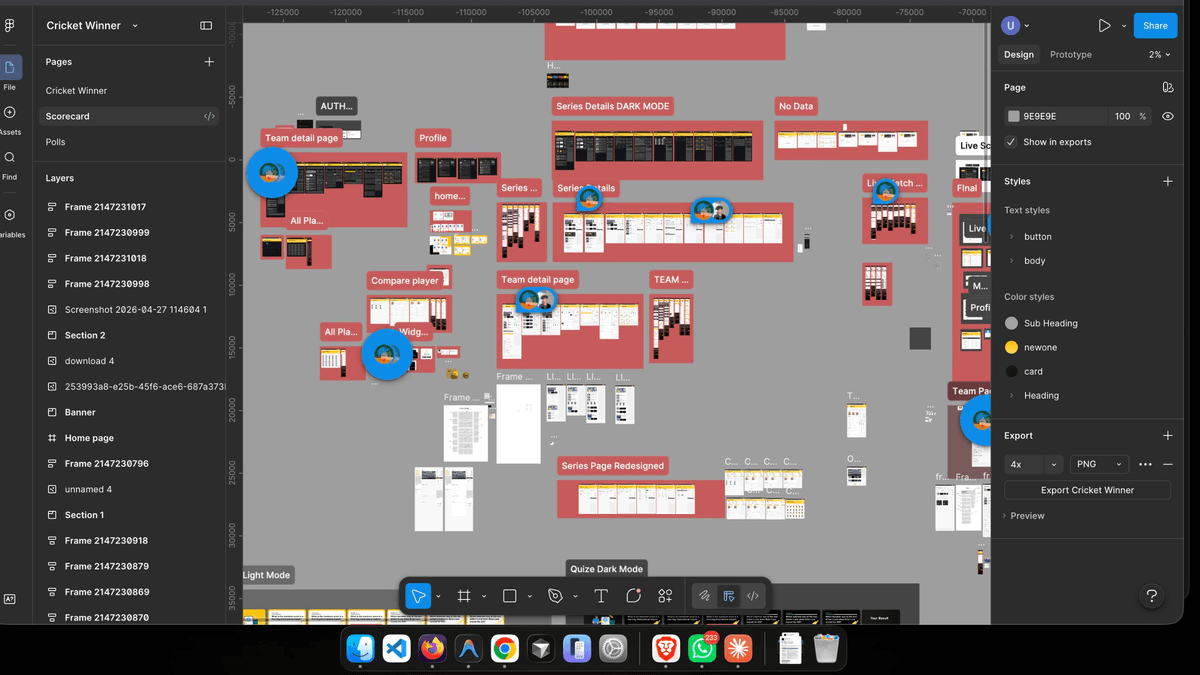
The backend proof is specific, not abstract. Cricket Winner streams ball-by-ball cricket scores to fans at IPL-scale traffic with sub-second WebSocket latency — a system our Node.js engineers built to stay fast when concurrency spikes into the hundreds of thousands. ClaimsMitra, an insurance inspection platform, runs 114+ API endpoints our team designed and maintains. Veda Milk's D2C dairy subscription engine generates deliveries nightly through RabbitMQ. Mappu (grocery e-commerce), CorporateGate (AI resume builder), and Alcedo (edtech) all run on Node.js services we shipped. When we say our engineers know how to build APIs, real-time systems, and event-driven pipelines, we can point you at the live products before you sign anything.
The stack our Node.js team works in daily is deliberately production-grade: Node.js with Express and NestJS, TypeScript in strict mode, WebSockets for real-time, Kafka for high-throughput event streams, RabbitMQ for job queues, PostgreSQL and MongoDB for data, Redis for caching and rate-limiting, and AWS Mumbai for deployment. This is a microservices-capable stack, and our engineers have decomposed monoliths, drawn sensible service boundaries, and handled the unglamorous realities — idempotency, retries with backoff, dead-letter queues, and back-pressure — that separate a system which survives Black-Friday traffic from one that quietly falls over on launch day. We choose the stack per problem — Express for lean focused services, NestJS for larger ones that need structure to stay legible as they grow.
Our hiring models flex to your stage and are priced in transparent INR with no post-call markup. Pre-seed and seed founders often take a Part-Time Developer at ₹60,000–₹1,00,000 per month (80 hours) to ship an MVP API without a full-time commitment. Funded teams take a Dedicated Developer at ₹1,20,000–₹2,10,000 per month (~$1,400–$2,500, 160 hours, exclusively yours). US, UK, UAE, and Australia customers frequently take Hourly engagements at ₹1,500–₹2,600/hr for surge capacity, performance tuning, or backend architecture reviews. Every engagement includes a 1-week trial, mutual NDA, and 100% IP ownership from day one.
Why hire Node.js developers from India in 2026? The economics remain compelling even after the rupee's recent strengthening — senior backend engineers in India deliver comparable shipping output to US peers for 60–70% less. But the deeper reason is depth: India's Node.js and backend community is one of the largest in the world, and Xenotix draws from it with a real vetting bar. We do not hire JavaScript generalists who once wrote an Express route. Our Node.js engineers have shipped services under load, tuned a slow PostgreSQL query, debugged a memory leak in a long-running process, and reasoned about consistency in an event-driven system without hand-waving.
Time zones are a solved problem, not a compromise. Our team is IST-aligned and offers a 4+ hour evening overlap with the US, and full-day overlap with the UK, Europe, the Middle East, and Australia. HQ is in Modinagar and Noida, and dedicated engagements can align working hours with your business day when the collaboration demands it. The result is a backend engineering partner that behaves like an in-house team — daily standups, weekly demos, code you can read, and a Node.js engineer who is reachable during your working hours and accountable for what ships.